At the end of the last devotion, Pharaoh had just told Joseph about his dreams, and Joseph had interpreted them. This devotional reading looks at how Pharaoh reacted to the impending famine.
Nuggets
- After interpreting Pharaoh’s dreams, Joseph suggested how to deal with the abundance as well as the shortage.
- Pharaoh didn’t hesitate to accept Jehovah’s interpretation of the dreams.
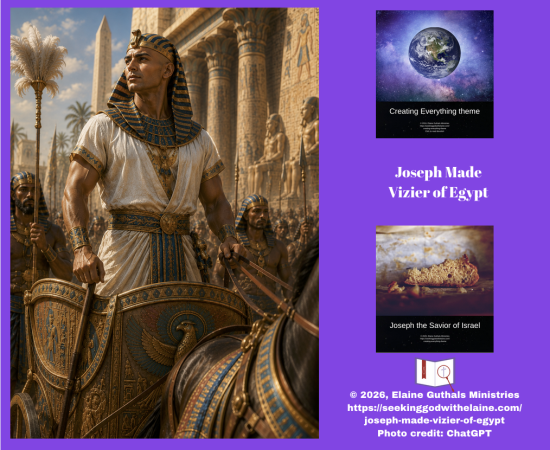
Joseph had just gotten done interpreting Pharaoh’s dreams, but he also proposed a plan to prepare for the famine that was coming. What was Pharaoh’s response?
Let's Put It into Context
To read devotions in the Creating Everything theme, click the button below.
Devotions in the Joseph the Savior of Israel series
Find Someone
“Therefore, Pharaoh should find an intelligent and wise man and put him in charge of the entire land of Egypt. Then Pharaoh should appoint supervisors over the land and let them collect one-fifth of all the crops during the seven good years. Have them gather all the food produced in the good years that are just ahead and bring it to Pharaoh’s storehouses. Store it away, and guard it so there will be food in the cities. That way there will be enough to eat when the seven years of famine come to the land of Egypt. Otherwise this famine will destroy the land’” (Gen. 41: 33-36 NLT)
After interpreting Pharaoh’s dreams, Joseph suggested how to deal with the abundance as well as the shortage.
We might think that it was a little forward of Joseph to, immediately after interpretation of the dreams, suggest what Pharaoh should do to prepare for the years of famine. It wasn’t because he thought they wouldn’t come up with a plan.
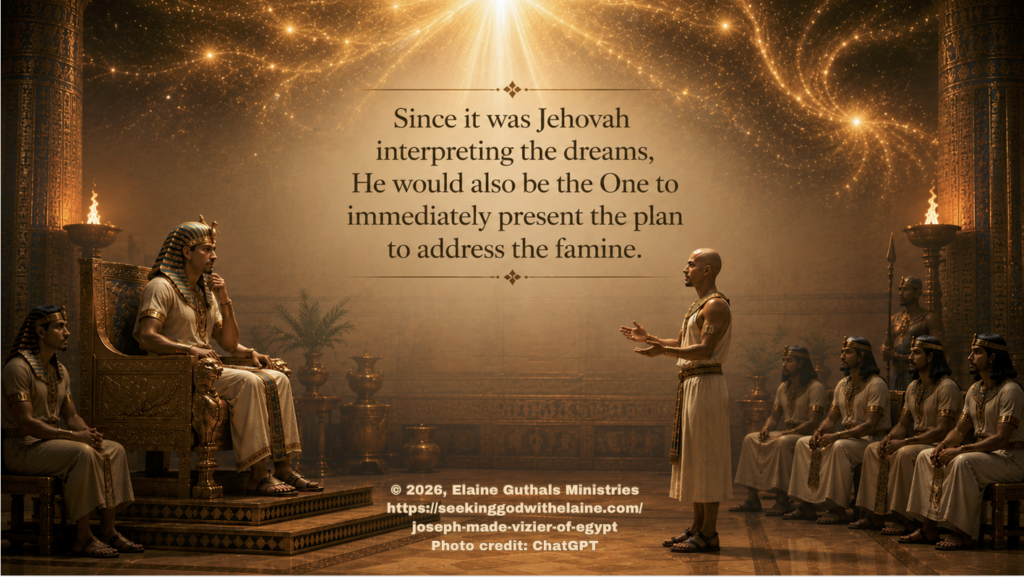
Joseph had the solution because Jehovah was still in control. Since it was Jehovah interpreting the dreams, He would also be the One to immediately present the plan to address the famine.
No, it wasn’t just for the Egyptians salvation. It was for the Israelites.
We just have to listen and follow Jehovah’s practical directions.
If Jehovah was intent on making sure Egypt survived — because He knew that is where the Hebrews would end up — it is logical He would give chapter and verse. In that way, they would know exactly how He wanted them to survive.
There are instances of this happening. Jehovah gave Noah specific instructions on how to build the ark (Gen. 6: 14-16). He gave Moses specific instructions on how to build the Tabernacle (Ex. 35-40).
But most of the time, Sovereign God doesn’t micromanage. He tells us what we are to do, and we are supposed to figure out how to get it done.
Oh, there are nudges from the Holy Spirit to keep us on path. But most of the time, we would kick and scream if He micromanaged all the time.
Sovereign God made us in His image, so we have some intelligence. He wants us to choose Him.
In this instance, it does seem like a no brainer. During the good years, save. During the bad years, use.
What is interesting is the twenty percent tax. To be that specific, it appears to come from God.
This brings up an important point. Jehovah has no problem with us saving for the future. It is when we start putting stock in that savings and forget that they are there because of Him that we get into a sinful attitude.
We just have to listen and follow God’s directions.
Joseph Made Ruler of Egypt
“Joseph’s suggestions were well received by Pharaoh and his officials. So Pharaoh asked his officials, ‘Can we find anyone else like this man so obviously filled with the spirit of God?’ Then Pharaoh said to Joseph, ‘Since God has revealed the meaning of the dreams to you, clearly no one else is as intelligent or wise as you are. You will be in charge of my court, and all my people will take orders from you. Only I, sitting on my throne, will have a rank higher than yours.’ Pharaoh said to Joseph, ‘I hereby put you in charge of the entire land of Egypt.’ Then Pharaoh removed his signet ring from his hand and placed it on Joseph’s finger. He dressed him in fine linen clothing and hung a gold chain around his neck. Then he had Joseph ride in the chariot reserved for his second-in-command. And wherever Joseph went, the command was shouted, ‘Kneel down!’ So Pharaoh put Joseph in charge of all Egypt. And Pharaoh said to him, ‘I am Pharaoh, but no one will lift a hand or foot in the entire land of Egypt without your approval’” (Gen. 41: 37-44 NLT)
Pharaoh didn’t hesitate to accept Jehovah’s interpretation of the dreams.
Everyone liked Joseph’s proposal. But being possible cousins to the Hebrews, we would think they would be more open to acknowledging God as the Hebrew’s God.
The Hyksos Pharaoh knew enough to know the power of Sovereign God. With all that was riding on what was soon going to happen, he didn’t want to discount this revelation.
So, probably in the Egyptians’ minds, the Hyksos Pharaoh promoted another outsider.
Then again, it may be that Joseph surprised Pharaoh. Here was this prisoner who was presenting noble qualities.
It doesn’t seem like it took long for Joseph to win the room. What, maybe an hour — probably less.
Davies addressed that. He wrote,
“He was entrusted with supreme authority. Such was the high estimate of Joseph, created in all minds, that they felt he was worthy of the largest trust. They could trust him as they trusted the law of gravitation. A Christian will never abuse his power.”
Resource
But remember, this was the job for which Jehovah was preparing Joseph.
Joseph would have had many duties in his activities under Potiphar and the prison warden. Look at this.
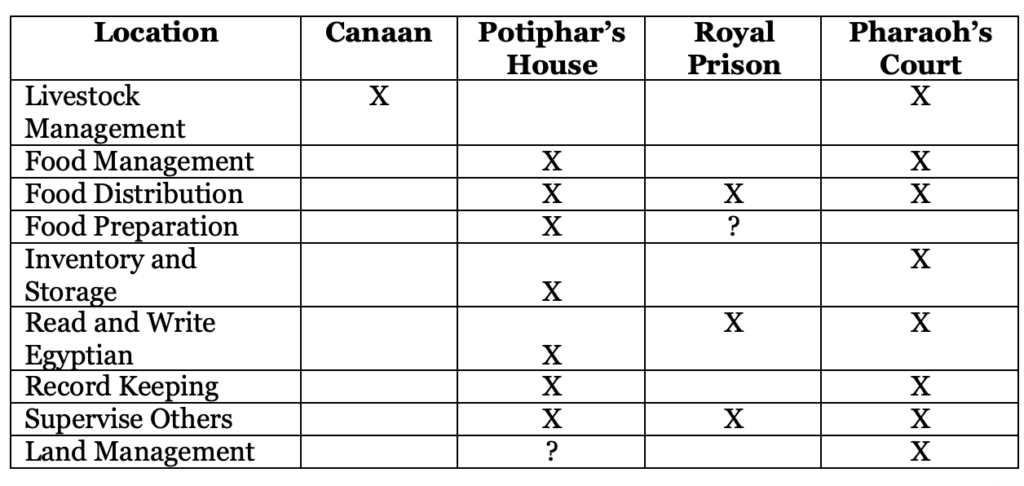
At each place where Joseph was held against his will, he was given responsibilities that grew in size, complexity, and reach, preparing him for what was ahead. Through it all, his obedience remained the same.
In today’s terms, we would probably call it an apprenticeship.
I think the most important thing Joseph learned at Potiphar’s house and in prison was administration. It would be safe to say that Joseph had an analytical mind to root out any problems and forge a solution.
All Jehovah’s behind-the-scenes coordination was paying off.
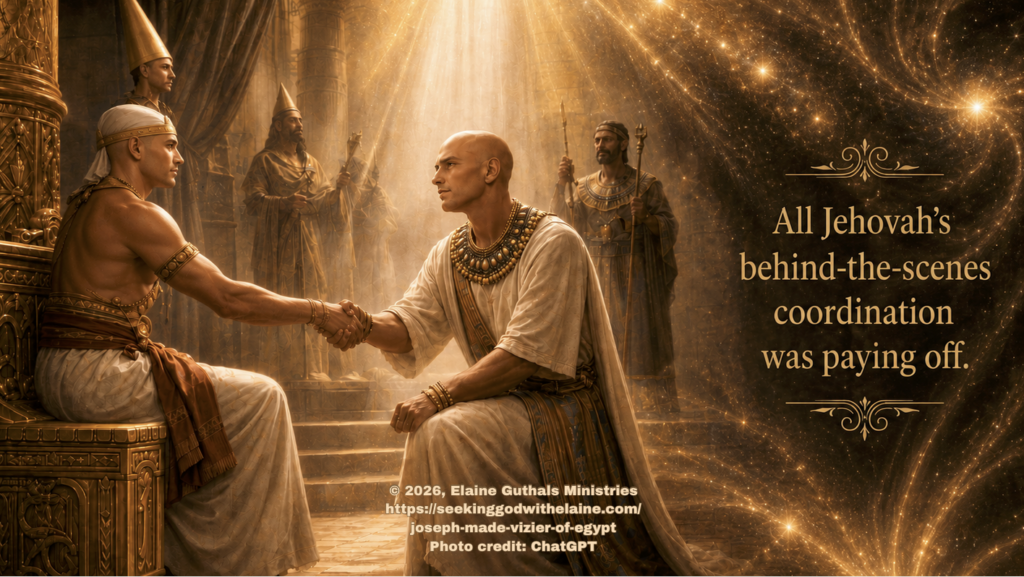
We also have to think that part of what sold Pharaoh and his advisors to choose Joseph was the unshakable confidence evident as he was laying out the interpretation. That confidence comes from and in Jehovah.
Joseph was made Vizier of Egypt. Egyptians and Hyksos alike were to bow down to him. He was second only to Pharaoh — and he put a qualifier on that. It was only when he was on the throne that he was higher than Joseph.
Joseph was going to be a hands-on leader. Pharaoh wanted him to be recognized as leader.
- The signet ring symbolized governmental authority.
- The fine linens showed honor and status.
- The gold chain indicated public recognition.
- The second chariot exhibited power.
- There were people to tell others to bow to him.
In other words, Joseph was given absolute authority.
Remember Joseph’s first dream? The grain bundles bowed down to his. We’ve always associated this with his brothers bowing to him.
What if it meant non-family members would bow to him first?
Look at the bottom line, though. In Dothan, Joseph was rejected by his brothers. In Egypt, Joseph is elevated among foreign rulers.
Making the Connections #1
Joseph was devoted to Jehovah back in Hebron. He was devoted to Jehovah at Potiphar’s house, even though he had been betrayed by his brothers. He was devoted to Jehovah in the prison, even though he was imprisoned for a crime he did not commit.
Of course, Joseph would continue to be devoted to Jehovah as second-in-command of the nation of Egypt.
This is an example of Jehovah wanting our obedience regardless of the circumstances we are in.
Making the Connections #2
Would Joseph have been elevated to Vizier if the Pharaoh had been an Egyptian? Probably not.
This is just another example of Jehovah working behind the scenes to further His plan.
Because the Pharaoh was Hyksos, he was not as opposed to a Semite being elevated. In fact, the Hyksos capital of Avaris had a Semitic population. In other words, Joseph wouldn’t have been the only foreigner in the city.
Joseph rose to power in a political environment where Semitic rulers governed Egypt, making his background less a barrier and possibly even an advantage.
How Do We Apply This?
- Trust Jehovah’s preparation.
- Be faithful in hidden seasons.
- Be obedient regardless of circumstances.
- Use the wisdom God provides.
- Remain faithful in foreign places.
Father God. We hear Your promises, and we wait for them. When Your fulfillment comes, it blows us away. Thank You how You love and provide for us. Amen.
If you don’t understand something and would like further clarification, please contact me.
If you have not signed up for the email providing the link to the devotions and the newsletter, do so below.
If God has used this devotion to speak with you, consider sharing it on social media.