Blog

  • Christ’s Great Preaching under the New Testament Dispensation

    Jesus was not only the Message of the gospel, but He was also the Messenger. This devotional reading looks at how and through whom He taught.

    Nuggets

    • Jesus approached the Jews according to what they would know and built from there.
    • Jesus expects greater works out of disciples than He accomplished.
    • Jesus expects ministry to be organized.
    hrists-great-preaching-under-the-new-testament-dispensation

    In the last devotion, we pulled out some Old Testament verses that spoke about Jesus. We are going to do the same thing for this devotion — only use the New Testament verses that Boston cited.

    Let’s Put It into Context

    To read devotions in the On the Day of the Lord theme, click the button below.

    Devotions in the Gospsel Tidings about Easter series

    The foundation of this series is Boston’s sermon, Jesus and the Meek.

    Resource

    The headings are Boston’s words.

    Preaching to the Jews as the Minister of Circumcision

    “For I tell you that Christ became a servant to the circumcised to show God’s truthfulness, in order to confirm the promises given to the patriarchs” (Rom. 15: 8 ESV)

    Jesus approached the Jews according to what they would know and built from there.

    The gospel message began with Jesus’ teaching of it. He told the story in which He was the main character.

    Jesus’ audience was primarily other Jewish people. “He answered, ‘I was sent only to the lost sheep of the house of Israel’” (Mt. 15: 24 ESV).

    Tough audience – I know!

    Jesus was talking to the people who thought they had it all figured out. They knew exactly what God was expecting of them – and only them.

    Because of that, Jesus had to come as “one of them.” He had to be a Jew – one of God’s chosen people. The vernacular in that day said it “… became a servant to the circumcised … (Rom. 15: 8 ESV).

    Since Jesus was coming to fulfill the law, He had to come under the auspices of the law. He couldn’t fulfill it if He wasn’t in it.

    It was more than our just looking like them in order to witness to them. God’s primary concern is not that we have representation so we “see ourselves” in the person(s) witnessing to us.

    In fact, God wants us to break down barriers. What are our marching orders?

    • “And he said to them, ‘Go into all the world and proclaim the gospel to the whole creation’” (Mk. 16: 15 ESV emphasis added).
    • “Go therefore and make disciples of all nations, baptizing them in the name of the Father and of the Son and of the Holy Spirit, teaching them to observe all that I have commanded you. And behold, I am with you always, to the end of the age” (Mt. 28: 19-20 ESV emphasis added).

    The world is so busy dividing itself into the are’s and are nots or the have and have nots. Satan is all about division.

    That allows covetousness to rear its sinful head. The world says, “We’re so busy about wanting what others have – until they have Christ. We don’t want that.”

    Jesus’ gospel is all about unity. “For as many of you as were baptized into Christ have put on Christ. There is neither Jew nor Greek, there is neither slave nor free, there is no male and female, for you are all one in Christ Jesus. And if you are Christ’s, then you are Abraham’s offspring, heirs according to promise” (Gal. 3: 27-29 ESV).

    Jesus witnessed under the conformity of the law. That was the only way to learn God’s character.

    We are to conform to God’s character, not Him to our culture.

    Inspiring His Apostles to Preach and Write the Doctrines of Salvation

    “Truly, truly, I say to you, whoever believes in me will also do the works that I do; and greater works than these will he do, because I am going to the Father” (Jn. 14: 12 ESV)

    Jesus expects greater works out of disciples than He accomplished.

    It always amazed me growing up that Jesus said that the Apostles were to surpass the works that Jesus did.

    No, I didn’t think like I am sure the Apostles did. They initially thought that everything would have stopped with His death. Obviously, hindsight has told us that didn’t happen.

    Also — obviously — there is a part of Jesus’ work that we can’t do. I didn’t think there was any expectation that we would be saviors of the world.

    Rather, I thought, how could flawed, earthly men do more than the sinless Perfect Son of God? And applying that to today — how can us continue to use flawed, earthly us?

    Then I realized that it wasn’t the doing that was going to surpass Jesus’ ministry. I was looking at it wrong.

    What was one reason that the Apostles had so much trouble understanding what Jesus was trying to tell them? Jesus didn’t say things in plain Hebrew.

    “I have said these things to you in figures of speech. The hour is coming when I will no longer speak to you in figures of speech but will tell you plainly about the Father” (Jn. 16: 25 ESV emphasis added).

    That leads to the second reason. Jesus didn’t speak so that everyone understood first pass. They — and we — have to open the eyes of our hearts so that we can see the meaning behind the words.

    God doesn’t want to spill His soul to anyone but His children. Because of that, much of our discipleship training is through revelation. The Holy Spirit teaches us what we need to know.

    I think the third reason is the main one as to why the Apostles were struggling with everything they were experiencing. It also shows us how they accomplished greater works than Jesus.

    While Jesus was here on the earth, the Plan of Salvation was still being accomplished. He needed to return to the Father and send the Holy Spirit.

    “Nevertheless, I tell you the truth: it is to your advantage that I go away, for if I do not go away, the Helper will not come to you. But if I go, I will send him to you. And when he comes, he will convict the world concerning sin and righteousness and judgment:  concerning sin, because they do not believe in me; concerning righteousness, because I go to the Father, and you will see me no longer; concerning judgment, because the ruler of this world is judged” (Jn. 16: 7-11 ESV).

    Conviction of sin didn’t come until after the Plan of Salvation was completed.

    Whitelaw cautioned us to not read John 14: 12 to mean that Jesus won’t use non-believers to get His message across. He uses anything that He has created — which is everything — to introduce us to Sovereign God.

    Also brought up by Whitelaw is the fact that the Apostles did not necessarily perform greater miracles than Jesus.

    What was greater is the reach that they had. Jesus stayed around the same areas during His life. He went to the house of Israel (Mt. 15: 24).

    The Apostles went everywhere. Paul specifically went to the Gentiles.

    Even today we feel the reach of the Apostles as we read the words written by Peter, Matthew, John, Paul, and the others. We wouldn’t be disciples today if not for their reach.

    Whitelaw summed it up this way. He wrote, “If Christ is the prime worker and the believer the instrument, connection must be established between them.

    Resource

    The apostles — and us when we witness — cannot work if we aren’t working the work assigned to us for Jesus. We are just the instruments.

    What is the foundation of these works? We have to believe in Jesus.

    We work for the exalted Lord to exalt Him even more.

    Our work is only great because The Lord is within us. He guides us in the work and accomplishes it through us.

    All this is saying is that there will always be work for Christ’s disciples to do. Maclaren put it this way. He wrote, “One form of His work was ‘finished’ on Calvary, but there is another work, which will not be ended until the angel voices shall chant ‘It is done, the kingdoms of the world are the kingdoms of our God and of His Christ.’”

    Resource

    We are going to work for Christ all the way from Calvary to the seventh trumpet. “Then the seventh angel blew his trumpet, and there were loud voices in heaven, saying, ‘The kingdom of the world has become the kingdom of our Lord and of his Christ, and he shall reign forever and ever’” (Rev. 11: 15 ESV).

    Think of it this way. Jesus said at the beginning of His ministry that “… ‘The time is fulfilled, and the kingdom of God is at hand …’” (Mk. 1: 15 ESV). His kingdom has been at hand all this time.

    On the Day of the Lord, it will arrive!

    Rising Up a Gospel Ministry

    “And he gave the apostles, the prophets, the evangelists, the shepherds and teachers, to equip the saints for the work of ministry, for building up the body of Christ, until we all attain to the unity of the faith and of the knowledge of the Son of God, to mature manhood, to the measure of the stature of the fullness of Christ” (Eph. 4: 11-13 ESV)

    Jesus expects ministry to be organized.

    Jesus is the Prince of Peace, and God works in an orderly fashion. Therefore, the ministry done is their Name is done in an organized manner.

    Cunningham told us what ministry is about. He wrote,

    “The object which the Christian ministry is designed to effect is the conviction and conversion of sinners, and the edification and consolation of saints; but these are effects which no human, and, indeed, no created, power is able to produce. The office of the Christian ministry — that is, the institution of a separate order of men to attend, more peculiarly, to the religious instruction of others — is admirably adapted in its own nature as a means to effect the object intended …”

    Resource

    Jesus knows if His work is to be accomplished, we need structure. We need a plan and a designation of who is going to do what.

    We shouldn’t necessarily think of the list Paul gives us in Ephesians 4: 11 as a hierarchy. I know. We would probably put the apostles first.

    But who is “more important” — the once who came before or the ones who came after? Yes, the prophets told how things would be, but the evangelists truly leave others to Christ.

    Both are important.

    That leaves the shepherds and teachers. Both are important, too.

    Shepherds are pastors that lead the flock, as Jesus did. “My sheep hear my voice, and I know them, and they follow me” (Jn. 10: 27 ESV). The churches are to follow their pastor.

    Teachers assist the pastor in growing the congregation to be closer to God. It is part of the Great Commission: “teaching them to observe all that I have commanded you …” (Mt. 28: 20 ESV).

    The goal of our Christian walk should be to grow closer to Him as we mature in our faith. Pastors and teachers are “to equip the saints for the work of ministry, for building up the body of Christ” (Eph. 4: 12 ESV). The body of Christ is the Church.

    The work is not only are we to strive to mature in our faith and holiness, but we are also to help others grow.

    By Continuing a Gospel Ministry in the Church

    “Go therefore and make disciples of all nations, baptizing them in the name of the Father and of the Son and of the Holy Spirit, teaching them to observe all that I have commanded you. And behold, I am with you always, to the end of the age” (Mt 28: 19-20 ESV)

    Jesus expects the ministry to continue until the Day of the Lord.

    We just talked about the teaching part of the Great Commission. Let’s look at the end of it.

    Jesus said He would be with us in performing this commission until the end of the age. He meant that He would be spiritually with us until the Day of the Lord.

    Bersier reminded us that God’s Word is a living Word. Jesus reveals Himself to us through those words, not just the written words.

    Resource

    The words Jesus gives us are those of love.

    Remember, Jesus was saying these words to the Apostles after the resurrection. He had been through death with its separation.

    Jesus was giving His final words of peace.

    Making the Connections #1

    Maclaren gave us a list of conditions on which Jesus works within us: faith and prayer.

    Remember, Jesus is standing at the door of our hearts, knocking. “Behold, I stand at the door and knock. If anyone hears my voice and opens the door, I will come in to him and eat with him, and he with me” (Rev. 3: 20 ESV).

    When we trust Him enough to open the door of our hearts to Him, He strengthens our abilities to do His work and He increases our success. Remember, our success is defined by our obedience to Him, not by the outcome.

    Prayer has to permeate our work. Said that wrong, didn’t I?

    It is not our work. It is Jesus’ work through us.

    Prayer is the only way in which we are connected to Him.

    Look what Maclaren had to say about that. He wrote, “Our power depends upon our prayer, Not God’s and Christ’s fulness and willingness to communicate, but our capacity to receive of that fulness, and so the possibility of its communication to us, depend upon our prayer.”

    Resource

    How many things do we start without bathing it in prayer? Oh, we may feel God calling us to that work, but that doesn’t mean we are to skip the prayer stage at any point in the exercise.

    Instead, prayer brings us a necessarily element in doing Christ’s work — unity with Christ.

    Making the Connections #2

    Bersier said something that backs up what I have been saying. He wrote, “This presence of Christ consists in something more than there is in His word. … Behind the written word there is the living word, the invisible [Savior] who manifests Himself to the heart.”

    Resource

    What is in God’s Word is an introduction to Who He is. We must become His children before He reveals Himself to our hearts.

    We are to focus on our inward relationships with God.

    Making the Connections #3

    Bersier said something else. He wrote, “But what makes men doubt the presence of Christ in the Church is the sight of the inward state of the Church itself. But what Christ announces to the Church He announces to the individual soul.”

    Resource

    We spent a long series on dealing with our doubts. Ooo, baby. This is an interesting take.

    Most of our individual doubts stem from the condition of the Church. Tie that to what God has been telling Pastor Steve. The Church is missing God because of its ignorance and apathy.

    The Church is getting it wrong, causing doubt in its members.

    But Jesus will reveal to us individually what is truth. Remember, He is the truth, the way, and the life (Jn. 14: 6 ESV).

    How Do We Apply This?

    • Realize Christ meets us where we are and then brings us to where He is.
    • Don’t conform to the worldview – be transformed by God.
    • Find a good Bible teacher because it is hard to understand God’s Word.
    • Never stop working to grow ourselves or others.
    • Do our part in God’s ministry.
    • Watch for Jesus’ return.

    Father God, as we celebrate the death and resurrection of Your Son, let us do so by growing closer to Him. When we do that, we grow closer to You. Let us be found on the Day of the Lord being about Your work. Amen.

    What do you think?

    Leave me a comment below (about this or anything else) or head over to my Facebook group for some interactive discussion.

    If you don’t understand something and would like further clarification, please contact me.

    If you have not signed up for the email providing the link to the devotions and the newsletter, do so below.

    If God has used this devotion to speak with you, consider sharing it on social media.

  • Christ’s Great Preaching under the Old Testament Dispensation

    Jesus was a master teacher Who used the Old Testament as the foundation of His teachings. This devotional reading looks at how Jesus taught of the need for salvation

    Nuggets

    • Jesus taught from the Old Testament of the need for the Plan of Salvation
    • Jesus taught from the Old Testament through others.
    • Jesus taught using the Scripture of the Old Testament.
    christs-great-preaching-under-the-old-testament-dispensation

    No, the Old Testament doesn’t once call Jesus by name. Yes, Jesus is all over the Old Testament.

    What we can’t forget is that, when Jesus preached, He used the Old Testament as the foundation for His expanded teachings. He told them what God had said, showed them where they went wrong, and told them what God really meant.

    Let’s look at some Old Testament passages that prophesied Jesus’ ministry.

    Let’s Put It into Context

    To read devotions in the On the Day of the Lord theme, click the button below.

    Devotions in the Gospsel Tidings about Easter series

    The foundation of this series is Boston’s sermon, Jesus and the Meek.

    Resource

    Personally, by Himself in Paradise

    “I will put animosity between you and the woman, and between your descendant and her descendant; he will bruise your head, and you will bruise his heel” (Gen. 3: 15 ESV)

    Jesus taught from the Old Testament of the need for the Plan of Salvation

    Jesus was present in Genesis 1. “Then God said, ‘Let us make humankind in our image, in the likeness of ourselves; and let them rule over the fish in the sea, the birds in the air, the animals, and over all the earth, and over every crawling creature that crawls on the earth’” (Gen. 1: 26 ESV).

    The story of mankind’s original sin is told in Genesis 3: 1-7. It is in God’s judgment for that sin that we are told Jesus’ mission in Genesis 3: 15.

    God told the serpent that He would instigate a hatred “… between your descendant and her descendant …” (Gen. 3: 15 ESV).

    Jesus was a descendant of Adam and Eve’s because He was born of a virgin.

    • “I will bless those who bless you, and him who dishonors you I will curse, and in you all the families of the earth shall be blessed” (Gen. 12: 3 ESV).
    • “Blessed be the Lord, the God of Shem; and let Canaan be his servant. May God enlarge Japheth, and let him dwell in the tents of Shem, and let Canaan be his servant” (Gen. 9: 26-27 ESV).
    • “How long will you waver, O faithless daughter? For the Lord has created a new thing on the earth: a woman encircles a man” (Jer. 31: 22 ESV).

    These verses were verified in the New Testament.

    • “And the Scripture, foreseeing that God would justify the Gentiles by faith, preached the gospel beforehand to Abraham, saying, ‘In you shall all the nations be blessed’ (Gal. 3: 8 ESV).
    • “You are the sons of the prophets and of the covenant that God made with your fathers, saying to Abraham, ‘And in your offspring shall all the families of the earth be blessed.’ God, having raised up his servant, sent him to you first, to bless you by turning every one of you from your wickedness” (Ac. 3: 25-26 ESV).
    • “Now the birth of Jesus Christ took place in this way. When his mother Mary had been betrothed to Joseph, before they came together she was found to be with child from the Holy Spirit. And her husband Joseph, being a just man and unwilling to put her to shame, resolved to divorce her quietly. But as he considered these things, behold, an angel of the Lord appeared to him in a dream, saying, ‘Joseph, son of David, do not fear to take Mary as your wife, for that which is conceived in her is from the Holy Spirit’” (Mt. 1: 18-20 ESV).
    • “the son of Cainan, the son of Arphaxad, the son of Shem, the son of Noah, the son of Lamech” (Lk. 3: 36 ESV).
    • “But when the fullness of time had come, God sent forth his Son, born of woman, born under the law, to redeem those who were under the law, so that we might receive adoption as sons” (Gal. 4: 4-5 ESV).

    Even from Genesis, Jesus was going to be victorious over Satan. “… he will bruise your head, and you will bruise his heel” (Gen. 3: 15 ESV).

    There was never a version where Satan was going to win. He may think he is winning the battles now, but he won’t win the war.

    David knew that. “Deliver my soul from the sword, my precious life from the power of the dog! Save me from the mouth of the lion! You have rescued me from the horns of the wild oxen!” (Ps. 22: 20-21 ESV). That is the Psalm that Jesus quoted part if not all of on the cross.

    That is what the cross was all about — defeating Satan and sin.

    • “Rejoice greatly, O daughter of Zion! Shout aloud, O daughter of Jerusalem! Behold, your king is coming to you; righteous and having salvation is he” (Zech. 9: 9 ESV).
    • “Seventy weeks are decreed about your people and your holy city, to finish the transgression, to put an end to sin, and to atone for iniquity, to bring in everlasting righteousness, to seal both vision and prophet, and to anoint a most holy place” (Dan. 9: 24 ESV).
    • “Since therefore the children share in flesh and blood, he himself likewise partook of the same things, that through death he might destroy the one who has the power of death, that is, the devil, and deliver all those who through fear of death were subject to lifelong slavery” (Heb. 2: 14-15 ESV).

    By His Ambassador, in HIS Name, the Prophets, and Ordinary Teachers

    “I have told the glad news of deliverance in the great congregation; behold, I have not restrained my lips, as you know, O LORD” (Ps. 40: 9 ESV)

    Jesus taught from the Old Testament through others.

    What the Jews had — and thought they knew — were teachings from the Old Testament. They called it the Torah. It consisted of what are the first five books of what we call the Old Testament.

    Some believed in the books written by the prophets and others. Some didn’t.

    Jesus affirmed the law given in the Old Testament. “Do not think that I have come to abolish the Law or the Prophets; I have not come to abolish them but to fulfill them. For truly, I say to you, until heaven and earth pass away, not an iota, not a dot, will pass from the Law until all is accomplished” (Mt. 5: 17-18 ESV).

    Did you catch that? Jesus acknowledged the law given by the prophets, not just Moses.

    Jesus taught about God’s grace and righteousness so all who were searching for Him could understand.

    • “You are the most handsome of the sons of men; grace is poured upon your lips; therefore God has blessed you forever” (Ps. 45: 2 ESV).
    • “Give ear, O my people, to my teaching; incline your ears to the words of my mouth! I will open my mouth in a parable; I will utter dark sayings from of old, things that we have heard and known, that our fathers have told us” (Ps. 78: 1-3 ESV).
    • “It shall come to pass in the latter days that the mountain of the house of the LORD shall be established as the highest of the mountains, and shall be lifted up above the hills; and all the nations shall flow to it, and many peoples shall come, and say: ‘Come, let us go up to the mountain of the LORD, to the house of the God of Jacob, that he may teach us his ways and that we may walk in his paths.’ For out of Zion shall go forth the law, and the word of the LORD from Jerusalem” (Isa. 2: 2-3 ESV).

    We know Jesus did just this.

    • “From that time Jesus began to preach, saying, ‘Repent, for the kingdom of heaven is at hand’” (Mt. 4: 17 ESV).
    • “For the law was given through Moses; grace and truth came through Jesus Christ” (Jn. 1: 17 ESV).
    • “And all spoke well of him and marveled at the gracious words that were coming from his mouth. And they said, ‘Is not this Joseph’s son?’” (Lk. 4: 22 ESV).
    • “But to all who did receive him, who believed in his name, he gave the right to become children of God, who were born, not of blood nor of the will of the flesh nor of the will of man, but of God” (Jn. 1: 12-13 ESV).
    • “From that time Jesus began to preach, saying, ‘Repent, for the kingdom of heaven is at hand’” (Mt. 13: 34-35 ESV).
    • “And when Jesus finished these sayings, the crowds were astonished at his teaching, for he was teaching them as one who had authority, and not as their scribes” (Mt. 7: 28-29 ESV).

    All the teaching is done in His and through His name. “May his name endure forever, his fame continue as long as the sun! May people be blessed in him, all nations call him blessed!” (Ps. 72: 17 ESV).

    Before Jesus came and after He came, His teachings were provided by prophets and ordinary teachers. True, some of the prophets were society people.

    • saiah had close relationships with the kings of his period.
    • Jeremiah was the son of a priest.
    • Ezekiel was a priest.
    • Daniel was nobility.
    • Zephaniah was probably the great-great grandson of King Hezekiah.
    • Haggai was the son of the governor.

    Hosea and Amos, like the Apostles, that were ordinary men. Nothing much is said about the origins of the rest of them.

    By His Written Word

    “As for me, I shall behold your face in righteousness; when I awake, I shall be satisfied with your likeness” (Ps. 17: 15 ESV)

    Jesus taught using the Scripture of the Old Testament.

    At the current time, we can’t see Jesus’ face. When David wrote those words, he couldn’t either.

    But that is what it is all about — faith without sight. “Now faith is the assurance of things hoped for, the conviction of things not seen” (Heb. 11: 1 ESV).

    David wrote a lot of things down which give us insight into Who Jesus is.

    • “I will tell of the decree: ‘The LORD said to me, “You are my Son; today I have begotten you. Ask of me, and I will make the nations your heritage, and the ends of the earth your possession”’” (Ps. 2: 7-8 ESV).
    • “Kiss the Son, lest he be angry, and you perish in the way, for his wrath is quickly kindled. Blessed are all who take refuge in him” (Ps. 2: 12 ESV).
    • “Yet you have made him a little lower than the heavenly beings and crowned him with glory and honor. You have given him dominion over the works of your hands; you have put all things under his feet” (Ps. 8: 5-6 ESV).
    • “Therefore my heart is glad, and my whole being rejoices; my flesh also dwells secure. For you will not abandon my soul to Sheol, or let your holy one see corruption. You make known to me the path of life; in your presence there is fullness of joy; at your right hand are pleasures forevermore” (Ps. 16: 9-11 ESV).

    Job also wrote about Jesus. “For I know that my Redeemer lives, and at the last he will stand upon the earth” (Job 19: 25 ESV).

    These were fulfilled in the New Testament.

    • “And though they found in him no guilt worthy of death, they asked Pilate to have him executed. And when they had carried out all that was written of him, they took him down from the tree and laid him in a tomb. But God raised him from the dead, and for many days he appeared to those who had come up with him from Galilee to Jerusalem, who are now his witnesses to the people. And we bring you the good news that what God promised to the fathers” (Ac. 13: 28-32 ESV)
    • “Jesus said to him, ‘Have you believed because you have seen me? Blessed are those who have not seen and yet have believed’” (Jn. 20: 31 ESV)
    • “But we see him who for a little while was made lower than the angels, namely Jesus, crowned with glory and honor because of the suffering of death, so that by the grace of God he might taste death for everyone” (Heb. 2: 9 ESV).
    • “Then the other disciple, who had reached the tomb first, also went in, and he saw and believed; for as yet they did not understand the Scripture, that he must rise from the dead” (Jn. 20: 9 ESV)
    • “He is not here, but has risen. Remember how he told you, while he was still in Galilee, that the Son of Man must be delivered into the hands of sinful men and be crucified and on the third day rise” (Lk. 24: 6-7 ESV).

    Making the Connections

    All of God’s Word is about the need for Christ to come; waiting for His arrival; His birth, death, and resurrection; His return to Heaven, and His second coming during the Day if the Lord.

    We have everything we need to believe Jesus is the Messiah.

    We just have to decide to do that.

    How Do We Apply This?

    The ABCDs of Salvation

    If you have not become a believer in Christ, please read through the
    Plan of Salvation and prayerfully consider what God is asking you to do.

    A – admit our sins
    B – believe His Son Jesus is our Redeemer
    C – confess God as Sovereign Lord

    D – demonstrate that commitment by making any changes needed in our lives to live the way in which God has called us

    The Disciple’s Job Description

    Searching for and Seeking God

    Hearing His Word (Rom. 10: 17)
    Reading His Word (Rev. 1: 3)
    Praying to Him (Heb. 4: 16)
    Studying His Word (Ac. 17: 11)
    Meditating on His Word (Ps. 1: 1-2)
    Memorizing His Word (Ps. 119: 11)

    Father God. You have spelled out for us what we need to do and why we need to do it. We have to believe Jesus is our Savior and Redeemer. Help us to decide to believe that and live our lives daily expressing that belief. Amen.

    What do you think?

    Leave me a comment below (about this or anything else) or head over to my Facebook group for some interactive discussion.

    If you don’t understand something and would like further clarification, please contact me.

    If you have not signed up for the email providing the link to the devotions and the newsletter, do so below.

    If God has used this devotion to speak with you, consider sharing it on social media.

  • Explaining the Good Tidings of the Gospel

    Mankind was presented the good tidings because we are treasured by God. This devotional reading looks at three ways in which God’s Word described how and why we are valued by God.

    Nuggets

    • We are treasured because, even though we are fallible, God designed the Plan of Salvation to restore us.
    • We are treasured because we have been given a special relationship with Jesus as His bride.
    • We are treasured because we have been given victory over sin when we ABCD.
    • What Jesus wants most with His sacrifice is to bring us peace.
    explaining-the-good-tidings-of-the-gospel

    There is one reason why God designed the Plan of Salvation to restore our relationships with Him. He love us.

    God treasures us.

    Boston pointed out three ways in which God’s Word shows that He treasures us. Let’s dig in.

    Let’s Put It into Context

    To read devotions in the On the Day of the Lord theme, click the button below.

    Devotions in the Gospsel Tidings about Easter series

    The foundation of this series is Boston’s sermon, Jesus and the Meek.

    Resource

    The headings are Boston’s words.

    These Tidings Relate to a Treasure

    “But we have this treasure in jars of clay, to show that the surpassing power belongs to God and not to us” (II Cor. 4: 7 ESV)

    We are treasured because, even though we are fallible, God designed the Plan of Salvation to restore us.

    We can take this topic two ways.

    The first way is that mankind is fragile like jars of clay, so we need Sovereign God’s intervention to save us.

    A jar of clay is a good representation of what we are. A blob of clay is put on the potter’s wheel. The potter lovingly molds it into a jar, fashioning it as He chooses.

    Then, the jar goes into the kiln. The baking strengthens it – but it still can be broken.

    Some jars were used in the temple. Therefore, they were consecrated to God.

    But look at it this way.

    We, like the clay, are a blob when we are unregenerated. We aren’t fulfilling the purpose of our creation – to worship God.

    When we ABCD, God molds us and makes us after His Will. The jar, like us, is filled with whatever the potter wants to put in it.

    But the jar doesn’t get to choose.

    We get to choose whether we will follow God or not. We decide whether we are going to be complete or not.

    The other way we can take this is that Sovereign God treasurers us so much that He did provide the Plan of Salvation.

    Yes, God gain glory because our lowliness shows His majesty. Others looking at us can see God.

    But it is more than that. God loves us that much. To put it in our emotions, I bet God was crushed when Adam and Eve disobeyed Him.

    Still, God is the One Who designed the Plan of Salvation to get us back. He decided what offering would work – and He provided the priceless Sacrifice to accomplish that offering.

    God was willing to give up what was needed – the life of His own beloved Son – to get us back.

    God’s Word tell us exactly how God sees us as His treasure. “For you are a people holy to the Lord your God. The Lord your God has chosen you to be a people for his treasured possession, out of all the peoples who are on the face of the earth” (Deut. 7: 6 ESV).

    I think both ways are correct. We are fallible. We did disobey God and let sin into the world.

    But God loves us so much that He designed the Plan of Salvation to restore our relationships with Him. He wanted us back. He wants to return to a place in our hearts.

    What we can’t lose sight of is the importance of what is in us, not what the important thing is in. The focus isn’t on how wonderful we are. The focus is on how wonderful God is.

    Our physical jars of clay are supposed to be filled with the gospel message. To the core of our beings, we have to be infused with the message that we are sinners, Jesus died to pay the price for our sins because we couldn’t, and we need to confess God as Sovereign Lord.

    We are to be willing – and excited – to share the good news with others.

    Yes, we can witness. Don’t gloss over the fact that “… we have this treasure in jars of clay …” (II Cor. 4: 7 ESV).

    The power to witness is in us now, because “… the surpassing power belongs to God and not to us” (II Cor. 4: 7 ESV).

    God will use us to spread His gospel message. “For as the rain and the snow come down from heaven and do not return there but water the earth, making it bring forth and sprout, giving seed to the sower and bread to the eater, so shall my word be that goes out from my mouth; it shall not return to me empty, but it shall accomplish that which I purpose, and shall succeed in the thing for which I sent it” (Isa. 55: 10-11 ESV).

    We have to understand that God loves us so much that He put something precious in something that He considered precious. Sherman had a great way to say that. He wrote, “Then the gospel is precious, for it is the word of life, and he that believeth it hath everlasting life.”

    Resource

    God put the precious gospel message in His precious children.

    To a Marriage, a Most Happy Match for Poor Sinners

    “And I will betroth you to me forever. I will betroth you to me in righteousness and in justice, in steadfast love and in mercy. I will betroth you to me in faithfulness. And you shall know the Lord” (Hos. 2: 19-20 ESV)

    We are treasured because we have been given a special relationship with Jesus as His bride.

    A covenant is an agreement or a promise. In essence, that is what a marriage is.

    God’s Word tells us how God views marriage.

    • “Therefore a man shall leave his father and his mother and hold fast to his wife, and they shall become one flesh” (Gen. 2: 24 ESV).
    • “Let marriage be held in honor among all, and let the marriage bed be undefiled, for God will judge the sexually immoral and adulterous” (Heb. 13: 4 ESV).

    Betrothal was something more than our becoming engaged. A ceremony occurred, and they were considered legally married. They just didn’t set up house yet.

    Boston gives us the timeline of what happens when a couple is betrothed to us.

    • The Trinity saw our acceptance of the gift of salvation throughout eternity.
    • They rejoiced at the match.
    • Jesus completed the Plan of Salvation by sacrificing Himself so that we may be redeemed.
    • Jesus accepted the match by signing the contracts.
    • The Holy Spirit is sent to convict us of our sins.
    • While we are determining whether we will choose to accept the gift of salvation or not, Jesus is preparing for our acceptance.
    • The Church is waiting to welcome us with open arms.
    • Baptism and the Lord’s Supper has been prepared for us.
    • Other disciples share examples of their relationship with Jesus.

    This marriage lasts forever. Boston say that playing out this way. He wrote, “Espousals stand firm in the case of the adversity of either party; in the case of the advancement of either party; in the case of desertion on either side.”

    Resource

    The Church, as we are going to find in Revelation 19 when we get there, is the bride of Christ. We are so beloved by Him that He wants to spend eternity with us.

    We cannot lose sight of the fact that the purpose of the marriage is to restore our righteousness and eliminate the judgment of whether we are God’s children or not.

    It is interesting that Calvin described faithfulness as stability. It’s never heard it described like that, but it fits.

    Resource

    We’ve called it being sober minded. “Be sober-minded; be watchful. Your adversary the devil prowls around like a roaring lion, seeking someone to devour” (I Pet. 5: 8 ESV).

    Ooo, baby. God doesn’t want us flopping back and forth between serving Him and serving the worldview. He was us focused solely on Him. That is the stability.

    When we think of a marriage contract, we understand that both parties have to be present and working toward the relationship for it to work. This is no different. We have to be seeking God.

    Searching for and Seeking God

    Hearing His Word (Rom. 10: 17)
    Reading His Word (Rev. 1: 3)
    Praying to Him (Heb. 4: 16)
    Studying His Word (Ac. 17: 11)
    Meditating on His Word (Ps. 1: 1-2)
    Memorizing His Word (Ps. 119: 11)

    What we have to focus on here is that betrothals were forever because the couple wouldn’t separate for any reason. God has an unbreakable covenant with Jesus.

    Think about it. There isn’t any closer relationship than being married. Of course, the love is there. So is communication.

    The whole purpose of the marriage is so that we can “… know the Lord” (Hos. 2: 19-20 ESV).

    I keep thinking about what God has been telling Pastor Steve. The Church is missing Jesus because of ignorance and apathy.

    We think we know God, but we really don’t.

    Hannam told us why knowledge is so important. He wrote, “There can be no cordial obedience to God by those who are ignorant of Him. Ignorance is not the mother of devotion, but the parent of superstition and idolatry. An unknown person cannot be truly and cordially loved.”

    Resource

    We can’t obey what we don’t know. Not knowing God causes idolatry, worshiping something other than Him.

    God is our Creator, and Jesus is our Redeemer. They demand — and deserve — our obedience.

    It has to start with knowledge. True, God overlooked that in times past. “The times of ignorance God overlooked, but now he commands all people everywhere to repent” (Ac. 17: 30 ESV).

    In my opinion, that was before Jesus came. There was God’s laws that He had given, but those weren’t given to bring salvation. Those were given so that we would know we need a Savior.

    God wasn’t going to judge harshly when the way wasn’t in place. Oh, He would still demand obedience, but He would accept that redemption wasn’t in place – yet.

    Once the Savior came and that redemption is in place, that is the only way in which we can be saved. “And there is salvation in no one else, for there is no other name under heaven given among men by which we must be saved” (Ac. 4: 12 ESV).

    Everything is in place now for our redemption. All we have to do is choose to follow God.

    To a Glorious Victory

    “He will swallow up death forever; and the Lord God will wipe away tears from all faces, and the reproach of his people he will take away from all the earth, for the Lord has spoken” (Isa. 25: 8 ESV)

    We are treasured because we have been given victory over sin when we ABCD.

    There are two kinds of death: physical and spiritual. We are all going to experience the physical death.

    I like how the King James Version says it. “He will swallow up death in victory …” (Isa. 25: 8 KJV).

    Jesus was victorious over spiritual death. “and which now has been manifested through the appearing of our Savior Christ Jesus, who abolished death and brought life and immortality to light through the gospel” (II Tim. 1: 10 ESV emphasis added).

    The sting is taken away because the sting is sin. Paul talked about that in his letter to the Corinthians. He kind of combined what Isaiah said with what Hosea sort of said. “… ‘Death is swallowed up in victory.’ ‘O death, where is your victory? O death, where is your sting?’” (I Cor. 15: 54-55 ESV).

    The Evalgelist listed four victories that Jesus enjoyed.

    • Defeating death and hell
    • Altering disciples’ nature
    • Securing a different judgment for all who ABCD
    • Resurrection

    Resource

    Jesus treasured us so much that He submitted to this horrible death so that we could be victorious over sin. He gave all He had forus.

    Moore was correct with what he said. He wrote that Jesus didn’t use any of His hidden divine powers. He used His life to give us eternal life.

    Resource

    The eternal life we receive will be without sorrows. We’ve talked about that once and will again when we get to Revelation 21.

    Jesus fulfilled all the laws. It is those laws that gave sin its authority. His death and resurrection took that authority away.

    Now wait a minute. Aren’t we supposed to follow God’s laws? How can they lead to sin?

    Well, breaking God’s laws and commandments means we are sinning. But the laws have a greater purpose.

    “Now the law came in to increase the trespass, but where sin increased, grace abounded all the more, so that, as sin reigned in death, grace also might reign through righteousness leading to eternal life through Jesus Christ our Lord” (Rom. 5: 20-21 ESV).

    We can only find salvation through submitting our hearts and lives to Jesus.

    To a Most Desirable Peace

    “For he himself is our peace, who has made us both one and has broken down in his flesh the dividing wall of hostility” (Eph. 2: 14 ESV)

    What Jesus wants most with His sacrifice is to bring us peace.

    The whole purpose of the Plan of Salvation is restore us back to the peace we have in God. We can only do that through accepting Jesus as our Savior, because He is the author of peace.

    • “Therefore, since we have been justified by faith, we have peace with God through our Lord Jesus Christ” (Rom. 5: 1 ESV).
    • “Peace I leave with you; my peace I give to you. Not as the world gives do I give to you. Let not your hearts be troubled, neither let them be afraid” (Jn. 14: 27 ESV).

    Jesus is the author of peace because He make peace between us and God. Through His death is how He created that peace.

    Jesus’ peace is His presence and that of the Father’s.

    But that isn’t peace as we think of it, is it? We think of peace as absence of conflict.

    What trips us up is we sometimes think Jesus should give us what we call peace in one shot to cover us for eternity. It doesn’t work that way.

    Jesus employs peace continually by degrees.

    I know. It doesn’t always feel that way.

    • It doesn’t feel like Jesus is giving us any peace.
    • It feels more like it comes in stops and starts when it does come.
    • It doesn’t feel like we are getting more of it, just the same meager amount we got last time.

    We forget our part of Jesus’ peace – contentment. If we aren’t content, we don’t have peace.

    We have to be satisfied with whatever amount of peace Jesus gives us at the time.

    We also have to be unified with fellow disciples in order to feel that peace. “Finally, all of you, have unity of mind, sympathy, brotherly love, a tender heart, and a humble mind” (I Pet. 3: 8 ESV).

    Peace can only be found through living our lives as Jesus would have us do.

    Making the Connections

    If we do not accept Jesus as our Savior, we are at war with Him. That is the opposite of peace. We can only find peace in His shed blood.

    How Do We Apply This?

    • Rest in the peace of Jesus’ presence.

    Father God. We are so humbled that You count us as treasures. We let sin into the world, and we continue to sin daily – even after we have committed our lives to You. Help us to strengthen our resolve to live for You. Help us to not be complacent in what we think we are. Help us to become more like You. Amen.

    What do you think?

    Leave me a comment below (about this or anything else) or head over to my Facebook group for some interactive discussion.

    If you don’t understand something and would like further clarification, please contact me.

    If you have not signed up for the email providing the link to the devotions and the newsletter, do so below.

    If God has used this devotion to speak with you, consider sharing it on social media.

  • Good and Welcome Tidings to All Who Accept

    When we think about Christ on the cross, we think about the good news that His story proclaims. This devotional reading begins to look at explaining the good news of the gospel and showing why it is offered to all.

    Nuggets

    • Jesus is Christ of the Cross so that the unregenerated world could be restored from the curse of sin.
    • Through Jesus, we have all we need in the gospel message – forgiveness and justification.
    • There are many benefits that we gain from the gospel, likening them to a scrumptious feast.
    good-and-welcome-tidings-to-all-who-accept

    We are members of the unregenerated world until we accept Jesus as our Lord and Savior. He became our Savior when He accomplished the Plan of Salvation. In these devotions leading up to Easter Sunday, we are going to look at what all that entails.

    We will be looking at Boston’s sermon, Jesus and the Meek. We are going to skip the discussion on meekness for this series. We’ve covered that several times before. We’re going to jump in on the good tidings of the gospel.

    We will start out by looking at how the gospel tidings for the meek. They tell us of a complete salvation.

    Let’s Put It into Context

    To read devotions in the On the Day of the Lord theme, click the button below.

    Devotions in the Gospsel Tidings about Easter series

    The foundation of this series is Boston’s sermon, Jesus and the Meek.

    Resource

    The headings are Boston’s words.

    These Tidings Relate to a Redemption, to a Ransom Paid

    “Christ redeemed us from the curse of the law by becoming a curse for us—for it is written, ‘Cursed is everyone who is hanged on a tree’—” (Gal. 3: 13 ESV)

    Jesus is Christ of the Cross so that the unregenerated world could be restored from the curse of sin.

    The unregenerated world became so when Adam and Eve committed the original sin. They sinned by disobeying God’s direct command – don’t bite.

    As punishment, sin became the curse inflicted upon the world.

    We have to remember that God’s laws are above man’s laws. When we break His laws, we are placed under the curse.

    It is our decision to break God’s laws. We can decide to follow Him or not.

    Unfortunately, too many decide – happily – not to follow God.

    The only way that the curse could have been broken was through the life and death of Jesus Christ as a human.

    Jesus did what we couldn’t do – bear the curse. All our sins were placed on Him, and His blood covered them.

    Let’s break that down.

    • “And if a man has committed a crime punishable by death and he is put to death, and you hang him on a tree, his body shall not remain all night on the tree, but you shall bury him the same day, for a hanged man is cursed by God. You shall not defile your land that the Lord your God is giving you for an inheritance” (Deut. 21: 22-23 ESV emphasis added).
    • He himself bore our sins in his body on the tree, that we might die to sin and live to righteousness. By his wounds you have been healed” (I Pet. 2: 24 ESV emphasis added).
    • But God shows his love for us in that while we were still sinners, Christ died for us” (Rom. 5: 8 ESV).
    • But if we walk in the light, as he is in the light, we have fellowship with one another, and the blood of Jesus his Son cleanses us from all sin” (I Jn. 1: 7 ESV emphasis added).
    • Blessed are those whose lawless deeds are forgiven, and whose sins are covered” (Rom. 4: 7 ESV).

    Think of it this way. It is what Manton said – only in Elaine-speak so Elaine can understand it.

    Resource

    If there would be no sentence for our breaking God’s laws, His laws would be useless. Let’s say it another way.

    There is a speed limit. No one drives under the speed limit. No one gets a ticket.

    Why do we have the speed limit? It is useless.

    Back to God’s laws. If there would be no sentencing for breaking the law, all of God’s threats would be useless.

    In other words, the Day of the Lord would mean nothing if it is just words.

    But it isn’t just a threat – it is very real. The Day of the Lord is coming.

    Let’s look at it another way.

    Every time there is a mass shooting, the call for stricter gun control gets louder. What is that expected to accomplish?

    It is expected that having a law threatening a judgment is going to deter people from breaking it. Unfortunately, it doesn’t always work that way.

    The cities with the highest murder rates have the toughest gun control laws. Just saying “you can’t do it” doesn’t stop people from doing it.

    Just like God’s laws written in His Word does not stop people from breaking them.

    God knew we wouldn’t stop breaking them. That is why He sent Jesus to pay the penalty for our breaking them.

    There is no way God wanted to spend eternity without us. He wants us to love Him and submit to His law.

    God isn’t going to force us to obey Him – any more than He forced Adam and Eve to obey Him.

    Redemption through Jesus Christ is the only way we will get out from under the curse of sin.

    Spurgeon made a good observation. Yes, the God’s law was given to the Jewish people on Mount Sinai.

    But it is really given to all nations – to all people. We are all His creation.

    It apply to all of us.

    I have to say this again – and again and again – in these devotions. God’s goal is not that we do the do’s and not do the don’ts.

    God’s goal is that we take the laws and improve our character so that it is more like His. The laws tell us what God’s character is. We are to be more like Him.

    To an Indemnity, a Pardon to Criminals Who Will Come to Jesus

    “Let it be known to you therefore, brothers, that through this man forgiveness of sins is proclaimed to you, and by him everyone who believes is freed from everything from which you could not be freed by the law of Moses” (Ac. 13: 38-39 ESV)

    Through Jesus, we have all we need in the gospel message – forgiveness and justification.

    Jesus is the Person through Whom salvation is given. We receive it by being forgiven and justified.

    We talked in the last section about how we break God’s laws. We can be given forgiveness when we ask for it and commit to serving God.

    God’s forgiveness is the best thing we could ever be given! Look what Kidd said about it. He wrote, “Whom the Lord pardons He pardons freely and completely.”

    Resource

    What does that mean?

    God overlooks our sin. Yes, the fallout from it is still there.

    I described it once as a country road full of potholes. The snow comes and blankets it in white. Oh, the potholes are still there under the snow – they just can’t be seen.

    Like the snow covering the potholes in the road, our sins are covered. When God looks at His children, He sees the blood of Jesus.

    Only God can do this. It doesn’t happen because of some self-help program we’ve been through.

    It is only by an act of God. “Who shall bring any charge against God’s elect? It is God who justifies” (Rom. 8: 33 ESV).

    God chose to forgive us. He chose to forgive all our sins, not just some.

    Also, God chose to forgive the sins of all who repent. “To him all the prophets bear witness that everyone who believes in him receives forgiveness of sins through his name” (Ac. 10: 43 ESV).

    God chose to forgive us – not for anything we’ve done. “yet we know that a person is not justified by works of the law but through faith in Jesus Christ, so we also have believed in Christ Jesus, in order to be justified by faith in Christ and not by works of the law, because by works of the law no one will be justified” (Gal 2: 16 ESV).

    That ties back to the discussion in the last section. Following God’s law does not bring forgiveness of breaking it.

    Only faith in Jesus as our Savior does.

    Think about it. Salvation only through Jesus doesn’t make God a dictator. It make Him merciful and just.

    We broke the relationship with God. He is fixing it.

    God doesn’t make salvation out of our reach. He gives it to us freely. It is a gift He gives us out of His love for us.

    It could be so easy to justify our sins as them being our human nature. And they are – now.

    They weren’t when Adam and Eve first sinned. They were a choice.

    Sin is still a choice with us. We can choose to lie to someone or not. We can choose to murder someone or not.

    We can choose to believe in Jesus as our Savior and Lord – or not.

    That choice has the longest lasting consequences if we get it wrong.

    We only obtain forgiveness and justification by believing in Jesus as our Savior and Redeemer.

    We can only be made holy through the work of God.

    These Tidings Are the Tidings of a Feast

    “On this mountain the Lord of hosts will make for all peoples a feast of rich food, a feast of well-aged wine, of rich food full of marrow, of aged wine well refined” (Isa. 25: 6 ESV)

    There are many benefits that we gain from the gospel, likening them to a scrumptious feast.

    God’s Word talks about a lot of feasts. There is the feast when the Prodigal Son returns home (Lk. 15: 11-32).

    Matthew recorded the Parable of the Wedding Feast (Mt. 22: 1-14). Luke recorded the Parable of the Great Banquet (Lk. 14: 16-24).

    Of course, Jesus observed the Passover meal with His Apostles the night He was arrested (Lk. 22: 14-20).

    What all these feasts had in common were the attendee were blessed by attending. These feasts offer an abundance to those who partake.

    The feast in the verse in Isaiah takes place “On this mountain …” (Isa. 25: 6 ESV). It refers to Judaea, specifically Mount Zion in Jerusalem.

    Mountains are significant in God’s Word. There is Mount Sinai, Mount Horeb, Mount Moriah, Mount Piscah, Mount Zion, and Mount Calvary. I read a sermon that outlined why mountains are so important.

    • They stand out.
    • They are exposed to the elements, including storms.
    • Yet, they stand strong.
    • They possess a beauty in nature.

    Resource

    Bennie said that Zion has been termed the mountain of God’s house. True, many momentous events happened on mountains.

    Resource

    The Lord Himself is the host. “On this mountain the Lord of hosts will make …” (Isa. 25: 6 ESV).

    God isn’t leaving the preparation or the execution of the feast to anyone. He alone is in charge of it.

    The Lord of hosts is one of God’s names. No, it doesn’t mean giver of the feast.

    It means God is the commander of armies. It may be referring to the angel armies or Israel’s armies — to both.

    We have to remember that it isn’t a potluck or carry-in. The majestic Father alone throws a feast for the unworthy and impure mankind.

    And not just any mankind, but all are invited to attend the feast. “On this mountain the Lord of hosts will make for all peoples a feast …” (Isa. 25: 6 ESV emphasis added).

    That must have thrown the Israelites of Isaiah’s day for a loop. That would mean Gentiles were to be included. That probably didn’t set well with them.

    But that was always God’s intention. The Israelites may be God’s chosen people, but the Church is His family.

    There is no distinction as to who is invited and who isn’t. Everyone is offered the gift of salvation.

    It is up to us to accept it.

    The feast had a scrumptious menu. It was “… a feast of rich food, a feast of well-aged wine, of rich food full of marrow, of aged wine well refined” (Isa. 25: 6 ESV).

    Hmmm. Is that what really will be on the menu. Spurgeon took it a different way. He saw the good things as the following:

    • Justification
    • Adoption
    • Eternal love
    • Union with Jesus
    • Eternal life

    Resource

    Miller told us what all of this meant. He wrote,

    “It means to say that God in His love has provided for the case of every man. It means that the blessings of salvation which we have to offer in Jesus Christ are not scanty blessings, — that they are not such blessings as leave us any doubt as to whether they will meet the case of this particular man, but that the salvation which is in Christ is a feast, and a feast of fat things.”

    Resource

    The “cost” of admission?

    • Belief that Jesus laid down His life to accomplish the Plan of Salvation.
    • Repentance of our sins.
    • Faith in the unseen and in things we don’t understand.

    What do we gain? A seat at the feast for eternity.

    A feast is a great analogy for the comparison of salvation with the state of the unregenerated world.

    The unregenerated world is starving for the food the Savior has to offer. Its meager fare pales in comparison to the feast.

    They will die if the do not partake in the feast.

    Making the Connections #1

    We can’t save ourselves. Only through faith in Jesus can the penalty for our sins be paid.

    • “And there is salvation in no one else, for there is no other name under heaven given among men by which we must be saved” (Ac. 4: 12 ESV).
    • “You shall have no other gods before me. You shall not make for yourself a carved image, or any likeness of anything that is in heaven above, or that is in the earth beneath, or that is in the water under the earth” (Ex. 20: 3-4 ESV).
    • “Jesus said to him, ‘I am the way, and the truth, and the life. No one comes to the Father except through me’” (Jn. 14: 6 ESV).

    Yes, that means believing in what we can’t see or understand. We just have to do it.

    Making the Connections #2

    Nicholls made a really interesting statement. He wrote, “This was the bitter experience of His life. From His standpoint of perfect rectitude and purity, He saw how far men had wandered from God, and how deeply they had fallen in sin.”

    Resource

    Oh, we get that this was the hardest, most painful thing Jesus had to experience.

    I think we forget about the mental and emotional cost Jesus had to suffer.

    Here was a Man Who had never committed a sin in His life. Oh, yes. He had seen others do it from Adam on down.

    We could say Jesus say it from afar, but I don’t think that is correct. God and Jesus both have a hands-on approach when it comes to this world.

    What Nicholls pointed out was the extent and the depth of sin. Jesus saw His creation murdering others. He saw them bitterly hating each other.

    And Jesus saw a whole slew of other things.

    Anyone less committed would have tucked tail and ran!

    But Jesus saw all of that and went through with the crucifixion anyway.

    Why? Because He loves us.

    Making the Connections #3

    Ooo, baby. I liked Kidd’s sermon.

    Look at what Kidd said about believing. He wrote,

    “And what is believing? It is not an inward feeling which cannot be accounted for. It is not a presumptuous persuasion, which a man acquires he knows not how, that his state is certainly safe. It is giving credit to the truth of God’s Word; a resting of the soul on that which He hath graciously revealed, so as to fall in heartily with the method of salvation made known in the Scriptures.”

    Resource

    Yes, believing is inward, but it isn’t something that we can really describe. It is just something we receive.

    God doesn’t try to talk us into believing in Him because He is really feeling His sovereignty.

    We choose whether or not we are going to believe God.

    How Do We Apply This?

    • Seek salvation only through Jesus.
    • Make salvation personal.
    • Use God’s complete forgiveness of our sins as a motivation for gratitude and obedience.
    • Don’t doubt but receive Christ without reservations.
    • Believe in God’s forgiveness.

    Resource

    Father God.  As we enter this Easter season, we thank You for the gospel message. It is all about the sacrifice Jesus made for us to pay the penalty for our sins. We know we were not worthy to pay the price. Help us to celebrate His love for us. Amen.

    What do you think?

    Leave me a comment below (about this or anything else) or head over to my Facebook group for some interactive discussion.

    If you don’t understand something and would like further clarification, please contact me.

    If you have not signed up for the email providing the link to the devotions and the newsletter, do so below.

    If God has used this devotion to speak with you, consider sharing it on social media.

  • The Unregenerated World on the Day of the Lord

    Disciples of Christ have nothing to fear on the Day of the Lord. This devotional reading looks at the consequences of the unregenerated world’s refusal to submit to God as Sovereign Lord.

    Nuggets

    • God is not going to bend over backwards to warn the unregenerated world when it will end.
    • Since the unregenerated world refuses God’s gift of salvation, grace, and faith, it will see God’s wrath.
    • Jesus will return to judge the world.
    the-unregenerated-world-on-the-day-of-the-lord

    We’ve been winding around Boston’s sermon entitled The Unregenerate World Described. We’ve been looking at the current state of the unregenerated world.

    Boston ended the sermon by looking at what will happen to the unregenerated world on the Day of the Lord. Yep, fits right into our theme this year!

    Let’s take a look.

    Let’s Put It into Context

    To read devotions in the On the Day of the Lord theme, click the button below.

    Devotions in the A World without God series

    The foundation of this series is Boston’s sermon The Unregenerate World Described.

    Resource

    The headings, for the most part,  are Boston’s words.

    The Frightful End of This Visible World

    “But the day of the Lord will come like a thief, and then the heavens will pass away with a roar, and the heavenly bodies will be burned up and dissolved, and the earth and the works that are done on it will be exposed” (II Pet. 3: 10 ESV)

    God is not going to bend over backwards to warn the unregenerated world when it will end.

    We’ve mentioned this verse before in The Noise of the Second Coming devotion. Revelation 1: 7 talked about the call, the shout, and the trumpet occurring on what we believe is the Rapture of the church.

    Peter says in Second Peter 3: 10 that there will be no warning on the Day of the Lord.

    Come Like a Thief

    God is not going to bend over backwards to warn the unregenerated world when it will end.

    Why wouldn’t worldview people be given warning regarding their approaching doom? Well, He has warned them.

    God’s Word makes no bones about what will happen to those who do not ask Jesus to be their Lord and Savior.

    • “Then he will say to those on his left, ‘Depart from me, you cursed, into the eternal fire prepared for the devil and his angels” (Mt. 25: 42 ESV).
    • “And these will go away into eternal punishment, but the righteous into eternal life” (Mt. 25: 46 ESV).

    Mankind — all mankind — has to watch for Jesus’ return. Yes, that is going to be an exciting and distressing time.

    Would we be better off knowing when the event is scheduled to occur? Probably not.

    Those who aren’t going to make a profession of faith still probably wouldn’t if they knew the deadline. Those who have may be tempted to stop living in anticipation.

    Thomas made an interesting observation. There are some aspects that deny that the Day of the Lord can come as a thief. He wrote,

    • While we don’t know the exact time the event will happen, we know it is coming. We have been warned.
    • Where a thief does not have the right to enter, God does. He is Creator and Owner of this universe. He is welcome any time.
    • While we can fortify against a thief, we cannot keep God out. When He wants in, He’s coming.

    Resource

    God is Ruler of all. He is in control of the Day of the Lord.

    The Heavens Pass Away

    We are going to talk about the heavens and earth passing away in depth in Revelation 20. What do we need to know for this discussion?

    I think we want to talk now about the power of that event. The heavens and earth aren’t going to go out as a thief, like the Day of the Lord came upon people.

    It is coming with a roar and a bang. God’s power is going to be on display for all to see.

    The roar is going to bring terror to everyone who hears it. The noise combined with the unexpectedness of it is going to really petrify people.

    What? God shouldn’t be so forceful in destroying this heavens and earth?

    First off, it is God’s to do with as He wants. He is its Creator.

    Earth and the Works Exposed

    What God is going to be doing is exposing all the sin in this corrupt earth. We’ve said time and time again that God hates sin. We’ve said He is biding His time to judge us for our sins.

    Make no mistake. Judgment of sins are coming.

    We may hope that this life is immortal. It isn’t.

    Yes, our souls are immortal, but nothing sinful from this world will remain. Those who haven’t ABCDed will spend eternity in the torment of hell.

    If you don’t want the heavens and earth to pass away, then you don’t want sin exposed. Then, you aren’t looking forward to the Day of the Lord.

    Then, are you really a Christian?

    We have to get our relationship right with God now. That is the only way we are going to miss the fire.

    What we know for sure is that Christ’s kingdom will be evident. He will be seen in all His glory, and all the saints will be right there with Him.

    The Unregenerated World Now Lies under Wrath

    “For by grace you have been saved through faith. And this is not your own doing; it is the gift of God” (Eph. 2: 8 ESV)

    Since the unregenerated world refuses God’s gifts of salvation, grace, and faith, it will see God’s wrath.

    Oh, wow! I didn’t expect to see this verse here.

    When we read, Ephesians 2: 8, it is because it is salvation in a nutshell. Grace (the source) and faith (the means) – therefore salvation (the product) – are gifts from God.

    This devotion is about an unregenerated world. The people we are talking about here rejected grace, faith, and salvation.

    The whole hat trick is God’s gift to us — if we accept it.

    God designed the Plan of Salvation so that our relationships with Him could be restored. If we choose not to ABCD, we will feel God’s wrath on the Day of the Lord.

    Salvation isn’t just about what we are being save for. It is about what we are being saved from.

    We are being saved from the Day of the Lord. Bridge explained from what we will be saved. He wrote, “You shall be delivered from all sorrow, both inward and outward …”

    Resource

    We gain from salvation. We are no longer dead in sin and in love with sin.

    We become children of God. This makes us His heirs.

    • “Listen, my beloved brothers, has not God chosen those who are poor in the world to be rich in faith and heirs of the kingdom, which he has promised to those who love him?” (Jas. 2: 5 ESV).
    • “And if children, then heirs — heirs of God and fellow heirs with Christ, provided we suffer with him in order that we may also be glorified with him” (Rom. 8: 17 ESV).
    • “And now I commend you to God and to the word of his grace, which is able to build you up and to give you the inheritance among all those who are sanctified” (Ac. 20: 32 ESV).
    • “Then the King will say to those on his right, ‘Come, you who are blessed by my Father, inherit the kingdom prepared for you from the foundation of the world’” (Mt. 25: 34 ESV).
    • “Blessed are the meek, for they shall inherit the earth” (Mt. 5: 5 ESV). “To an inheritance that is imperishable, undefiled, and unfading, kept in heaven for you” (I Pet. 1: 4 ESV).
    • “So that being justified by his grace we might become heirs according to the hope of eternal life” (Ti. 3: 7 ESV).

    We escape God’s wrath when we accept His gifts of grace, faith, and salvation.

    Those under Wrath Will Perish

    “When the Son of Man comes in his glory, and all the angels with him, then he will sit on his glorious throne” (Mt. 25: 31 ESV)

    Jesus will return to judge the world.

    There are several reasons why Jesus is the perfect Person to judge mankind for our sins.

    • Jesus was tempted to sin but did not give into the temptation.
    • No one is righteous unless we are given His righteousness.
    • Jesus possesses the wisdom to accomplish the job.
    • He has the power and authority needed to carry out the sentencing.

    Dixon reminds us that the judging will occur while Jesus is sitting on the throne as King of Zion. He has authority over us as our King.

    Resource

    We can’t think that we, as disciples, are going to miss being judged. We think this because Revelation 20 talks about the dead being judged.

    “And I saw the dead, great and small, standing before the throne, and books were opened. Then another book was opened, which is the book of life. And the dead were judged by what was written in the books, according to what they had done” (Rev. 20: 12 ESV).

    We think we aren’t dead so we won’t be judged. Wrong.

    • “For we must all appear before the judgment seat of Christ, so that each one may receive what is due for what he has done in the body, whether good or evil” (II Cor. 5: 10 ESV).
    • “I tell you, on the day of judgment people will give account for every careless word they speak” (Mt 12: 35 ESV).
    • “So then each of us will give an account of himself to God” (Rom. 14: 12 ESV).
    • Behold, I am coming soon, bringing my recompense with me, to repay each one for what he has done” (Rev. 22: 12 ESV).

    All mankind from all ages are going to be judged. All nations — meaning all ethnicities — will be there. Rich, poor, young, and old — those labels won’t matter.

    Our judgment will be based on our character. Do we have the character of God?

    Yes, we are sheep. No, we are goats.

    Making the Connections

    Boston wrapped up his sermon by giving us some overarching bullet points on the unregenerated world. He saw us applying his sermon (our series) this way.

    • Determine if we are worldview people or Godview people.
    • Separate ourselves from the world.
    • Understand it will get bad in the end, so don’t be surprised.
    • Watch so we are not sucked into the worldview.
    • Set our eyes in our lives in Heaven and long for that day to come.
    • Repent and submit our lives to our Savior if we haven’t.

    Resource

    As we go through the rest of Revelation, we will see why it is imperative that we do these things.

    How Do We Apply This?

    • Don’t be lazy and indifferent regarding Jesus’ return.
    • Look forward to His return.
    • Repent of our sins.
    • Walk in the Spirit, imitating Jesus.
    • Meditate on what His return will bring.
    • Rejoice that Jesus will be our Judge.
    • Show our love for Jesus by being merciful to others.

    Resources

    Father God. You have given this world ample warning that You will not tolerate sin forever. Soon, this world will end. Lord, we want to spend eternity with You. We don’t want to spend eternity with those from the unregenerated world in hell. Make us bold so that we can tell others of their need to repent. Amen.

    What do you think?

    Leave me a comment below (about this or anything else) or head over to my Facebook group for some interactive discussion.

    If you don’t understand something and would like further clarification, please contact me.

    If you have not signed up for the email providing the link to the devotions and the newsletter, do so below.

    If God has used this devotion to speak with you, consider sharing it on social media.

  • The Uneasy Life of the Serious Godly

    Disciples must live in a unregenerated world. This devotional reading looks at challenges disciples face.

    Nuggets

    • The worldview offers a hateful and repugnant world.
    • The worldview offers a prideful solution to things.
    • The worldview tries to ensnare disciples to turn them away from God.
    • The worldview doesn’t know God, making them foolish.
    the-uneasy-life-of-the-serious-godly

    What we’ve been saying in the devotions in this series is that the unregenerated world is wicked. On top of that, disciples have fallen away from God and present an inaccurate picture of what He calls us to be and do.

    Sin is a disease. “And Jesus answered them, ‘Those who are well have no need of a physician, but those who are sick. I have not come to call the righteous but sinners to repentance’” (Lk. 5: 31-32 ESV).

    That makes it hard for disciples to live godly lives in it. What challenges do we have in trying to live as God requires in a world that tries to trip us up?

    Let’s Put It into Context

    To read devotions in the On the Day of the Lord theme, click the button below.

    Devotions in the A World without God series

    The foundation of this series is Boston’s sermon The Unregenerate World Described.

    Resource

    The headings are Boston’s words.

    A Loathsome World

    “Why do you make me see iniquity, and why do you idly look at wrong? Destruction and violence are before me; strife and contention arise” (Hab. 1: 3 ESV)

    The worldview offers a hateful and repugnant world.

    I don’t know about you, but destruction, violence, strife, and contention sounds awful. That is what we have to put up with in this world.

    We can’t help but see these things. The world is full of them.

    That is why this world is filled with such hate. It plays out in horrible acts designed to promote widespread hurt and destruction.

    God, on the other hand, is pure. His holiness means that He can’t exist in sin.

    So, the question is a good one. Why do we have to see it? There are several reasons.

    We see sin because it is a consequence of Adam and Eve’s original sin. That is how it got into this world in the first place.

    Our sin — and our inability to follow God’s laws and commandments perfectly — show us that we need a Savior. We can’t reconcile ourselves to God because we aren’t holy, just, and good without Him.

    Our conscience, while we have one, allows us to choose between right and wrong. We can corrupt it so that our right isn’t really God’s right.

    Raikes made an interesting statement. He was talking about God being love as well as detesting sin. Then he wrote, “But we must notice the limits under which the love of God must be taken in application to ourselves. Only in the Gospel is it revealed.”

    Resource

    Isn’t that a great way to reconcile the God of love Who just doesn’t drop His standards to allow everyone a free pass?

    Let’s face it. Worldview people insist that God should not call a sin a sin. They want to do anything they want and have it be okay.

    God says no.

    God loves us, but He loves us enough to have high standards as to how His love is applied to us.

    The world isn’t going to change God’s acceptance — or rejection — of sin. His holiness won’t allow that.

    This world isn’t going to recognize God’s glory and holiness. It comes only from Him, so we have nothing through which to gauge it.

    The worldview is always trying to get an end run around God. They want to end up at peace and happiness. They just don’t want to go God’s way to get there.

    Talbot made an interesting observation. He argued that worldview people don’t have the restraints to keep them from guarding himself and mastering hurtful tendencies. I read it to mean that the reason is because they really don’t have love.

    Resource

    We have to turn away from the horribleness of the world and look to God. Only He can bring us peace. Only He can — and will for eternity — offer us a better world without sin.

    A Vexatious World

    “I have seen everything that is done under the sun, and behold, all is vanity and a striving after wind” (Ecc. 1: 14 ESV)

    The worldview offers a prideful solution to things.

    It is so easy to lead with our pride in this world. From a young age, we are programmed to get ahead in it. We are pushed to excel and come out on top.

    What starts is a vicious cycle. We accomplish one goal and come out at the top. Then, we have to set another goal to take us even higher.

    As we are successful in going up, up, up, our pride takes the same course. We pat ourselves on the back and think we have done good.

    But there is something else. As the King James Version translates it, it says that there is “… vanity and vexation of spirit” (Ecc. 1: 14 KJV).

    What aggravates and exasperates us? For one thing, we want everyone to get out of our way so that we can reach our goals!

    We hate it when they have conflicting goals. We want it our way or the highway. Our vanity makes us think we have the best solutions.

    Sometimes, it is even worse when their goals are the same as ours. They just have different highways to get there.

    This world can also be a morbid place. With so much sickness and dying, it really seems temporary.

    But then we read of another shooting, and it gets scary. It also ramps up the question why.

    What this world is boiling down to is that everyone is in search of their own pleasure.

    Jordon identified one root cause. He wrote,

    “So is our view of life affected by our fluctuating feelings and changeful circumstances. To the boy life is a promise, a beautiful flower in the bud; to the old man it is a closing day, a solemn sunset; to the man in prosperity it is a quiet lake, with only the gentlest zephyrs rippling its surface; to the man in adverse circumstances it is a stormy sea kept in perpetual disquiet by the rude and boisterous breezes; to the satiated pleasure-seeker, the worn-out sensualist, the disappointed voluptuary, ‘all is vanity and vexation of spirit.’”

    Resource

    Our lives are so interconnected, yet people are all over the place in what they want, where they are at, and what they are feeling. It is hard to mesh it all together.

    It helps when we are all looking the same way – toward God. We have the same goals – to serve Him. We have the same rules – His laws and commandments.

    But instead of trying to do that, the worldview wants to rely on their own intellect. They want to understand and, more importantly, do themselves.

    Instead of not knowing what is going to happen, read the Book – God’s Word. We should especially read the Book of Revelation. Then we will know exactly what is coming.

    Don’t allow the vexations of this world. Look to God for His knowledge of what will happen. Rest in Him.

    An Ensnaring World

    “But understand this, that in the last days there will come times of difficulty. For people will be lovers of self, lovers of money, proud, arrogant, abusive, disobedient to their parents, ungrateful, unholy, heartless, unappeasable, slanderous, without self-control, brutal, not loving good, treacherous, reckless, swollen with conceit, lovers of pleasure rather than lovers of God, having the appearance of godliness, but denying its power. Avoid such people” (II Tim. 3: 1-5 ESV)

    The worldview tries to ensnare disciples to turn them away from God.

    Boston cited only the first two verses in Second Timothy as the evidence of his point.

    I don’t know. I thought Paul was on a roll, so I included all until the period.

    If we were going to look at a list of things that could snare us, I felt we needed to look at the whole list.

    It is a perilous world in which we live. Satan offers what is appealing to us but is contrary to God’s Will. He is always trying something to ensnare us so that we get us off the Sanctification Road.

    We need as big of a list as we can get need to know what to watch out for, don’t we?

    But then, God doesn’t give us a big checklist, does He? It is really very simple. ‘And he [Jesus] said to all, “If anyone would come after me, let him deny himself and take up his cross daily and follow me’” (Lk. 9: 23 ESV).

    Still, we are commanded to watch, be alert, and be on guard. Most importantly, we are to couple that with prayer.

    • “But stay awake at all times, praying that you may have strength to escape all these things that are going to take place, and to stand before the Son of Man” (Lk. 21: 36 ESV).
    • “Be watchful, stand firm in the faith, act like men, be strong” (I Cor. 16: 13 ESV).
    • “Watch and pray that you may not enter into temptation. The spirit indeed is willing, but the flesh is weak” (Mt. 26: 41 ESV).
    • “Praying at all times in the Spirit, with all prayer and supplication. To that end, keep alert with all perseverance, making supplication for all the saints” (Eph. 6: 18 ESV).
    • “Be sober-minded; be watchful. Your adversary the devil prowls around like a roaring lion, seeking someone to devour” (I Pet. 5: 8 ESV).
    • “Blessed are those servants whom the master finds awake when he comes. Truly, I say to you, he will dress himself for service and have them recline at table, and he will come and serve them” (Lk. 12: 37 ESV).
    • “Be on guard, keep awake. For you do not know when the time will come” (Mk. 13: 33 ESV).
    • “Finally, brothers, whatever is true, whatever is honorable, whatever is just, whatever is pure, whatever is lovely, whatever is commendable, if there is any excellence, if there is anything worthy of praise, think about these things” (Phil. 4: 8 ESV).
    • “Therefore, stay awake, for you do not know on what day your Lord is coming” (Mt. 24: 42 ESV).
    • “Behold, he is coming with the clouds, and every eye will see him, even those who pierced him, and all tribes of the earth will wail on account of him. Even so. Amen” (Rev. 1: 7 ESV).

    The way I read this is that we have to be so familiar with God’s Word that we know when things are going sideways.

    What do we know from these verses?

    • Trouble is coming – know it, believe it, and watch for it.
    • It will be bad.
    • It will prepare us for the Day of the Lord.
    • Some people who are identifying as sheep really aren’t.

    That last bullet gets me every time. People who think they are true disciples, have their ticket punched and bags packed for Heaven, are going to find out that they don’t.

    What do I think the main reason for that is? They have compromised with the world. They have taken their eyes off God and His Will and tried to make it easier to live in this perilous, temporary world.

    Owen gave us a whole list of ways disciples can go off track.

    • We go with our outward religion rather than inward transformation.
    • We don’t tamp down our worldly desires.
    • We don’t see God’s truth for truth.
    • We give up when we encounter persecution.

    Resource

    Disciples don’t want to be following the world. We want to follow Jesus all the way to God’s throne.

    Wickedness Thrives but So Does Good

    “For my people are foolish; they know me not; they are stupid children; they have no understanding. They are ‘wise’ — in doing evil! But how to do good they know not” (Jer. 4: 22 ESV)

    The worldview doesn’t know God, making them foolish.

    Okay, I used Boston’s word for the heading. But to me, it doesn’t go with what the verse says.

    Jeremiah 4: 22 is a sad verse.

    We started out with such promise. We were made in God’s image. We were to be like Him.

    But mankind said, “Nope. I want to do things my way.”

    Oh, how wise we were – NOT! We were – and still are – stupid children.

    We think we understand. We think science has it all figured out.

    It doesn’t.

    We can’t understand all that God does. “For my thoughts are not your thoughts, neither are your ways my ways, declares the Lord. For as the heavens are higher than the earth, so are my ways higher than your ways and my thoughts than your thoughts” (Isa. 55: 8-9 ESV).

    So, it ends up as Jeremiah said. They are wise in doing evil. They are wise in the ways of sin.

    Making the Connections #1

    Worldview people can think that God can’t because He isn’t. If He were God, He could make all the pain and suffering go away; but since He isn’t, He can’t — and isn’t. They see that as an argument that God is not omnipotent.

    If God doesn’t remove all the bad stuff, He is just plain mean, not a just, loving God.

    But God is loving because He does let us go through the trials and tribulations of this life. He lets us go through them so that we may grow closer to Him.

    The best part is that we don’t have to go through those struggles alone. God is always in our hearts to guide and provide.

    Making the Connections #2

     When do we find peace and contentment in this world? Jordan said it best. He wrote,

    “When we learn that life is not a selfish search, but an unselfish service; not the sacrifice of everything to self, but the subordination of self to God; then we receive a spiritual joy. The man who has spent his life like a butterfly flitting from flower to flower in search of sweets at last whines out the melancholy cry, ‘All is vanity and vexation of spirit.’ But the noble soul who has used himself in the service of God and humanity goes to his heaven exclaiming, ‘I am now ready to be offered, and the time of my departure is at hand,’ etc.”

    Resource

    We serve others in God’s name. We submit to His Will.

    If we are looking for peace and contentment outside of God, we won’t find it.

    Making the Connections #3

     “having the appearance of godliness, but denying its power. Avoid such people” (II Tim. 3: 5 ESV)

    We have to have a true form of godliness when the Day of the Lord dawns. We’ve got to get it to the heart level.

    The only way we receive godliness is through salvation and sanctification.

    Kollock told us what that looks like. He wrote,

    “We are unequivocally commanded to assume the form of godliness; to testify by external acts our allegiance to the Lord; and to attend on those ordinances and sacraments which He surely did not appoint that we might with impunity neglect them.”

    Resource

    Yes, it has to be at the heart level, but it has to bubble out from there into our actions throughout our lives. We have to praise and worship God and have compassion for mankind.

    How Do We Apply This?

    • Show God’s holiness to others by providing them with His justice.
    • Read God’s Word so that we know what happens on the Day of the Lord – and are prepared for it.
    • Be content among the discontent.
    • Teach the worldview people when they are ready to be taught.
    • Live in God’s hope.
    • Grow our faith in Him.
    • Set our minds on godly things.
    • Don’t center on ourselves.
    • Pray for God’s grace to navigate our way in this world.

    Resources

    Father God. Thank You for creating this beautiful world in which we love. Forgive us for allowing sin into it. Help us as we try to be in the world but not of it. We want to be following You. Amen.

    What do you think?

    Leave me a comment below (about this or anything else) or head over to my Facebook group for some interactive discussion.

    If you don’t understand something and would like further clarification, please contact me.

    If you have not signed up for the email providing the link to the devotions and the newsletter, do so below.

    If God has used this devotion to speak with you, consider sharing it on social media.

  • What Else Is Apostasy?

    The unregenerated world is full of apostasy. This devotional reading looks at what that means and what it means to the world.

    Nuggets

    • Because sin corrupts us, punishment is needed when we commit it.
    • While it is easy to sin, we can work on ways to strengthen ourselves to withstand the temptation.
    • Sin will be prevalent in the end times.
    what-else-is-apostasy

    The last devotion ran real long, so I broke it into two.

    Sin is about breaking God’s laws and commandments. When we do that, we are guilty and should be punished.

    Let’s Put It into Context

    To read devotions in the On the Day of the Lord theme, click the button below.

    Devotions in the A World without God series

    The foundation of this series is Boston’s sermon The Unregenerate World Described.

    Resource

    Guilt and Punishment

    “For if, after they have escaped the defilements of the world through the knowledge of our Lord and Savior Jesus Christ, they are again entangled in them and overcome, the last state has become worse for them than the first. For it would have been better for them never to have known the way of righteousness than after knowing it to turn back from the holy commandment delivered to them. What the true proverb says has happened to them: ‘The dog returns to its own vomit, and the sow, after washing herself, returns to wallow in the mire’” (II Pet. 2: 20-22 ESV)

    Because sin corrupts us, punishment is needed when we commit it.

    Pollution of Sin

    The world is full of moral corruption. It is hard for disciples to live in it and not be affected.

    The King James Version translates verse 20 an interesting way. “For if after they have escaped the pollutions of the world through the knowledge of the Lord and [Savior] Jesus Christ …” (II Pet. 2: 20 ESV).

    A polluted world cannot purify itself. That is where Jesus came into play.

    Again, this passage is talking about disciples who are backsliding. “For if, after they have escaped the defilements of the world through the knowledge of our Lord and Savior Jesus Christ …” (II Pet. 2: 20 ESV).

    It isn’t taking about worldview non-believers.

    It is talking about those who had escaped the corruption. They had made a profession of faith.

    Then the unregenerated world sang its siren song and pulled them back.

    We’ve escaped the harmful, poisonous things of this world by setting our sights on things above — God’s things.

    We can’t believe that one or two bad decisions doesn’t stop us from being a good person. It is more than that.

    Adam’s explained it this way. He wrote, “There is no knowledge to do good in corrupted nature and filthiness of the flesh.”

    Resource

    That is because disciples use a different definition of good than do worldview people. Good is contrasted with evil, not just bad.

    Worldview people define good without having God in the definition. Having God in the mix is the only way people can be totally good and not evil.

    Backsliding

    It is easy to backslide.

    Satan makes it easy — way too easy — to backslide. He takes the familiar to twist us around to where he wants us to be. He uses our friends to lead us down the wrong path.

    Part of it is our fault. We don’t put on the armor of God (Eph. 6: 11-18). We don’t seek God.

    Searching for and Seeking God

    Hearing His Word (Rom. 10: 17)
    Reading His Word (Rev. 1: 3)
    Praying to Him (Heb. 4: 16)
    Studying His Word (Ac. 17: 11)
    Meditating on His Word (Ps. 1: 1-2)
    Memorizing His Word (Ps. 119: 11)

    Satan makes it so attractive. He knows what can influence us to turn our backs on God.

    Satan wears us down. Think about Peter himself. As he spent consistent time with Jesus, he shouldn’t have given into temptation, right?

    At the Passover meal, he was all gung-ho in regard to his service for Jesus.

    “Simon Peter said to him, ‘Lord, where are you going?’ Jesus answered him, ‘Where I am going you cannot follow me now, but you will follow afterward.’ Peter said to him, ‘Lord, why can I not follow you now? I will lay down my life for you.’ Jesus answered, ‘Will you lay down your life for me? Truly, truly, I say to you, the rooster will not crow till you have denied me three times” (Jn. 13: 36-38 ESV).

    But that isn’t the case. “Peter again denied it, and at once a rooster crowed” (Jn. 18: 27 ESV).

    I bet Peter and the other Apostles were feeling overloaded. There was too much input coming in and had been all week.

    It is easier to give into the temptation when our inner world is rocked.

    Satan makes it difficult from which to return. We are so mired in the sin that we can’t break free. It overwhelms us.

    How big of a deal is it if we backslide? A very big deal!

    Smalridge cautions that, when we return to our old sins, they will come roaring back at their former strength. We are going to get the same pleasures out of them.

    Smalridge’s The Danger of Relapsing
    https://biblehub.com/sermons/auth/smalridge/the_danger_of_relapsing.htm

    Each time we return to that sin, we will have less of a chance to ever repent of it again.

    Guilt

    It is understandable that we feel guilt when we backslide. We have a better understanding that we are guilty. We know exactly where we went wrong and what we should have done.

    That increases our stress level.

    Our level of hopelessness increases, also. We sometimes begin to question whether we will ever be able to withstand temptation.

    What all this is telling me is that we have to endure. “Blessed is the man who remains steadfast under trial, for when he has stood the test he will receive the crown of life, which God has promised to those who love him” (Jas. 1: 12 ESV).

    We must stay strong in our performance of the duties to which God calls us.

    Way of Righteousness

    Staying strong means we are walking in “… the way of righteousness …” (II Pet. 2: 21 ESV). Only by doing this do we become righteous.

    Righteousness doesn’t have to be as confusing as we make it out to be. “For God so loved the world, that he gave his only Son, that whoever believes in him should not perish but have eternal life” (Jn. 3: 16 ESV).

    We have no self-righteousness.

    The righteousness for which we are striving comes from having Jesus as our Savior. We believe, we get Jesus’ righteousness.

    Jesus gives us His righteousness. “And be found in him, not having a righteousness of my own that comes from the law, but that which comes through faith in Christ, the righteousness from God that depends on faith” (Phil. 3: 9 ESV).

    We have to turn from our sinful ways and follow God’s ways. That is working out our salvation (Phil. 2: 12) in the present.

    Doing that leads us away from apostasy.

    Cautions Against

    “You therefore, beloved, knowing this beforehand, take care that you are not carried away with the error of lawless people and lose your own stability” (II Pet. 3: 17 ESV)

    While it is easy to sin, we can work on ways to strengthen ourselves to withstand the temptation.

    Satan is going to be relentless in tempting us. It is easy to give into him. It’s hard to get back to a right relationship with God.

    Come on, Chick. Don’t you have any good news?

    The good news is that we can take care to ensure we stay within God’s boundaries of repentance and obedience. We can keep watch and keep on guard.

    The best news is we don’t have to do that alone. Not only does the Holy Spirit live within us, but Jesus and God do also. “Jesus answered him, ‘If anyone loves me, he will keep my word, and my Father will love him, and we will come to him and make our home with him’” (Jn. 14: 23 ESV).

    We need to guard our hearts. “Take care, brothers, lest there be in any of you an evil, unbelieving heart, leading you to fall away from the living God” (Heb 3: 12 ESV).

    A note of caution: we can’t interpret this to mean that salvation and righteousness come through belief only. We can believe that Jesus is real but neither have we truly repented nor are we living in obedience to Him.

    We can’t squeak into salvation on the lowest commitment on our part. We have to fully submit out lives, opinions, wishes — everything — to God.

    Talmage made a good point. He wrote, “You have a right to aspire to the very highest style of Christian character.”

    Resource

    We do this by seeking God.

    Shall Abound in Later Days

    “Now the Spirit expressly says that in later times some will depart from the faith by devoting themselves to deceitful spirits and teachings of demons, through the insincerity of liars whose consciences are seared, who forbid marriage and require abstinence from foods that God created to be received with thanksgiving by those who believe and know the truth” (I Tim. 4: 1-3 ESV)

    Sin will be prevalent in the end times.

    Well, this discussion fits in well with our On the Day of the Lord theme. It is talking about end times.

    The One that told Paul this was the Holy Spirit. That is logical.

    “All Scripture is breathed out by God and profitable for teaching, for reproof, for correction, and for training in righteousness, that the man of God may be complete, equipped for every good work” (II Tim. 3: 16-17 ESV).

    Since the Holy Spirit is part of the Trinity and doesn’t say anything that God doesn’t tell Him to say, He would know. “When the Spirit of truth comes, he will guide you into all the truth, for he will not speak on his own authority, but whatever he hears he will speak, and he will declare to you the things that are to come” (Jn. 16: 13 ESV).

    The sad part is that the Holy Spirit says that some in the Church will fall away in the end times. They will be fooled by the teaching of the evil spirits.

    How will they be fooled? Satan will add just enough truth in with his lies to trip us up. He did this with Eve.

    Satan knew full well that God didn’t say any tree. God said a specific tree.

    But Satan has his own agenda and twists the truth to fit his purposes.

    Paul makes no bones about the source of the falling away. It comes from Satan. He is going to keep pushing the conflict of good and evil in our faces in order to force us off the Sanctification Road.

    That is what Satan does so well.

    But it isn’t just Satan we are going to have to worry about. He will have help — “through the insincerity of liars whose consciences are seared” (I Tim. 4: 2 ESV).

    The Holy Spirit isn’t our conscience. He shows us right from wrong. Our conscience is our decision as to what we think is right and wrong. It is our ability to choose.

    It comes down to our choosing which side on which we are going to be a soldier.

    The worldview is quick to point out that silence is acceptance. The same applies to God.

    We have to consciously choose to follow God, or we remain condemned.

    But this reads like it is more than that, doesn’t it? It smacks of indulgence rather than indifference. We know the right way, but we choose differently.

    That is apostasy.

    Making the Connections #1

    Jamieson had an interesting discussion of what it means when disciples turn out to engage in secret apostasy to Christ. He said that, because we are departing from purity, we are actually committing the unpardonable sin.

    Resource

    Well, that stands to reason. When we turn our backs on God and our faith, we are renouncing our profession of faith.

    Making the Connections #2

    “Do not love the world or the things in the world. If anyone loves the world, the love of the Father is not in him. For all that is in the world — the desires of the flesh and the desires of the eyes and pride of life — is not from the Father but is from the world” (I Jn. 2: 15-16 ESV).

    I have to process what what Melvill told us. We aren’t going to not love the world. We are still going to be attached to it. It will still influence us.

    How does that mesh with I John 2: 15-16?

    We are going to be in the world. I don’t think God is talking about us loving the beauty of His creation.

    God’s Word tell us to love our brothers and sisters in Christ (I Pet. 4: 8, Rom. 12: 10) as well as our enemies (Mt. 5: 44, Lk. 6: 35). It tells us to be sober minded and not put undue emphasis on things of this world.

    So, we can enjoy money and what it brings, including fame. We can value our honor.

    What does God’s Word condemn? Loving it above anything else.

    Instead, we have to set our sights on things above. “If then you have been raised with Christ, seek the things that are above, where Christ is, seated at the right hand of God. Set your minds on things that are above, not on things that are on earth” (Col. 3: 1-2 ESV).

    We have to prioritize God above this world. Our love must first and foremost be Him.

    Melville took it a step farther. He wrote, “There may be weariness, there may be dissatisfaction, there may be even disgust with the vanities of earth, but nevertheless these vanities will occupy the heart, unless displaced by the realities of heaven.”

    Resource

    It isn’t just hating the things of this world. It is about seeking God.

    Seeking God is how we don’t fall into apostasy. It is how we guard our hearts.

    Making the Connections #3

    Our renunciation of our profession of faith is detrimental to us. We will spend eternity in hell.

    It is also disturbing to those with whom we are serving. Even a powerhouse like Paul was devastated with Demas’ turn.

    Paul knew that he could rely on Jesus to keep watch over his ministry. I am sure He was advocating to His Father that Paul receive that peace that passes all understanding.

    We will fall when we try to rely on ourselves. That also happens when we try to serve two masters.

    Making the Connections #4

    We hear the saying that we are the only Bible that some ever read, and we slough it off. Maybe we think that people have other ways they are getting God’s message than us.

    Maybe we just don’t want that responsibility.

    You know, it really doesn’t matter if we are the only source of the gospel for them or not. We have to be showing them the truth, the way, and the life.

    We have to be pointing them to Jesus.

    If we, as disciples, are not truly pointing them to Jesus because we have compromised with the world, we are one of the ones who have fallen away.

    That isn’t going to end well.

    How Do We Apply This?

    • Don’t lose our thankfulness to God.
    • Be remorseful for our sin.
    • Avoid hypocrisy.
    • Be on guard for Satan’s temptations.
    • Work hard not to lose our love for Christ.
    • Strengthen our faith by practicing the moral duties to which God calls us.
    • Obey God by performing those duties.
    • Honor God in all things.
    • Prefer the disciple’s life to that of the world.
    • Avoid sinful activities.
    • Strengthen our decisions to follow God.
    • Watch all of our actions.
    • Consistently perform our duties to God.
    • Pray fervently.

    Resources

    Father God. We want to turn away from any and all sin. We want to turn to You. Help us be strong when Satan comes against us to turn us from You. Amen.

    What do you think?

    Leave me a comment below (about this or anything else) or head over to my Facebook group for some interactive discussion.

    If you don’t understand something and would like further clarification, please contact me.

    If you have not signed up for the email providing the link to the devotions and the newsletter, do so below.

    If God has used this devotion to speak with you, consider sharing it on social media.
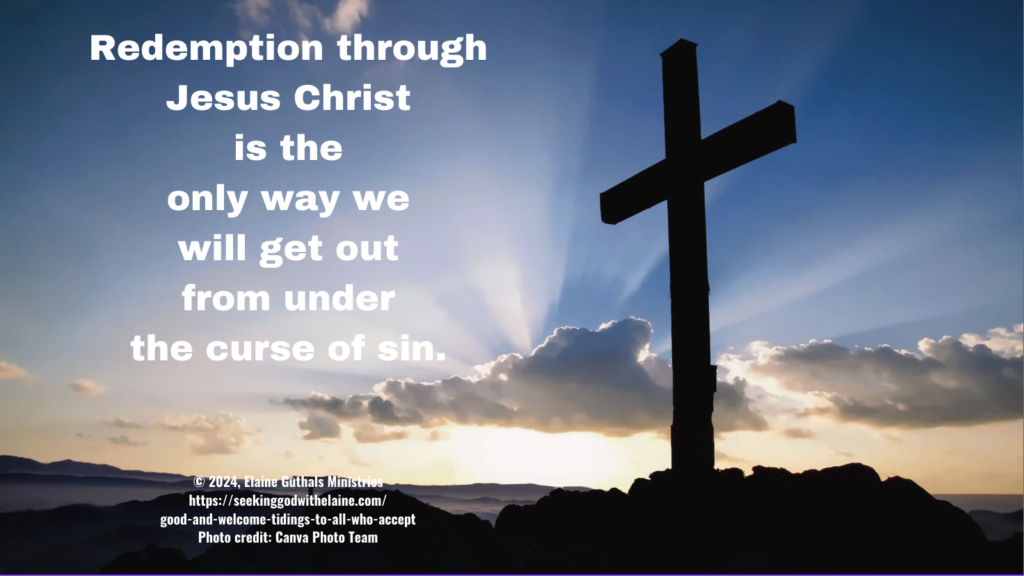
  • What Is Apostasy?

    The unregenerated world is full of apostasy. This devotional reading looks at what that means and what it means to the world.

    Nuggets

    • Disciples should have the opposite of apostasy in their hearts.
    • Disciples must guard against falling away from the faith because of apostasy.
    • Disciples can choose to rebel against God and commit apostasy.
    what-is-apostasy

    An unregenerated world is full of sin. But the worldview doesn’t see not being a Christian is not a “crime.” They don’t want any nor believe there should be any consequences for their having that belief.

    They are wrong.

    What that is called is apostasy. Apostasy means not believing in the state religion or not being a Christian.

    That is a big part of being an unregenerated world. Let’s dig in to see what Boston said about it.

    Let’s Put It into Context

    To read devotions in the On the Day of the Lord theme, click the button below.

    Devotions in the A World without God series

    The foundation of this series is Boston’s sermon The Unregenerate World Described.

    Resource

    Described

    “Take care, brothers, lest there be in any of you an evil, unbelieving heart, leading you to fall away from the living God” (Heb. 3: 12 ESV)

    Disciples should have the opposite of apostasy in their hearts.

    Okay, this verse threw me. I thought we were talking about the unregenerated world – aka non-believers.

    The writer of Hebrews is talking to his brothers – other children of God.

    It really doesn’t matter, though, does it? Apostasy is apostasy, whether we are believers or non-believers.

    Plain and simple, apostasy is rejection of the gospel. We recently looked at the verse that said that there is no God. “The fool says in his heart, ‘There is no God.’ They are corrupt, they do abominable deeds; there is none who does good” (Ps. 14: 1 ESV).

    You don’t think this applies to believers? Listen to what Cumming said. He wrote, “You are a Christian just in as far as the grace of God transforms your heart.”

    Resource

    Jamieson gave us some direction on what stops our transformation. He talked about sin, temptations, and influence.

    Resource

    The power of sin in our hearts is strong. It is our very nature.

    Satan knows exactly how to tempt us. He knows what we consider is shiny and appealing. That is exactly what he will throw before us — again and again and again.

    The influence of the world is also strong. It doesn’t want to change, and it doesn’t want us to follow God.

    Jesus’ teachings are counterculture. Regardless of how much we want to obey God, He is in the process of cutting our sin out of us.

    That puts us in a precarious position.

    If we compromise with the worldview, we aren’t in as far as the grace of God wants to transform us. Why? There is a big problem here.

    If we are compromising with the worldview, we aren’t exclusively following God. That is sin. That is apostasy.

    What they are doing is devaluing the gospel. We are being negligent in fulfilling our duties as disciples.

    We can’t think that God’s mercy will give us license to sin. We must

    Despair is also a form of apostasy. We are filled with despair when we are looking for justice instead of faith.

    In what are we to have faith? Jesus’ righteousness.

    Part of our apostasy is due to ignorance. Yes, the unregenerated world does not know what God is about or Who He is.

    Unfortunately, some disciples feel the same way. God told Pastor Steve a couple of years ago that the church is missing Jesus. Recently, He has been saying that it is because of ignorance and apathy.

    We don’t know, and we don’t care to know. Rather, we don’t know the truth, and we don’t care for the truth if it is different than what we believe.

    Oh, we are stubborn when we don’t want to give up our opinions.

    Unbelief does not mix with righteousness. Bottom line, it is disobedience to God.

    Disobedience is the love of sin. Sin comes from Satan, the prince of the unregenerated world.

    Why do disciples confess to believe in Jesus and then continue in disobedience? We think God should provide for us the way we want – and He doesn’t.

    We blame it all on God. He doesn’t answer prayers. He can’t do what He says.

    The issue is with our unregenerated hearts. We cannot change them ourselves. It is God Who just sanctify us.

    There are deadly consequences when we appear to be disciples have an outward form of godliness without the true inward transformation. When worldview people see disciples’ flawed confession, they may think God is willing to accept that.

    Jamieson called this deception a secret apostasy. We can’t have that.

    We have to make sure our witness brings people to God, not sets up barriers to a relationship with Him.

    Resource

    As disciples, we don’t want to fall back into sinful ways. We want our faith to truly be at the heart level.

    Oh, yeah. Disciples can practice apostasy. But the unregenerated world is full of it.

    Caused by Persecution

    “Then they will deliver you up to tribulation and put you to death, and you will be hated by all nations for my name’s sake. And then many will fall away and betray one another and hate one another” (Mt. 24: 9-10 ESV)

    Disciples must guard against falling away from the faith because of apostasy.

    Jesus warned us that, in the end times, many would fall away from the Church. They would become immersed once’s again in the unregenerated world.

    This will happen because of persecution. In other words, the unregenerated world is fighting back against God and His leadership.

    We lose faith because we think we shouldn’t have to endure persecution when we are disciples. We let our emotions take over and take our eyes off God.

    Face it, the unregenerated world doesn’t want God, so they especially don’t want His Church growing stronger.

    Tucker had an interesting term — speculative error. We think we know — but we don’t really know.

    Resource

    That is the state of many churches right now. They think we have interpreted God’s Word correctly, but too many times we interpret it the way we want it to read.

    This is a flat-out error. We are wrong.

    Dealing with the unregenerated world can cause us to lose our love for the worldview people.

    Yes, we are to love them — but not condone their sin. Yes, we are to love them — but not give up witnessing to them.

    More importantly, we aren’t supposed to be like them.

    It is like Paul correcting Peter. “But when I saw that their conduct was not in step with the truth of the gospel, I said to Cephas before them all, ‘If you, though a Jew, live like a Gentile and not like a Jew, how can you force the Gentiles to live like Jews?’” (Gal. 2: 14 ESV).

    How can we call worldview people to something better if we are like them?

    Unfortunately, there is a big pull to be like them. We don’t like being different, especially when that alienates us from others.

    It isn’t that we always want to be voted the most popular person. We just don’t want to be voted the most unpopular person.

    Kitchen made a good point. Early disciples were only tempted to fall back into the worldview mindset. They were tempted to fall back onto the Jewish mindset.

    Resource

    We know the Jews were expecting a military Messiah. They were probably really expecting this when the Temple fell in AD 70.

    But they had a speculative error.

    I bet it did feel like they were choosing the New Testament over the Old. And you know how we dislike change and confrontation!

    That is what we have to do. We have to choose the new creation over the old.

    • “And I will give you a new heart, and a new spirit I will put within you. And I will remove the heart of stone from your flesh and give you a heart of flesh” (Ezek 36: 26 ESV)
    • “Therefore, if anyone is in Christ, the new creation has come:[a] The old has gone, the new is here!” (II Cor. 5: 17 ESV).

    Since we are so good at speculative errors, it is easy to place blame on other causes. We say there is no way we can be totally pure and blameless. Isn’t that too much of an expectation anyway?

    Our duty is to endure in God’s doctrine. We are to follow Him.

    Caused by Worldliness

    “For Demas, in love with this present world, has deserted me and gone to Thessalonica. Crescens has gone to Galatia, Titus to Dalmatia” (II Tim. 4: 10 ESV)

    Disciples can choose to rebel against God and commit apostasy.

    Who is Demas, and why should we care?

    Demas wasn’t one of Paul’s inner circle like Barabbas, Silas, Luke, Timothy, and Titus. He was, however, with Paul when he wrote to Philemon and to the Colossians. He was mentioned by name in the list of greetings.

    • “Epaphras, my fellow prisoner in Christ Jesus, sends greetings to you, and so do Mark, Aristarchus, Demas, and Luke, my fellow workers” (Philemon 1: 23-24 ESV).
    • “Luke the beloved physician greets you, as does Demas” (Col. 4: 14 ESV).

    We don’t know anything more about Demas’ relationship with God. Knowing the Energizer Bunny for God, Paul was particular about who went with him on mission trips.

    • “Now Paul and his companions set sail from Paphos and came to Perga in Pamphylia. And John left them and returned to Jerusalem” (Ac. 13: 13 ESV).
    • “Now Barnabas wanted to take with them John called Mark. But Paul thought best not to take with them one who had withdrawn from them in Pamphylia and had not gone with them to the work” (Ac. 15: 37-38 ESV).

    The books of Philemon and Colossians were written anywhere between 57 AD and 62 AD. That means Demas was probably with Paul a minimum of seven or eight years.

    Demas had endured his share of persecution being with Paul. He was cowardly. He probably made a true confession of faith, or he wouldn’t have lasted that long. He made a conscious decision to stick with Paul.

    It wasn’t like Demas was lacking in opportunities of being fed. His teacher was Paul himself.

    In his letter to Timothy, Paul was willing to call Demas out for his backsliding. He had deserted Paul; but more importantly, he deserted God.

    Somewhere along the line, things changed. The outward appearance may have been in line, but the inward relationship wasn’t right.

    Apply it to today’s world, we may be a church member, but not right with God.

    We don’t want that to be with case if the end times are upon us!

    Crawford gave us an idea of Demas’ unfaithfulness. He wrote,

    “He refused to stand by the apostle in his hour of trial, withheld from him his former sympathy, withdrew from those Christian labours in which he had once been noted as a sharer with him, and shunned to be any longer seen in his society. He was not prepared to ‘endure hardness as a good soldier of Jesus Christ.’ That want or weakness of faith which he had hitherto concealed from others, and, probably, from himself also, could not be any longer disguised. That world which he had long loved secretly, without perhaps being aware of the strength of his attachment to it, he now openly clung to and embraced.”

    Resource

    I know. It is easy when we start reading that to interpret it as Demas’ beef was with Paul.

    We have some clues that Demas’ relationship wasn’t right with God.

    • He withdrew from Christian labors.
    • He wasn’t willing to endure the persecution for Christ’s name.
    • He secretly loved the world, but then turned to embrace it publicly.

    Christian labors may not be only going on mission trips and witnessing. We can stay home and witness.

    We are to labor by working out our salvation. “Therefore, my beloved, as you have always obeyed, so now, not only as in my presence but much more in my absence, work out your own salvation with fear and trembling, for it is God who works in you, both to will and to work for his good pleasure” (Phil. 2: 12-13 ESV).

    If we are okay with how our relationship is with God today and not willing to grow tomorrow, it isn’t as good of a relationship as we think.

    But let’s make sure we give Demas his due. Melville said that Demas had attended to Paul’s needs while he was in prison. He had worked with Paul up to the point that Paul is facing execution.

    Resource

    Bottom line is Demas loved the world more than he loved God. That isn’t a true profession of faith.

    But think of it this way. Demas had endured all the other persecutions. What was different from this one?

    Paul really was going to be executed this time. This was really the end.

    Demas was probably fearing for his own safety— and life. He just couldn’t stick.

    God’s Word tells us time and time for us to be aware. We are not to be of this world — we are not to put it over God. “Do not love the world or the things in the world. If anyone loves the world, the love of the Father is not in him. For all that is in the world — the desires of the flesh and the desires of the eyes and pride of life — is not from the Father but is from the world” (I Jn. 2: 15-16 ESV).

    Verrall helped show us how that could play out today. We were raised in a Christian home. We graduated from high school. We move off to college or to some city states away to secure a job.

    Resource

    We are on our own.

    No, it may not be a mission field like Paul’s. However, wherever we are, that is our mission field.

    How can we let the world in?

    • We don’t follow our beliefs — meaning we don’t follow our conscience.
    • We fall in with the wrong crowd.
    • We fill our time pursuing interests God would rather we didn’t.
    • We don’t worship God regularly.
    • We don’t submit our lives to Him anymore.

    Satan loves to bait the trap with this. He loves nothing more than having a disciple turn away from God.

    I know. Did Demas lose his salvation or did he never have it in the first place?

    It doesn’t matter. That is above our pay grade and is no concern of ours.

    What we have to be concerned about is our relationship with God. Is it where it is supposed to be?

    How Do We Apply This?

    • Know God’s Word and apply that knowledge to situations in our lives.
    • Look to God’s truth and believe in it.
    • Don’t be stubborn when it comes to God’s Word.
    • Don’t reject Jesus or any portion of God’s Word.
    • Hold on to God’s promises.
    • Rely in God in Christ.
    • Get belief in God to the heart level.
    • Don’t love the world more than God.
    • Don’t be afraid of suffering.
    • Don’t be prideful.
    • Watch for Satan’s influence in the world around us and guard our hearts so we aren’t deceived.
    • Examine ourselves to remove any unbelief in our hearts.
    • Grow in faith and knowledge so that we can be diligent in seeking God.
    • Ask God to open our hearts.
    • Guard our love for Christ.
    • Seek God and His true grace.
    • Practice what we preach.
    • Increase our love for God.
    • Deny ourselves and follow Him.
    • Become more humble.

    Resources

    Father God. We so want to be out of the clutches of sin. We no longer want to be its slaves. We want to be totally obedient to You. Help us to withstand temptation and be pure in Your eyes. Amen.

    What do you think?

    Leave me a comment below (about this or anything else) or head over to my Facebook group for some interactive discussion.

    If you don’t understand something and would like further clarification, please contact me.

    If you have not signed up for the email providing the link to the devotions and the newsletter, do so below.

    If God has used this devotion to speak with you, consider sharing it on social media.

  • Wickedness in an Unregenerated World

    Evil is called wicked in God’s Word. This devotional reading looks at how the slavery of sin causes bitterness.

    Nuggets

    • Sin in the unregenerated world is bitter and possessive.
    • Sin in the unregenerated world is slavery.
    • Sin in the unregenerated world occurs so frequently that it is habitual.
    wickedness-in-an-unregenerated-world

    Just as non-believers are identified in God’s Word by several terms, so is sin. It is called wickedness, death, a curse, and evil.

    Boston calls it wickedness. Let’s see what he has to say.

    Let’s Put It into Context

    To read devotions in the On the Day of the Lord theme, click the button below.

    Devotions in the A World without God series

    The foundation of this series is Boston’s sermon The Unregenerate World Described.

    Resource

    The headings are Boston’s words.

    The State of Sin and Wickedness

    “For I see that you are in the gall of bitterness and in the bond of iniquity” (Ac. 8: 23 ESV)

    Sin in the unregenerated world is bitter and possessive.

    We have to set up the event that was happening in Acts. There was a man named Simon, who was a magician in Samaria. He had amassed a great following. When Philip came to town, Simon believed in the message of the gospel.

    Peter and John were dispatched to pray over them so they could receive the Holy Spirit. Simon was dazzled by the power. He offered money in exchange for the power to call upon the Holy Spirit.

    Simon didn’t get it, did he? God’s power can’t be bought or sold. We don’t receive it so we can make a name for ourselves and create or increase a following for ourselves.

    Peter put Simon straight. His heart wasn’t right. It was still filled with sin and wickedness.

    Let’s break this down a second.

    Simon was a goat who thought he was a sheep. He had made what he thought was a profession of faith, but it wasn’t. “Not everyone who says to me, ‘Lord, Lord,’ will enter the kingdom of heaven, but the one who does the will of my Father who is in heaven” (Mt. 7: 21 ESV).

    Barnard listed three things that showed his confession was not genuine. He remained covetous, ambitious, and a hypocrite.

    Resource

    Covetousness is when we want something that belongs to someone else. Simon saw the power that Peter and John had and wanted it for himself.

    Maybe it was partly because he had previously had a following. He may have thought Peter and John were cutting into it. He wanted to be top dog. If he could add this ability to his arsenal, he probably felt his status would be restored.

    But that made Simon a hypocrite. He was giving a false appearance of submitting to God. He hadn’t gotten his confession down to the heart level.

    Nothing else matters if our heart is not right with God.

    But let’s make sure we understand gall of bitterness and bond of iniquity.

    Gall of Bitterness

    Think about it. Adam and Eve thought they were going to get a sweet bite. That bite turned bitter real fast.

    I know. We tend to focus on their devastation over their loss of relationship with God.

    But they had to have been disappointed that sin was not as it appeared to be. That would become part of human nature.

    The suffering didn’t stop with them. Down through the ages, the bitterness of sin has shown that its shiny appearance is a lie.

    We know Jesus suffered greatly during His life on earth. We know we are called to suffer along side Him.

    “Since therefore Christ suffered in the flesh, arm yourselves with the same way of thinking, for whoever has suffered in the flesh has ceased from sin, so as to live for the rest of the time in the flesh no longer for human passions but for the will of God” (InPet. 4: 1-2 ESV).

    • The “… same way of thinking …” part means we have to have the mind of Christ. Our attitude has to be right.
    • There is a correlation between our suffering and denouncement of the wickedness of the unregenerated world.
    • We have to give up our human passions and replace it with the desire to serve God.

    What we should never gloss over is that the hall of bitterness brings us to ruin. This is not always seen in physical ruin.

    It always presents itself in spiritual ruin. Before we gain salvation, we are spiritually dead. After conversion, though we may not lose our salvation, our relationship with Hod may be ruined and need rebuilding.

    Bond of Iniquity

    Sin has a stranglehold on this world. “The iniquities of the wicked ensnare him, and he is held fast in the cords of his sin (Prov. 5: 22 ESV).

    Burn nailed it. He wrote, “Sin is the servitude of the mind which it imprisons in the sphere of matter.

    Resource

    Sin — and faith, for that matter — starts in the mind. We make a conscious decision whether or not to give into our sin or to follow God’s Will.

    Sin completely corrupts our lives. “They have all turned aside; together they have become corrupt; there is none who does good, not even one” (Ps. 14: 3 ESV).

    Corrupted means godless. We said in a devotion a long time ago that sinners were practical atheists. I can see that.

    We sin because we don’t think there is a God to correct us. We don’t think He has sovereignty to reign over us.

    Under the Dominion and Reigning Power of Sin and Wickedness

    “But thanks be to God, that you who were once slaves of sin have become obedient from the heart to the standard of teaching to which you were committed” (Rom. 6: 17 ESV)

    Sin in the unregenerated world is slavery.

    One thing worldview people may not always realize is that, without God, we are obedient to sin. We serve either sin or righteousness. “Whoever is not with me is against me, and whoever does not gather with me scatters” (Mt. 12: 30 ESV).

    I love what Burn had to say. He wrote, “Sin’s code is the ten commandments with the ‘nots’ omitted; and the world swarms with men and women who yield the most constant and earnest obedience to each.”

    Resource

    Part of that is because it has control and power over us. Sin isn’t some weak sister that is just sitting off in the corner.

    The pull of sin is strong. God’s Word is clear that sin puts us in bondage. “Jesus answered them, ‘Truly, truly, I say to you, everyone who practices sin is a slave to sin’” (Jn. 8: 34 ESV).

    Another part is because we choose to let it have power and control over us. We choose whether we are branded by God or by Satan.

    Where does our obedience lie? That is the test.

    Obedience has to come from the heart.

    We think sin is easy and fulfilling, but it isn’t. “Good judgment wins favor, but the way of the unfaithful leads to their destruction” (Prov. 13: 15 ESV).

    Habitual Practice of Sin and Wickedness

    “The fool says in his heart, ‘There is no God.’ They are corrupt, they do abominable deeds; there is none who does good” (Ps. 14: 1 ESV).

    The unregenerated world’s denial of His existence and His sovereignty over their lives occurs so frequently that it is habitual.

    The Psalmist said that a fool refuses to acknowledge the existence of God. This makes them theoretical atheists.

    How can worldview people look at this intricate world and say there is no God? How can they deny the power needed to create such a place? How can they see its beauty and not see the Creator’s love for them?

    Don’t they know our intelligence needs to come from Someone with a higher intelligence? Don’t they realize that our intuitions and instincts had to be put there by Someone?

    If they can’t acknowledge that God is real, they can’t go any farther in their search for religion. They won’t realize that God is looking for a relationship rather than religion.

    God’s Word doesn’t set out to prove that God is real. We have to accept that from verse “In the beginning, God created the heavens and the earth” (Gen. 1: 1 ESV).

    We have to accept that God is self-existent — He was not created by someone or something else. Also, we have to accept He is all-knowing and all-powerful. Our acceptance is not complete unless we accept God is an infinitely perfect Being.

    A fool doesn’t do that.

    Some worldview people know there is a God but don’t care. They aren’t afraid that God, Who says He is a God of love, will judge them harshly. This makes them practical atheists.

    The sad part is that, while some sinners are theoretical atheists, we are all practical atheists. Practical atheism is worse than theoretical atheism. They acknowledge God’s existence but refuse to submit to Him.

    Tucker gave us some pretty good reasons why worldview people are practical atheists.

    • They don’t want to serve God because they can’t see or understand Him.
    • They don’t like God having power and jurisdiction over them.
    • They just don’t want to meet Him.

    Resource

    Even after we have earn salvation, we still have some practical atheism in us. Have we ever said we could do something without God? Or worse, have we said we were going to do something our way anyway?

    There are times when we turn away from God. We can still be hypocrites and liars at times. We’ll still set our eyes on this world.

    Satan will work on us to deny the gospel or get us to try to rewrite God’s laws. Maybe we disregard what we feel is threatening.

    We have to ask God’s forgiveness when we fall into that. Our hope should be to be sanctified to withstand this temptation.

    Townsend gave us a good description of how fool is used in God’s Word. He wrote, “The ‘fool’ in Scripture is the man who makes a wrong choice of good; who, when two objects are placed before him, one a lesser good and one a greater good, chooses the lesser in preference to the greater.”

    Resource

    “The fear of the Lord is the beginning of knowledge; fools despise wisdom and instruction” (Prov. 1: 7 ESV).

    Why would someone choose this temporary life over an eternal life? This is what they know and can’t envision anything else. They don’t want to envision anything else.

    The problem lies within the heart. “The heart is deceitful above all things, and desperately sick; who can understand it?” (Jer. 17: 9 ESV).

    What is in our heart signifies what is in our minds. It is the foundation of the judgments we make.

    Our souls are eternal and belong to God. That makes us temporary stewards of them in order to serve Him.

    Without the presence of God, our souls cannot be happy. Sin may give us an appearance of happiness, but it is only an illusion.

    God will not let this disobedience go on for eternity. He will end it. “I the Lord search the heart and test the mind, to give every man according to his ways, according to the fruit of his deeds” (Jer. 17: 10 ESV).

    The deciding factor of whether we spend eternity in Heaven or hell is wether we deny Him or not. The righteous Judge will judge us on established standards — those written in His Word.

    As we have taken God out of our schools and government, don’t we see how man’s moral condition has taken that same slide? Don’t we see as more and more churches flounder and close that chaos reigns in the world?

    And worldview people want to eliminate God all together.

    One day, they will be in such a place. Hell is hell because it doesn’t have the presence of God.

    They aren’t going to like it then.

    But, to me, that doesn’t really address the habitual.

    Let’s look at it this way. “The sacrifice of the wicked is an abomination to the Lord, but the prayer of the upright is acceptable to him” (Prov. 15: 8 ESV).

    Boston said the best thing we do is our sacrifices to God. We are to be a living sacrifice.

    But an unregenerated world offers unapproved sacrifices and not to God. The kicker is that fools don’t even know it. “Guard your steps when you go to the house of God. To draw near to listen is better than to offer the sacrifice of fools, for they do not know that they are doing evil” (Ecc. 5: 1 ESV).

    Part of that is because it has become habit.

    No, they probably don’t see it as sacrifice, because then they would see it as worship. They don’t do that.

    They just see it as their ways. “He who slaughters an ox is like one who kills a man; he who sacrifices a lamb, like one who breaks a dog’s neck; he who presents a grain offering, like one who offers pig’s blood; he who makes a memorial offering of frankincense, like one who blesses an idol. These have chosen their own ways, and their soul delights in their abominations” (Isa. 66: 3 ESV emphasis added).

    Okay. That is kind of a convoluted statement.

    Macculloch interpreted it for us. Sacrifices — offered the wrong way — were being accompanied by crimes. The biggest ding was they weren’t being offered with pure hearts. They compromised with the worldview and incorporated some of their ceremonies and superstitions into their worship.

    Resource

    Yeah, Isaiah was taking about Israel. I am sure not all worshiped God as they should any more than disciples do.

    How much worse for those not believing in God!

    Making the Connections #1

    How do we get obedience to the heart level? Well, it’s a process.

    The process is called sanctification. It is where we are changed to become more like God.

    Rainsford helped us figure this out. He wrote, “The gospel is not only a directing power, but a transforming influence; you cannot believe it without being moulded by it.”

    Resource

    This isn’t a flip-the-switch download. It is more a timely change.

    You know, like the potter with clay. “But now, O Lord, you are our Father; we are the clay, and you are our potter; we are all the work of your hand” (Isa. 64: 8 ESV).

    You don’t just plop the clay on the potter’s wheel, and poof, it’s a pitcher.

    It was a process of being taught. That takes time.

    Making the Connections #2

    We are known to be disciples by the fruit we bear. “A healthy tree cannot bear bad fruit, nor can a diseased tree bear good fruit” (Mt. 7: 18 ESV).

    The fruit we are to bear is the fruit of the Spirit. “But the fruit of the Spirit is love, joy, peace, patience, kindness, goodness, faithfulness, gentleness, self-control; against such things there is no law” (Gal. 5: 22-23 ESV).

    Yes, these morals make us good people. But God isn’t interested in just that.

    These are rewards for being obedient disciples. More importantly, these are the attributes of God, those we are to imitate.

    How Do We Apply This?

    • Be knowledgeable about God, His Will, and His Word.
    • Watch the company we keep.
    • Watch what we allow into our lives through where we go and what we read.
    • Prefer the future life to the present.
    • Be in awe of Sovereign God, our Creator.
    • Pray for God’s power to deliver us from any atheism still contained in our hearts.
    • Resist any atheistic thoughts Satan puts in our minds.
    • Don’t indulge in secret sins.
    • Set our minds in God.

    Resources

    Father God. We thank You that You designed the Plan of Salvation so that the chains of bondage of sin can be broken. Our souls want to be with You for eternity. Amen.

    What do you think?

    Leave me a comment below (about this or anything else) or head over to my Facebook group for some interactive discussion.

    If you don’t understand something and would like further clarification, please contact me.

    If you have not signed up for the email providing the link to the devotions and the newsletter, do so below.

    If God has used this devotion to speak with you, consider sharing it on social media.

  • How the Unregenerated World Is Wicked

    An unregenerated world does not have God, making it wicked. This devotional reading looks at how it is bound by sin and disobedience.

    Nuggets

    • The unregenerated world is bound by sin.
    • The unregenerated world, in many ways, is ignorant of its sin.
    • The unregenerated world is dead to God’s saving grace because of disobedience.
    how-the-unregenerated-world-is-wicked

    An unregenerated world is a hopeless case. Boston said that it shows in three ways.

    Let’s dive in.

    Let’s Put It into Context

    To read devotions in the On the Day of the Lord theme, click the button below.

    Devotions in the A World without God series

    The foundation of this series is Boston’s sermon The Unregenerate World Described.

    Resource

    Bound in It

    “The Spirit of the Lord God is upon me, because the Lord has anointed me to bring good news to the poor; he has sent me to bind up the brokenhearted (Isa. 61: 1 ESV)

    The unregenerated world is bound by sin.

    I know. We just said that an unregenerated world is hopeless.

    Isaiah wrote that there is hope, so we will have to look at this as from what they are being released.

    A poor person can be someone who is weary. “The Lord GOD has given me the tongue of those who are taught, that I may know how to sustain with a word him who is weary. Morning by morning he awakens; he awakens my ear to hear as those who are taught” (Isa. 50: 4 ESV).

    This weariness can feel like an emptiness.

    A poor person is someone who is in despair. “a bruised reed he will not break, and a faintly burning wick he will not quench; he will faithfully bring forth justice” (Isa. 42: 3 ESV).

    They are sinful, and this sinfulness causes misery. This is the hopelessness in full force. Everything is crashing down on them.

    The worst part is they don’t see a way out. They can’t help themselves, no matter how hard they try.

    A poor person is someone who is in the darkness of prison. “to open the eyes that are blind, to bring out the prisoners from the dungeon, from the prison those who sit in darkness” (Isa. 42: 7 ESV).

    Most of all, a poor person is someone who is unrighteous. They feel so unworthy.

    But Jesus said, “Blessed are the poor in spirit, for theirs is the kingdom of heaven” (Mt. 5: 3 ESV).

    That is the hope the unregenerated world has. Through Jesus, we can become righteous by gaining His righteousness.

    Sin makes us feel guilty because we are breaking God’s laws.

    The purpose of God’s laws is to show us the need of a Savior when we don’t follow them. Sin is the exact opposite of those laws.

    Unfortunately for the unregenerated world, sin can deaden our guilt.

    Probably worse yet, it is hard to shake off the guilt. This is especially true when we backslide.

    We’ve said in a previous devotion that the purpose of the law was to show that we needed a Savior. When we see that the law can’t save us, it feels like we are crushed by a hammer.

    We have to be broken in the knowledge that we are oppressed by sin. That is the only way in which we can turn to Christ.

    Asleep in It

    “But when anything is exposed by the light, it becomes visible, for anything that becomes visible is light. Therefore it says, ‘Awake, O sleeper, and arise from the dead, and Christ will shine on you’” (Eph. 5: 13-14 ESV)

    The unregenerated world, in many ways, is ignorant of its sin.

    Death is referred to, at times in God’s Word, as sleep. Yes, there are some similarities but also some differences.

    Really, being asleep to our sin is being ignorant to it.

    Lathrop gave us a good list of what spiritual sleep looks like. He wrote, “

    1. “If you allow yourself in the practice of known wickedness, your conscience is asleep.
    2. “If you live in the customary neglect of self-examination, you are in a state of slumber.
    3. “If you have never been in any degree affected with a sense of your guilt, and of your dependence on the mercy of God in Christ, you are among those who are asleep.
    4. “If you have no conflicts with sin and temptation, you are in a state of slumber.
    5. “The prevalence of a sensual and carnal disposition is a sign of spiritual death.”

    Resource

    Luckily for us, while spiritual sleep isn’t a healing sleep, it can be temporary. That is why the verse says awake. We can choose to wake up from our spiritual sleep and submit our lives to God.

    That is called ABCDing. We change from being spiritually dead to spiritually alive.

    The ABCDs of Salvation

    If you have not become a believer in Christ, please read through the
    Plan of Salvation and prayerfully consider what God is asking you to do.

    A – admit our sins
    B – believe His Son Jesus is our Redeemer
    C – confess God as Sovereign Lord

    D – demonstrate that commitment by making any changes needed in our lives to live the way in which God has called us

    The Disciple’s Job Description

    Ooo, baby. We don’t like to examine ourselves. We don’t want to say something is wrong with us.

    But God wants to make sure things are right with Him.

    Satan doesn’t go after us if we aren’t following God. He already has us right where he wants us. We are living in a life that gratifies our physical nature.

    You know, I’ve always said that if we aren’t spiritually alive, we are spiritually dead. While that is true, it doesn’t allow for us to choose God.

    We are only totally spiritually dead when we are physically dead, or we have refused to come to Him while He is near. “Seek the Lord while he may be found; call upon him while he is near” (Isa. 55: 6 ESV).

    Maybe we are spiritually asleep when we are physically alive, and spiritually dead when we are physically dead.

    The problem is worldview people can’t see that they are spiritually asleep. Spurgeon had a good discussion on that. We aren’t spiritually asleep if we know we are spiritually dead, let alone spiritually asleep.

    I know. The unregenerated world doesn’t think that they are innately bad. It would be wrong.

    When we think being a good person is what God wants, we don’t know we are spiritually asleep. We may even be trying to get others to live a good life.

    But it isn’t our physical actions that God wants. It is our spiritual obedience.

    Spurgeon is right — we do a lot of things in our sleep. We walk and talk. I grew up screaming in my sleep — still do.

    What saddens me is when Spurgeon said we purposefully try to prevent Jesus from awakening us. We make a conscious decision to remain spiritually asleep, therefore spiritually dead.

    We only gain salvation through Jesus. God is the One to call us to salvation. “And there is salvation in no one else, for there is no other name under heaven given among men by which we must be saved” (Ac. 4: 12 ESV).

    But an unregenerated world pushes Jesus away. They refuse to acknowledge God’s sovereignty.

    In other words, we are good with our spiritual condition and don’t want to fight, as Spurgeon wrote, “… the chloroform of bad doctrine.”

    Resource

    We think the reasons are valid. Sin is shiny and fulfilling. It bolsters our pride. We are just following our hopes and desires.

    Wrong reasons all around. They lead to an eternity of torment.

    Jesus offers us love. He personally comes to offer us hope.

    Our greatest hope through Jesus is that, on the Day of the Lord, we will found to be faithful and get to spend eternity with Him.

    Dead in It

    “And you were dead in the trespasses and sins in which you once walked, following the course of this world, following the prince of the power of the air, the spirit that is now at work in the sons of disobedience — among whom we all once lived in the passions of our flesh, carrying out the desires of the body and the mind, and were by nature children of wrath, like the rest of mankind” (Eph. 2: 1-3 ESV)

    The unregenerated world is dead to God’s saving grace because of disobedience.

    Spiritually asleep/spiritually dead. Whatever state we want to call ourselves while we are alive without Christ, the foundation is the same.

    Physical death is the absence of life. Spiritual death is the absence of God.

    Darkness

    An unregenerated world is languishing in the darkness of sin. This is our natural state when we do not have Jesus in our lives as our Savior and Redeemer. “Again Jesus spoke to them, saying, “I am the light of the world. Whoever follows me will not walk in darkness, but will have the light of life’” (Jn. 8: 12 ESV).

    Since Jesus is the light, darkness is the absence of Jesus. This is another way of saying we are spiritually dead without the life-giving presence of Christ.

    Satan is a powerful adversary. He blinds us to the Light. “In their case the god of this world has blinded the minds of the unbelievers, to keep them from seeing the light of the gospel of the glory of Christ, who is the image of God” (II Cor. 4: 4 ESV).

    The darkness doesn’t destroy the light. Instead, Satan makes us turn away from God. He wrecks our witness.

    Darkness and being spiritually dead is our natural state because, without Jesus in our lives, we have already been condemned. “Whoever believes in him is not condemned, but whoever does not believe is condemned already, because he has not believed in the name of the only Son of God” (Jn. 3: 18 ESV).

    We are spiritually dead because we are condemned. We have been since the original sin.

    Glossary

    But don’t blame it solely on Adam and Eve. Yes, they may have sinned first, but we continue to sin. We are not totally pure.

    Death

    I know. The unregenerated world asks how it can be dead when it is living and functioning.

    Their bodies are alive. Their souls are dead.

    It is all about, as Mackenzie said, spiritual perception, understanding, desires, spiritual strength, and enjoyment. We must look at all of those through God’s viewpoint, not our own.

    Resource

    A dead spiritual soul is totally corrupt. In a previous devotion, we said this put it under the curse of God.

    There is a big reminder that we have to keep in mind. We can’t resurrect ourselves. Nope, there are no number of self-help programs that will fix the separation from God.

    The separation was all about us and our disobedience. Salvation is all about God and His grace.

    In fact, once dead, there won’t be a resuscitation.

    True, God raised Jesus from the dead. Jesus raised Lazarus. The prophets and apostles did, too. That was physical.

    This isn’t going to happen to the spiritually dead. Dead is dead in this case.

    God isn’t going to turn to Jesus and say, “You know, I told You that the only way to salvation was through their accepting Your death as payment. If they didn’t, they would be sent to hell. I can’t do it.”

    God will not change the Plan of Salvation at the last minute because He has a tender heart or because He sees some redeeming quality in us.

    The wrath of God will be poured out on all those who have not accepted His Son as their Savior and lived a life of obedience to His laws and commandments.

    Once we are physically dead, our location for eternity is set in stone. There won’t be any do-overs, no last-minute Hail Mary’s to finally reach the end zone of Heaven – nothing.

    The cause of death is unbelief.

    But our statements of belief have to be genuine. We have to walk the walk as well as talk the talk.

    If we say we love God yet willfully break His commandments, we need to take a good, hard look at what we really believe.

    If we are willfully breaking God’s laws and commandments, we are still under the influence of Satan. Yes, it will be hard to break free of his influence, but we have to be serving God, not Satan.

    Sibbes had an interesting comment on spiritual death. He wrote, “We are dead in law as well as in disposition. This death in law is called guilt, a binding over to eternal death.”

    Resource

    Let’s unpack that. The law shows us the character of God – His disposition. We don’t have it. Once we receive regeneration and become a new creation, we start on the Sanctification Road to get it.

    The Jews thought they could get it by obeying the law. However, the law won’t save us. Its purpose was to show us our need of the Savior. Until we accept the Savior, we are spiritually asleep.

    Sibbes had another great nugget. In Elaine-speak, sin is a cause of death, but it is not the only one.

    It is an inherent one.  Some of the synonyms are very descriptive: essential, integral, innate, natural, and fundamental.

    Why are all of these overarching words used? Because the root is the separation from God.

    God withdrew from mankind when Adam and Eve sinned. He no longer came to visit them as He did in the Garden of Eden (Gen. 3: 8). He not only withdrew physically, but He also withdrew from our souls.

    Once a vacuum was created, sin rushed to fill the hole. Sin is disease and death.

    That withdrawal remains until we commit to being obedient to God because the hole remains until we take actions to restore the relationship.

    Yes, God was probably walking in the Garden so Adam and Eve could worship Him. Most of all, He wanted to spend time with them and love on them.

    If God turned His back on His love for us, we would not be spiritually asleep. We would truly be spiritually dead with no avenue to wake up.

    Thanks be to God that He didn’t choose that route. He designed the Plan of Salvation so that our relationships with Him may be restored.

    Making the Connections #1

    We are so bound by sin that we become brokenhearted. But that is a good thing.

    “The sacrifices of God are a broken spirit; a broken and contrite heart, O God, you will not despise” (Ps. 51: 17 ESV).

    We can only come to God when we are brokenhearted. It is only then that we show remorse for our sins.

    It is then that we humbly come to Him, asking for forgiveness.

    It has to be a total, aching heart. We have to “’… rend your hearts and not your garments.” Return to the LORD your God, for he is gracious and merciful, slow to anger, and abounding in steadfast love; and he relents over disaster” (Joel 2: 13 ESV).

    Doing that is the only hope an unregenerated world has.

    Making the Connections #2

    We can awake from our sinfulness. It isn’t an impossible feat.

    It is only impossible when we try to do it ourselves our way. Only God, Jesus, and the Holy Spirit can wake us up from sin.

    God isn’t going to call us to wakefulness, and then go play hide and seek while we are waking up. He will be there from the beginning to eternity.

    How Do We Apply This?

    • Acknowledge the conviction of our sins and repent by ABCDing.
    • Walk in the Spirit and live holy lives.
    • Enjoy our relationship with God.
    • Never forget that we are only saved by grace.
    • Thank God for His mercy.

    Resources

    Father God. Without You, this world is wicked. We need You. Thank You for designing the Plan of Salvation to restore us to You. Amen.

    What do you think?

    Leave me a comment below (about this or anything else) or head over to my Facebook group for some interactive discussion.

    If you don’t understand something and would like further clarification, please contact me.

    If you have not signed up for the email providing the link to the devotions and the newsletter, do so below.

    If God has used this devotion to speak with you, consider sharing it on social media.