Blog

  • Herald Was A Little Off Kilter

    Have you ever been a little off kilter during the Christmas season? Sometimes, it is hard to participate in holiday activities when God has been silent, and we are depressed. This devotion reminds us that God is always with us.

    Nuggets

    • The whole time between the Old Testament and the New Testament, God was silent.
    • The Israelites had to have been depressed by the end of 400 years of silence.
    • God finds us where we are – even if we are depressed and want to cancel Christmas.
    • God may be silent — but He is there with us.
    Flowers with title Herald Was a Little Off Kilter

    Herald was a little off kilter. Yes, he was setting on top of the Christmas tree where he should be. (Yes, I named my tree topper. Oh, yes, I am really good at naming things.)

    To me, he looked like the Leaning Angel of Pisa.

    It probably wouldn’t have been such a big deal to me if I hadn’t decided to put Gloria on top of the tree.

    Don’t get me wrong. Herald is a nice angel. His traditional look really set off the nine-foot Christmas tree we had in the conservatory. He looked regal, like an angel should. He belonged on the nine-foot tree.

    Gloria was always on the six-foot tree in the parlor. Gloria has a simple elegance that seemed much more approachable. (Approach a Christmas decoration — work with me here.)

    But the days of the conservatory and parlor were long gone. This was my third residence since moving out of the house. It was already Cockroach Alley. It was considerably smaller, so there was only one skinnier six-foot tree.

    To me, Herald didn’t fit.

    See, part of the problem was that I hadn’t gotten the garage arranged since we moved. I didn’t know where anything was. I only got the right ornaments because I found the box that said, “Christmas ornaments — start here.”

    I had it in my mind how the tree should look. I couldn’t wait to put the lights on and all my pretty ornaments. Gloria would just top it off.

    Oh, well. I didn’t find the box with the lights. I couldn’t have plugged them in anyway since there was no accessible, available outlet. That really let Gloria out — even if I could have found her — because you have to plug her into the light strands.

    But off-kilter Herald, no Gloria, and no lights wasn’t the problem. I was the problem.

    I was off kilter.

    My problem was I wasn’t looking forward to Christmas. I wasn’t looking forward to cooking the meal. I wasn’t looking forward to buying the presents. I didn’t think I was fit to be around company — even family company.

    Then the first mouse showed up in my stove the day before our Christmas dinner. All I could think of was we were going to have roast mouse with our turkey.

    This was all at the tail end of my spiritual tornado. I wasn’t where I had planned to be nor wanted to be.

    I was having trouble finding my fit.

    I was ready to cancel Christmas. It was in a barren time where, even though I knew God was sustaining me, I was depressed. I was wondering if God hadn’t decided to take a hiatus after all.

    I wonder if the Israelites were feeling as unsettled as I was when God did give them the silent treatment.

    How Did the Israelites Feel?

    “He will lead children and parents to love each other more, so that when I come, I won’t bring destruction to the land” (Mal. 4: 6 CEV)

    The whole time between the Old Testament and the New Testament, God was silent. Not a word.

    It had been a long time since Malachi had quit preaching. Somewhere around four hundred years, in fact.

    Malachi’s final message was a mixed bag. He had been preaching about the coming of the Messiah. “‘But for you who fear my name, the Sun of Righteousness will rise with healing in his wings. And you will go free, leaping with joy like calves let out to pasture. On the day when I act, you will tread upon the wicked as if they were dust under your feet,’ says the Lord of Heaven’s Armies” (Mal. 4: 2-3 NLT).

    Oh, we can get on that bandwagon. We like when someone swoops in and saves the day. That is especially so when we don’t want to get out of bed, don’t want to complete the project at hand, or don’t want to do what we are supposed to do.

    And the death to the enemy part? Well, we aren’t as blood thirsty as they were back them, but we like when our enemies get what is coming to them.

    But Malachi was also preaching about judgment day. “The Lord of Heaven’s Armies says, ‘The day of judgment is coming, burning like a furnace. On that day the arrogant and the wicked will be burned up like straw. They will be consumed — roots, branches, and all’” (Mal. 4: 1 NLT).

    Hmmm. Probably another verse some used to think Israel would get a military Messiah.

    To read a related devotion, click the button below.

    Making the Connections

    The Israelites had to have been depressed by the end of 400 years of silence. They did believe there was a God.

    My Ladies and I were talking this morning that, for all their grumbling, complaining, and disobedience, the Israelites always taught their children about how God had provided for them.

    We also mentioned that God finds us where we are. Even if we are depressed and want to cancel Christmas, God is there.

    Oh, God may be silent — but He is there with us. He will never leave us (Deut. 31: 8).

    Look what they got — the Messiah. The silence was followed by the best gift of all.

    The Israelites would have been depressed if they realized Jesus wasn’t the Messiah they were expecting. They could hear the sound of someone swooping in keep going on past them. Don’t we hate it when we get our hopes up about something just to have them dashed?

    The Israelites — and we — got the Messiah we needed. We got a Savior that was concerned for our spiritual health, not our physical health. We got a Savior Who will love us for eternity.

    Church

    How Do We Apply This?

    Christmas is supposed to be a joyous time. However, for many it isn’t. They may be going through a major life change and are just having trouble adulting at the moment.

    Be there for them. Keep your motor mouth zipped, and listen to them. Well, you can unzip your mouth long enough to ask them a specific thing you can do for them. Don’t just assume you know what they want you to do for them.

    People may be going through the silent portion of their walk during the Christmas season. This may mean they are feeling lonely and abandoned by God.

    Encourage them. Walk with them. Show them they are not alone. Keep reminding them God will never leave them.

    On a side note, some who are experiencing difficulties this Christmas season may be children with special needs. On good days, lights and noise can set them off. Multiply that by the Christmas factor (more lights, more people hence more noise, all the jingle things ringing and singing on every street corner and aisle, short tempers, normally sane people acting insane …). That offers the opportunity for a meltdown.

    Herald was off kilter. I was off kilter. You may be off kilter or know someone who is.

    God is always with us, and He keeps His promises. He did one night long ago in Bethlehem — after a long silence. He sent His Only Son to die for us so that we may live.

    Father. You love us so much. Forgive us when we focus more on us than You. Help us to walk on the straight and narrow path You have devised for us. Help us to shake off any fingers of depression so that we may praise You name. Amen.

    What do you think?

    Leave me a comment below (about this or anything else) or head over to my Facebook group for some interactive discussion.

    If you don’t understand something and would like further clarification, please contact me.

    If you have not signed up for the email daily or weekly providing the link to the devotions and the newsletter, do so below.

    If God has used this devotion to speak with you, consider sharing it on social media.

  • No Christmas Peace

    Why does it seem that there is no peace in Christmas? It seems like our holidays are filled with anything but. This devotion looks at how Jesus is the Prince of Peace.

    Nuggets

    • The peace that is supposed to be associated with Christmas is with Jesus.
    • Jesus as Prince of Peace is exactly what they needed — and we need.
    • Jesus’ definition meant reconciliation with God.
    • Jesus is the only one God found worthy.
    • Jesus restored our relationship with God, reinstating His peace in us.
    • Jesus is still working for us.
    Flowers with the title No Christmas Peace

    Best laid plans of mice and men. Have things just not gone the way you planned? That seems to happen a lot during Christmas time, doesn’t it? It seems Christmas is filled with chaos. And it gets worse every year.

    We find a lot of activities to cram into our already-packed schedules. That really takes away our peace.

    Decorations can eat up a lot of time. So many things can go wrong when putting the tree up. The only Christmas we lived in Cockroach Alley, we realized we couldn’t put on lights on the tree because there was no place to plug them in — unless I had extension cords (yes, plural).

    What is a Christmas tree without lights? Mine had pretty gold beads.

    Cooking can be time consuming. We not only have the Christmas dinner to plan for, we have all the potlucks to which we have to take a dish. That doesn’t include if we do other entertaining.

    And cookies. Gotta have cookies.

    Kids activities increase scheduled events. There are recitals, band concerts, plays … a whole variety of places the family has to be.

    Adult activities also pack on the dates. How many people have annual Christmas parties at their houses? We tend to want to reconnect with people during the holidays.

    Where is the peace that is supposed to be associated with Christmas? It is with Jesus.

    Prince of Peace

    “For to us a child is born, to us a son is given, and the government will be on his shoulders. And he will be called Wonderful Counselor, Mighty God, Everlasting Father, Prince of Peace” (Isa. 9: 6 NIV)

    Look at Isaiah 9: 6. Princes, in those days, were expected to be warriors. But Jesus was to be the Prince of Peace.

    How could a baby be a warrior?

    Besides, it seems like the Israelites of that day had something in common with us today. They wanted their prayer for a Messiah answered today — if not yesterday. They didn’t want to have to wait 30 years for this Kid to grow up.

    But Jesus as Prince of Peace is exactly what they needed — and we need. Let’s take a look.

    What Peace Are We Talking About?

    To the Hebrews, peace meant “notions of totality or completeness, success, fulfillment, wholeness, [and] harmony.” Hmmm. We can get behind that definition.

    Jesus had a totally different definition. His definition meant reconciliation with God. It meant peace with our neighbors (Mk. 12: 31) and enemies (Lk. 6: 27) — and ourselves.

    In other words, love everyone.

    We talked unity and peace when we walked through Ephesians. Unity is peaceful. Jesus has broken down divisions that destroy the unity. His sacrifice has created a way that Jews and Gentile — everyone — have become one — children of God. In that way, hate is replaced by love.

    To read a related devotion, click the button below.

    We’ve talked about how hard it is to love ourselves. That is another thing we can blame on the results of sin. Before sin entered the world, we were comfortable in our own skin. Adam and Eve probably didn’t give a thought to what they looked like.

    To read a related devotion, click the appropriate button below.

    Now, most people are obsessed with what they look like. If not to the level of obsession, they don’t like how they look.

    But our peace is also wrecked because we are seemingly always at odds with our conscience. We can bite on ourselves for what we do or don’t do — especially when we don’t do God’s do’s or do His don’ts.

    If we don’t have peace with ourselves, how can we expect peace with everyone else?

    Man

    Jesus’ Qualifications

    We can have peace because we put our faith and trust in the Prince of Peace. He is more than qualified for that position.

    Jesus is the only one God found worthy. “For there is one God and one mediator between God and humanity, the man Christ Jesus” (I Tim. 2: 5 CSB). We know that because “…He is able to open the scroll and its seven seals” (Rev. 5: 5 NIV).

    Because Jesus is the only One worthy, God has given Him a place of honor. “Stephen, full of the Holy Spirit, gazed into heaven. He saw the glory of God, and Jesus standing at the right hand of God” (Ac. 7: 55 CSB).

    What made Jesus worthy? He submitted to God’s Will — even though it hurt and was humiliating — in order to secure our pardon.

    Yes, His peace had to have been shaken. And anyone else would have lashed out at the people putting them through that.

    But Jesus didn’t. He endured. Why? Us. Propitiation. Atonement.

    To read a related devotion, click on the appropriate button below.

    Jesus even endured at the hands of His friends. One betrayed Him. One denied Him. All of them ran away when His human part needed them.

    Don’t mistake Jesus’ meekness for weakness. That, He is not. Yes, He chooses the peaceful route. We’ll see Jesus the Warrior some day.

    Jesus Rocked His Job Here on Earth

    Oh, Jesus fulfilled God’s plan of salvation. Jesus was born of a virgin, making Him 100% God and 100% man. He gave His life on the cross for us so that His blood could pay the price for our sins. Because of God’s great might and power, He rose from the grave, conquering death and paying the price for our sins.

    Nailed it.

    Jesus restored our relationship with God, reinstating His peace in us.

    Mission accomplished.

    Jesus

    Jesus Is Still Slaying His Job

    Yep, Jesus is up there right beside God (Ac. 7: 55). I bet He is leaning over, whispering in God’s ear.

    “See, Tom down there. I think just a little more prompting by the Spirit, and he will turn his life over to You. Poor Sally. Look how depressed she is. She needs a blast of Your peace. Did You see how Elaine stood up to Satan, telling him she wasn’t going to deny You? They are — and I want them to be — Mine. You promised ‘no one can snatch them out of [Your] hand’ (Jn. 10: 29 NIV).”

    What? You don’t think He is? But the Bible tells us “… for Christ Jesus died for us and was raised to life for us, and he is sitting in the place of honor at God’s right hand, pleading for us” (Rom. 8: 34 NLT).

    Jesus is still working for us.

    Making the Connections

    It is easy to think someone besides Jesus is the author of the peace. I mean, when He was born, Rome was at peace. Being the ruler of the world at that time, if they were at peace, so was everyone else.

    Jesus didn’t wreck that peace. There was no bloody coup. Yep, the Israelites wanted one because they wanted a military Messiah.

    To read a related devotion, click the button below.

    Who would Jesus have fought? The Pharisees? The Sadducees?

    We aren’t going to find peace in the tree, the snow, the parties. We are going to find it in Jesus.

    I think Adam said it best.

    “The Christmas season may be chaotic, but that too is part of God’s plan. My favorite part of Christmas is when, in the middle of the chaos, God gives us a moment of calm, and we perceive the peace and joy that Jesus brought to us two thousand years ago.”

    Christmas Ornaments

    With Jesus in our hearts, we should have peace. “Therefore, since we have been justified by faith, we have peace with God through our Lord Jesus Christ” (Rom. 5: 1 ESV).

    Jesus not only brought peace with Him, but He also left it here. “Peace I leave with you; my peace I give to you. Not as the world gives do I give to you. Let not your hearts be troubled, neither let them be afraid” (John 14: 27 ESV).

    How Do We Apply This?

    Sometimes, though, it is really hard to do what Philippians 4: 6-7 tells us to do. It says, “Do not be anxious about anything, but in everything by prayer and supplication with thanksgiving let your requests be made known to God. And the peace of God, which surpasses all understanding, will guard your hearts and your minds in Christ Jesus” (ESV).

    We get caught up on the hustle and bustle of the holidays, and the anxiety starts. How are we going to fit everything in? How are we going to pay for all of this? Is our family going to get along this time?

    We don’t access the peace that is there to calm us. That peace is for the Christmas season and for every day of our lives. “And let the peace of Christ rule in your hearts, to which indeed you were called in one body. And be thankful” (Col. 3: 15 ESV).

    Do you think we sometimes lose the peace because we lose the thankfulness? Do those two sorta go hand in hand? When we are thankful for what we have and where we are at, doesn’t that increase our peace? Doesn’t that make us more joyful?

    So, when our plans go up in smoke when we are hanging the stockings at the fireplace, take a deep breath. A little baby brought us peace. Dial into that peace and joy. Go on with His plans.

    Loving God. We get so caught up in our daily lives and our plans. We let the worries of this world steal our peace. You have graciously given us a peace that passes our understanding (Phil. 4: 7). Help us to put aside the hustle and bustle of this world. Help us to focus on the Baby in the manger. May we always seek Your plans and accomplish those. Amen.

    What do you think?

    Leave me a comment below (about this or anything else) or head over to my Facebook group for some interactive discussion.

    If you don’t understand something and would like further clarification, please contact me.

    If you have not signed up for the daily or weekly email providing the link to the devotions and the newsletter, do so below.

    If God has used this devotion to speak with you, consider sharing it on social media.

  • Why Is the Feast of Tabernacles Important to Us?

    Nuggets

    • The Feast of Tabernacles was to be a celebration.
    • And we are still celebrating the Festival of Tabernacles in heaven.
    • Refusing to worship God has consequences.
    Flowers with title Why Is the Feast of Tabernacles Important to Us?

    There were several festivals mentioned in the Bible. Are they all past history? This devotion looks at the Feast of Tabernacles and why it is important.

    Let’s Put It into Context

    “The Lord said to Moses, ‘Say to the Israelites: ‘On the fifteenth day of the seventh month the Lord’s Festival of Tabernacles begins, and it lasts for seven days’’” (Lev. 23: 33-34 NIV)

    The Feast of Tabernacles was to be a celebration. Grout described it as “a protracted religious meeting.”

    It happened five days after the Day of Atonement (Num. 29: 12) and lasted for seven days (Lev. 23: 34). The purpose of the festival was to remind the Israelites of their deliverance: from Egypt and from sin.

    It also reminded them from where they came. They had been slaves in Egypt — and now they were landowners. To get there, they had to go through a lot.

    There was three components to the festival. It was a remembrance of the years of wondering in the wilderness. Yes, they had a lot to remember. God always wants us to remember how he has provided for us.

    One of the things God provided was His presence. We talked recently about the tabernacle where He lived among them and the pillar that led the wanderers.

    To read a related devotion, click the button below.

    The festival was timed after the gathering of the crops. This, too, showed how God continued to provide for them.

    Because of God’s provision, the Israelites were to make the daily sacrifices. Oh, man — were they supposed to sacrifice! Over the eight days, here are the totals:

    Bulls – 71
    Rams – 15
    Lambs – 105
    Goats – 8
    Grain – 696+ quarts

    That’s a lot. I didn’t get all of the grain offering figured out. There was also a liquid offering that they were supposed to sacrifice.

    The third component was the joy they were to experience. Worshiping God is to make us happy. We are to be content where we are at in life (Phil. 4: 11-13).

    What was interesting in this festival was that the Israelites were to live in booths or tabernacles during the seven days. That was a throwback to their wilderness wandering years.

    But look at it this way. The festival “ended” with their arrival in the Promised Land. What if that was a foreshadowing of our arrival in eternity? It ended on the first day of the new week — the day Jesus rose from the grave.

    Why Is the Feast of Tabernacles Important?

    “Then the survivors from all the nations that have attacked Jerusalem will go up year after year to worship the King, the Lord Almighty, and to celebrate the Festival of Tabernacles” (Zech. 14: 16 NIV)

    Okay, one more thing. We have to go back to Zechariah 14: 1 to frame verses 16 and 17. “Watch, for the day of the LORD is coming when your possessions will be plundered right in front of you!” (Zech. 14: 1 NLT).

    The day of the LORD is described in two ways. It is either the day when Jesus returns, or it is the day of judgment. That is an important day!

    The ABCDs of Salvation

    A – admit our sins

    B – believe His Son Jesus is our Redeemer

    C – confess God as Sovereign Lord

    D – demonstrate that commitment by making any changes needed in our lives to

    live the way in which God has called us

    If you have not become a believer in Christ, please read through the Plan of Salvation and prayerfully consider what God is asking you to do.

    So, this heaven and earth passes away, and we are living our lives for eternity. We are there because we have admitted our sins, believed on Jesus as our Savior and Redeemer, and confessed Him as Sovereign Lord. We demonstrated that commitment by following our job description.

    The Disciple’s Job Description

    And we will still be celebrating the Festival of Tabernacles.

    We will still remember God’s protection and provision. We will be joyous!

    But isn’t that what heaven is going to be about? We talked about waking up wherever we are going and remembering our lives here on earth. We also talked about that memory being on steroids because things we have forgotten will be called to mind.

    To read a devotion in the Hell Does Have Fury series, click on the appropriate button below.

    I don’t know what kind of sacrifices will happen throughout eternity. I would doubt it reverts to the blood sacrifice. Jesus has taken care of that. “He entered the most holy place once for all, not by the blood of goats and calves, but by His own blood, having obtained eternal redemption” (Heb. 9: 12 HCSB).

    I would say we keep on being a living sacrifice. “Therefore, brothers and sisters, in view of the mercies of God, I urge you to present your bodies as a living sacrifice, holy and pleasing to God; this is your true worship” (Rom. 12: 1 CSB).

    Because worship, we will! “But we will bless the LORD, both now and forever. Hallelujah!” (Ps. 115: 18 CSB).

    We will get to sing with the angels! “… Day and night they never stop, saying,

    Holy, holy, holy,
    Lord God, the Almighty,
    who was, who is, and who is to come” (Rev. 4: 8 CSB).

    Showers of Blessing

    “If any of the peoples of the earth do not go up to Jerusalem to worship the King, the LORD Almighty, they will have no rain” (Zech. 14: 17 NIV)

    I am a sunny and 80 degrees type of girl. I love a nice warm day.

    If you read my devotions from this spring, you know I got really tired of Mud Spring. Yes, rain is nice on the tin carport — not that much at once for so long.

    Refusing to worship God has consequences — “… they will have no rain” (Zech. 14: 17 NIV). That may sound a little squirrely to us, but remember in Bible speak, rain is equated with blessings.

    Related Links

    Willie Nelson

    Think of it this way. No rain = no crops. No crops = no food. No food = famine, pestilence, disease, and death.

    From where did famine, pestilence, disease, and death come? Those are results of sin.

    To read a related devotion, click the button below.

    Worshiping God = loving God. Not worshiping God = not loving God. Not loving God = sin.

    Let’s come at it from another angle. “… For he gives his sunlight to both the evil and the good, and he sends rain on the just [blessed] and the unjust [cursed] alike” (Mt. 5: 45 NLT). Right now, everyone receives some blessings.

    It isn’t going to stay that way. “He will put the sheep on his right and the goats on the left. Then the King will say to those on his right, ‘Come, you who are blessed by my Father; inherit the kingdom prepared for you from the foundation of the world … Then he will also say to those on the left, ‘Depart from me, you who are cursed, into the eternal fire prepared for the devil and his angels!’” (Mt. 25: 33-34, 41 CSB emphasis added).

    We’ve talked about this before. People are sheep on the right because they are blessed. “The person who trusts in the Lord, whose confidence indeed is the Lord, is blessed” (Jer. 17: 7 CSB).

    To read a related devotion, click the button below.

    On the flip side is the cursed. “But if you refuse to listen to the LORD your God and do not obey all the commands and decrees I am giving you today, all these curses will come and overwhelm you” (Deut. 28: 15 NLT).

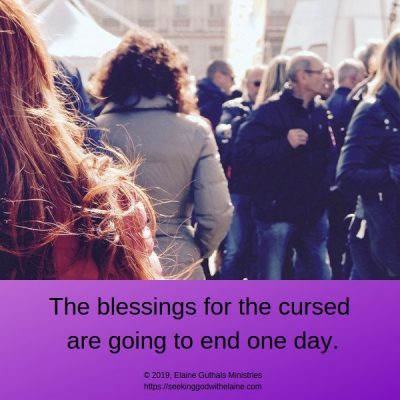
    The blessings for the cursed are going to end one day.

    People

    Making the Connections

    “And I heard a loud voice from the throne, saying, ‘Behold, the tabernacle of God is among men, and He will dwell among them, and they shall be His people, and God Himself will be among them’” (Rev. 21: 3 NASB)

    That is what it is all about. Are you blessed, or are you cursed? One day God will dwell among us. Forever.

    Jesus dwelled among us for a while. It is interesting that Henry said that many think He was born around the time of this feast.

    I know. Jesus left heaven — like the Israelites left Egypt — to live among us. Scriptures really don’t tell us how He lived. We just know that He said, “…The foxes have holes and the birds of the air have nests, but the Son of Man has nowhere to lay His head” (Mt. 8: 20 NASB). Did Jesus live in a tent (tabernacle/booth)?

    Leviticus 23: 40 says. “On the first day gather branches from magnificent trees — palm fronds, boughs from leafy trees, and willows that grow by the streams. Then celebrate with joy before the Lord your God for seven days” (NLT). John 12: 12 says, “The next day, the news that Jesus was on the way to Jerusalem swept through the city. A large crowd of Passover visitors took palm branches and went down the road to meet him …” (NLT).

    How Do We Apply This?

    Zechariah was all about that praise — whether it be bass or soprano or somewhere in between. We should be, too.

    Yep, we are going to be singing. And listening to the preaching. And whatever other form worshiping is going to take.

    Practice now. Start liking it now.

    We have role models through which we can see how to live this life. Look at Jesus. Look at David. Look at Moses. Look at all of them. See how they praised God.

    Be in God’s presence whenever we can. Continuously pray (I Thess. 5: 17). Read His Word (Josh. 1: 8). Sing praises (Ps. 105: 2).

    This life is preparation for the next. Don’t waste it.

    Come, let us sing to the Lord!
    Let us shout joyfully to the Rock of our salvation.
    Let us come to him with thanksgiving.
    Let us sing psalms of praise to him.
    For the Lord is a great God,
    a great King above all gods” (Ps. 95: 1-3 NLT)

    What do you think?

    Leave me a comment below (about this or anything else) or head over to my Facebook group for some interactive discussion.

    If you don’t understand something and would like further clarification, please contact me.

    If you have not signed up for the email daily or weekly providing the link to the devotions and the newsletter, do so below.

    If God has used this devotion to speak with you, consider sharing it on social media.

  • When Should We Meditate?

    Nuggets

    • If our imitating God’s character makes us holy, holiness and godliness is the same thing.
    • When we are having trials, we have to consider God and how He wants us to live.
    • God doesn’t like any sin.
    • When we meditate on God, we look inside ourselves to take stock.
    • He wants us to think about where we are as a disciple and what we need to work on to be more holy.
    • We have to come into God’s presence the right way.
    Flowers with title When Should We Meditate?

    Meditation helps us grow. This devotion looks why God wants us to meditate on Him — when we experience trials and at other times.

    Let’s Put It into Context

    “Answer me when I call, O God of my righteousness! You have given me relief when I was in distress. Be gracious to me and hear my prayer! O men, how long shall my honor be turned into shame? How long will you love vain words and seek after lies? Selah” (Ps. 4: 1-2 ESV)

    It is trial city again. What is it this time? Too much month at the end of our money? To much holiday “cheer”? Unexpected changes or illnesses? Problems in paradise? [Insert your trial of the moment.]

    We are so good at calling God when we are in the midst of trials — probably not so much at other times. But don’t we expect God to answer us every time we call regardless how long it has been?

    Calling to God is coming to Him in prayer. That is how we communicate with God. We are to reverently approach God. We are to praise Him for His plan of salvation.

    It is interesting. The King James Version and the New King James Version say, “Hear me when I call …” (Ps. 4: 1). Every one of the modern translations changed it to answer me.

    Hearing means the answering is implied. Changing it emphasizes, I think, that God is always going to answer our prayers. It just may not be in the way we asked or on our timetables.

    Are we so insecure in our faith today that we don’t think God will answer? Or have we accused Him of not answering so many times because He doesn’t answer the way we have demanded?

    “… O God of my righteousness! …” (Ps. 4: 1 ESV emphasis added). We’ve said that righteousness is the product of being holy, created by having faith and loving as Jesus does. Our righteousness comes from God.

    We’ve talked before about how God wants us to remember. He wants us to remember His laws and commandments. He wants us to remember how He has provided for us in past trials.

    To read a related devotion, click the button below.

    Set Apart the Godly

    “But know that the Lord has set apart the godly for himself; the Lord hears when I call to him” (Ps. 4: 3 ESV)

    Okay, we are going to start in the middle, just in case we are tripping over godly. Fisk said that “godliness is a state of mind and heart which is derived from a source higher than man.”

    We’ve been calling it holy. If our imitating God’s character makes us holy, holiness and godliness is the same thing.

    We know that God has set people apart. Holy means to be set apart, perfect, and pure. Those who are holy and set apart are called saints.

    Who we are talking about are people who have ABCDed. They have been and are in the process of being regenerated. Regeneration is the change in us that God brings about when we go from being spiritually dead to spiritually alive.

    The ABCDs of Salvation

    A – admit our sins

    B – believe His Son Jesus is our Redeemer

    C – confess God as Sovereign Lord

    D – demonstrate that commitment by making any changes needed in our lives to

    live the way in which God has called us

    If you have not become a believer in Christ, please read through the Plan of Salvation and prayerfully consider what God is asking you to do.

    When we think about it, it is very humbling. God believed in us enough to ask His Son to be a sacrifice for us. He believes we can be holy. We can be saints. … We are saints when we are His child.

    Seek God

    “Tremble, and do not sin; Meditate in your heart upon your bed, and be still. Selah” (Ps. 4: 4 NASB)

    The versions all have their unique take on Psalms 4: 4. Some say for us to be angry (ESV, NKJV, CSB, HCSB). I don’t think that is what is meant.

    One says don’t let your anger make you sin (NLT). Okay, I can see that.

    Others say tremble or tremble in fear (NIV, NASB, GNT). The King James Version says, “Stand in awe …” (Ps. 4: 4). I think this is probably the original meaning.

    Tremble

    I think this goes back to the fear of the Lord concept. Remember, fear of the Lord is reverence and love.

    To read a related devotion, click the button below.

    Why do I think that? Awe is reverence.

    We just came off of talking about His righteousness. How do we respond to that righteousness? Awe not anger. We look to Him. The anger puts us in focus, not Him.

    But these days, we don’t do awe and reverence very well, do we? It is more like the Natalie Grant song about bringing God down to our level. Putting boundaries around Him.

    Related Links

    Natalie Grant

    Isn’t awe and reverence the whole theme of this section? When we are having trials, we have to consider God and how He wants us to live. He wants us to remain holy and righteous.

    But if we are going to stand firm in these trials, we have to stand in God, not ourselves.

    Don’t Sin

    I get it that we sin in anger. But we sin when we aren’t angry, too.

    God doesn’t like any sin. If we sin, we are not living holy lives.

    I think part of the fallout of losing the awe and reverence is that we feel there isn’t going to be a judgment.

    There is.

    Meditate

    This verse was what I put in my drafts folder. I was intrigued by this section of the verse.

    “… Meditate in your heart upon your bed, and be still. Selah.” (Ps. 4: 4 NASB).

    We’ve talked before that faith is described by beliefs, a.k.a., the assent of the mind. Hickman said it should be “improved by exercise and application of the mind.”

    To read a related devotion, click the button below.

    The meditate part is where we evaluate things. We look inside ourselves to take stock.

    The on-our-bed part is where we pull away so we can focus on God and what He is saying to us. It is where we get to really now ourselves.

    I know. Some nights, it is hard to turn off. But if we are going ninety to nothing all day, when are we going to slow down enough to really think things through?

    That is what God wants us to do. He wants us to think about where we are as a disciple and what we need to work on to be more holy. This will help us grow.

    But it is more than that, too. This is where God wants us to take our daily Bible readings and apply them to our lives.

    What should we examine? Anything and everything — our lives, our friendships, our jobs, how we spend our leisure time, our opinions, our priorities, our schedules………….

    Our measuring stick should be God’s Word. It should especially be His laws and commandments. We have to know them in order to make the comparison.

    That makes it a series exercise. We can’t approach it lightly. We need to now ourselves.

    Measuring tape and Bible

    Sacrifice in Trust

    “Offer right sacrifices, and put your trust in the Lord (Ps. 4: 5 ESV)

    Oh, I like this verse. We have to come into God’s presence the right way. It is all about Him and our reverencing and honoring Him.

    Our job description says that spree sacrifice should be a living sacrifice. Our sacrifice is to be the way that we live.

    We are to give our all to God. This includes our self, our thoughts, our desires, our energy — everything.

    We give God control over our jobs and our finances. God calls the shots in our relationships.

    We can make this sacrifice because we trust God. Trust is confidence that the promises of God are true. Trust helps us to keep the prayer line going with God.

    We give God control over the times we feel like we have been wronged. This includes the times we feel bullied and humiliated.

    Making the Connections

    I loved a quote by Logan. “This serious frame of mind cherishes those higher virtues of the soul which are called ‘the armour of God.’ In the solemn silence of the mind are formed those great resolutions which decide the fate of men. This temper is no less favourable to the milder virtues of humanity. A serious mind is the companion of a feeling heart.”

    When we meditate on God, we value the armor of God. This meditation helps strengthen us for when the spiritual warfare comes.

    Why do you think it is so hard for us to meditate on God? Is it we are so used to the frantic pace of the world today? Is it we just hate to be alone? Maybe it is because — deep down — we don’t think God is going to answer us back.

    God will answer — probably with just a flood of peace.

    How Do We Apply This?

    We have to form the habit of meditating on God. It is so easy to pray, say amen, and go to sleep. When do we listen for what He has to say to us?

    It is important that we are real in these analyses. We can’t gloss over what God wants us to change. Neither should we bite on ourselves needlessly.

    I can see advantages of meditating the last thing before turning in at night. But you know, we can do it any time. Are we better in the morning? Do it then. Would it be a better lunch-time activity? Go for it.

    Whenever we choose to meditate, Satan is going to try to stop us from making it a habit to evaluate ourselves. We can’t let him succeed. We need to keep our thoughts on God and how He wants us to live.

    Try asking yourselves these questions:

    • Did today draw us closer or further away from God?
    • What leisure activities carried temptation?
    • What was God calling us to do today that we did and didn’t do?
    • Did we live today based on the principles of God?

    Remember, God wants us to look at our lives to see where sin is lurking. He wants us to grow in Him.

    God. We want to seek You — not just when we are in the midst of trials, but every day. We want to make sure that we are following Your laws and commandments and Your will for our lives. Help us to read and meditate on Your Word. Amen.

    Related Links

    I have created a worksheet of the questions above. Click on the button below to access it.

    What do you think?

    Leave me a comment below (about this or anything else) or head over to my Facebook group for some interactive discussion.

    If you don’t understand something and would like further clarification, please contact me.

    If you have not signed up for the email daily or weekly providing the link to the devotions and the newsletter, do so below.

    If God has used this devotion to speak with you, consider sharing it on social media.

  • Is the Old or New Covenant Better?

    Nuggets

    • God’s covenant with Abraham — which He initiated — has three parts: land, kids, and blessings.
    • The new covenant is all about Jesus.
    • We are called to expand His kingdom to include others.
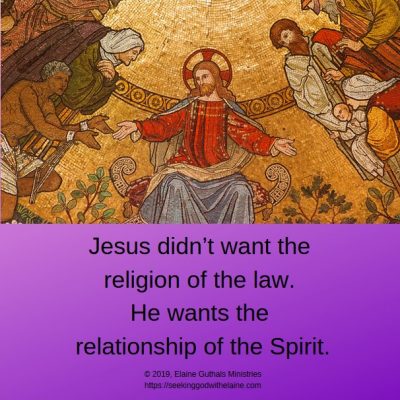
    • But Jesus didn’t want the religion of the law; He wanted the relationship of the Spirit.
    • The old covenant and the law did not save the people – only Jesus can.
    Flowers with title Is the Old or New Covenant Better?

    God is calling disciples to be competent ministers of His gospel. We may not think we fit the bill. This devotion looks at why it is so important that we do our work for His ministry.

    Let’s Put It into Context

    “Are we beginning to commend ourselves again? Or do we need, like some, letters of recommendation to you or from you? You yourselves are our letter, written on our hearts, known and read by everyone. You show that you are Christ’s letter, delivered by us, not written with ink but with the Spirit of the living God — not on tablets of stone but on tablets of human hearts. Such is the confidence we have through Christ before God. It is not that we are competent in ourselves to claim anything as coming from ourselves, but our adequacy is from God” (II Cor. 3: 1-5 CSB)

    Don’t you love how Paul starts this chapter? “Do you think we are stuck on ourselves? Think that we need letters of recommendation from you? You are our living letters.”

    Paul was always quick to point out that, whatever abilities he has, he got them from God. He always, always, always gave God credit for anything he has accomplished.

    A disciple has to defer credit to God. God is the creator of all things. It is only through His gifts of grace and faith that we have spiritual life.

    Oh, yes. That goes against the worldview. We are programmed these days to be self-sufficient, to be our own god.

    Paul had the correct take on things. It isn’t us; it is Him.

    Ministers of a New Covenant

    “He has enabled us to be ministers of his new covenant …” (II Cor. 3: 6 NLT)

    Before we talk about the new covenant, we have to talk about the old covenant. To do this, we have to go all the way back to Genesis.

    The Old Covenant

    A covenant is an agreement between two parties. They may be equals, or one may have greater authority than the other.

    God’s covenant with Abraham — which He initiated — had three parts: land, kids, and blessings (Gen. 12: 1-3; 13: 14-17; 15: 1-21; 17: 1-27; 18: 9-15).

    We talked in a previous devotion how God sent Abram moving without telling him the destination until he got there. “He also said to him, ‘I am the Lord, who brought you out of Ur of the Chaldeans to give you this land to take possession of it’” (Gen. 15: 7 NIV). “This land” was Canaan, which was given to the Israelites.

    To read a related devotion, click the appropriate button below.

    God also promised Abraham that he would have kids. Abraham reminded God that there was a major problem. His heir was a slave. And he and his wife were old, so it wasn’t looking good for them (Gen. 15: 4-6). But God did the impossible, and they had a son.

    To read a related devotion, click the appropriate button below.

    God also promised Abraham that, through him, all the world would be blessed. “I will bless those who bless you, and whoever curses you I will curse; and all peoples on earth will be blessed through you” (Gen. 12: 3 NIV).

    The New Covenant

    Jesus initiated a new covenant. In a way, it is the fulfillment of the all-the-world-will-be-blessed part of Abraham’s covenant.

    The new covenant is all about Jesus. “In the same way, after the supper he took the cup, saying, ‘This cup is the new covenant in my blood, which is poured out for you’” (Lk. 22: 20 NIV).

    Even though Abraham’s covenant was sealed with the blood of sacrifices, this covenant would be sealed by the blood of Christ Himself.

    Because of that, Jesus is the mediator of the new covenant. “For this reason Christ is the mediator of a new covenant, that those who are called may receive the promised eternal inheritance — now that he has died as a ransom to set them free from the sins committed under the first covenant” (Heb. 9: 15 NIV).

    We’ve talked about why Jesus’ blood was so important for this covenant. His blood provided the atonement for our sins.

    To read a related devotion, click the button below.

    We Are Competent Ministers

    Back to Second Corinthians.

    We are competent ministers of the new covenant. Yes, we are the recipients of the covenant, but we are also administrators of it. Let me explain that.

    In previous jobs, I have worked under presidents, chief executive officers, and owners. In two out of the three cases, they did not make the decisions themselves. They carried out the vision of the board.

    Even though they were higher up on the food chain and had these powerful titles, they oversaw the daily implementation of the vision of the company/institution. It was their jobs to shepherd the employees underneath them.

    Yes, they had to have skills. They had to have knowledge.

    But they were working for someone else. Not only that, they had others working below them.

    Disciples are working for God. We have to have knowledge of God’s laws and commandments. We have to know how He wants us to live.

    More importantly, our job description says that we are to proclaim the gospel and make disciples for Him. We are called to expand His kingdom to include others.

    The problem is, we do not feel we are competent. In fact, in many cases, we feel the exact opposite.

    We have to realize that God has given us the gifts — the knowledge and skills — needed to fulfill His plan for our lives. “Now may the God of peace, who through the blood of the eternal covenant brought back from the dead our Lord Jesus, that great Shepherd of the sheep, equip you with everything good for doing his will …” (Heb. 13: 20-21 NIV). He is going to equip us for what He calls us to do.

    I’ve talked with you before about being authentic and honest with you. I have to be authentic, or you will start questioning why you should read what I write. You have to see my faith and what I believe to be true. You have to see me as a competent minister.

    To read a related devotion, click the button below.

    Law v. Spirit

    “… This is a covenant not of written laws, but of the Spirit …” (II Cor. 3: 6 CSB)

    What is the difference between the law of the Old Testament and the Spirit of the New Testament? Thomas said this: “The New Testament means God’s revelation through Christ, in contradistinction to His revelation through Moses. Though both are admitted to be “glorious,” the latter is shown to be “more glorious”; for the one is the dispensation of “righteousness,” the other of “condemnation”; the one is permanent, the other is “done away”; the one so opens the spiritual faculties that the mind can look at it “with open face,” the other through the prejudices of the Jewish people was concealed by a “veil.”

    Did you catch all of that, or did you trip over contradistinction? Contradistinction is a highfalutin way of saying we are looking for distinct differences.

    What are the differences?

    Don’t you see that? The Pharisees were good at “the letter of the law.” They were good at the religion.

    But Jesus didn’t want the religion of the law. He wanted the relationship of the Spirit. He wanted worship in spirit and truth.

    Jesus

    The Old Covenant Didn’t Save

    “… The old written covenant ends in death; but under the new covenant, the Spirit gives life” (II Cor. 3: 6 CSB)

    Why did Jesus want the Spirit and not the law?

    Jesus knew the old covenant and the law did not save the people. There is only one way that people can be saved.

    “Jesus answered, ‘I am the way and the truth and the life. No one comes to the Father except through me’” (Jn. 14: 6 NIV).

    The old way won’t bring regeneration because no one can do all the do’s and not do all the don’ts. If we could do that, Jesus would not have had to shed his blood to purchase remission of our sins.

    Since the law can’t be payment for our sins, we are still spiritually dead under it. We have to admit our sins, believe on Jesus as Redeemer, confess God as Sovereign Lord, and demonstrate that commitment by following our job description.

    The Disciple’s Job Description

    Making the Connections

    Don’t take that the wrong way. I am not saying that the law did not have its purposes and should be disregarded.

    Everything in the law points toward God. But it also points toward Jesus, Who is the fulfillment of that law.

    “Do not think that I have come to abolish the Law or the Prophets; I have not come to abolish them but to fulfill them” (Mt. 5: 17 ESV).

    The old covenant was good, too. It gave people hope. They could have faith that God was going to provide a way for salvation.

    But Jesus is the only way.

    How Do We Apply This?

    If we haven’t ABCDed yet, we need to follow God’s promptings.

    The ABCDs of Salvation

    A – admit our sins

    B – believe His Son Jesus is our Redeemer

    C – confess God as Sovereign Lord

    D – demonstrate that commitment by making any changes needed in our lives to

    live the way in which God has called us

    If you have not become a believer in Christ, please read through the Plan of Salvation and prayerfully consider what God is asking you to do.

    If we look at the laws and commandments, we will see how we will live one day for eternity. That is why we need to make them part of us now.

    God wants us to put our faith and trust in Him. He wants to save us. Let Him save you today.

    Father God. We are nothing without You. Write Your laws on our hearts so that we will always want to follow them. May we be confident ministers of Your Word so that others can come to know Your love and mercy. Amen.

    What do you think?

    Leave me a comment below (about this or anything else) or head over to my Facebook group for some interactive discussion.

    If you don’t understand something and would like further clarification, please contact me.

    If you have not signed up for the email daily or weekly providing the link to the devotions and the newsletter, do so below.

    If God has used this devotion to speak with you, consider sharing it on social media.
    Lorem ipsum dolor sit amet, consectetur adipiscing elit. Ut elit tellus, luctus nec ullamcorper mattis, pulvinar dapibus leo.

  • Is Jesus the Basic Elements We Need?

    God’s 411 had a meme on how Jesus represents the four basic elements needed to survive. The four elements are water, air, food, and light. This devotion looks at Bible verses that say Jesus is living water, the breath of life, the bread of life, and the light of the world.

    Nuggets

    • Jesus is the fountain of living waters because He and God are one.
    • Even though made in God’s image, man would have been nothing if He had not breathed into him.
    • Jesus, on the other hand, was the Bread of Life that gave eternal life
    • Jesus is the light that pierces the darkness caused by Satan’s machinations.
    Flowers with the title Is Jesus the Basic Elements We Need?

    Every once in a while, we hear about science trying to prove or disprove the Bible. That happened with God’s 411 meme. It was about how Jesus represented the four basic elements for survival.

    The Bible does have verses that support that. Let’s take a look.

    Living Water

    “Jesus answered her, ‘If you knew the gift of God, and who it is that is saying to you, ‘Give me a drink,’ you would have asked him, and he would have given you living water’” (Jn. 4:10 ESV).

    The first element needed for survival is water. The passage that jumps into mind is Jesus’ discussion with the Samaritan woman at the well.

    There are other verses as well. John 7: 37 says, “… Jesus stood up and cried out, “If anyone thirsts, let him come to me and drink” (ESV). Jesus provides us living water.

    Jesus is the fountain of living waters because He and God are one. Jeremiah 2:13 says, “for my people have committed two evils: they have forsaken me [God], the fountain of living waters, and hewed out cisterns for themselves, broken cisterns that can hold no water” (ESV).

    Jeremiah says the same thing in Jeremiah 17:13 “O Lord, the hope of Israel, all who forsake you shall be put to shame; those who turn away from you shall be written in the earth, for they have forsaken the Lord, the fountain of living water” (ESV).

    To read a related devotion, click the button below.

    Breath of Life

    “The Spirit of God has made me, and the breath of the Almighty gives me life” (Job 33: 4 ESV).

    The second element is air. Jesus was with God when man was created: “then the Lord God formed the man of dust from the ground and breathed into his nostrils the breath of life, and the man became a living creature” (Gen. 2: 7 ESV).

    God purposefully made man. He formed him in His image (Gen. 1: 26). Still, man would have been nothing if He had not breathed into him.

    We see life in this fallen world. We cannot see how life would have been had Adam and Eve not sinned.

    Suffice it to say that life would have been way sweeter than we can imagine.

    To read a related devotion, click the appropriate button below.

    Bread of Life

    “‘I am the bread of life,’ Jesus told them. ‘No one who comes to me will ever be hungry, and no one who believes in me will ever be thirsty again’” (Jn. 6: 35 CSB)

    God provided manna to the Wilderness Wanderers (Ex. 16: 12). However, they had to gather that daily except for on the Sabbath.

    Jesus, on the other hand, was the Bread of Life that gave eternal life. “This is the bread that comes down from heaven so that anyone may eat of it and not die. I am the living bread that came down from heaven. If anyone eats of this bread he will live forever. The bread that I will give for the life of the world is my flesh’” (Jn. 6: 50-51 CSB).

    Let’s roost in verse 51 a second. “I am the living bread that came down from heaven. If anyone eats of this bread he will live forever. The bread that I will give for the life of the world is my flesh’” (Jn. 6: 51 CSB).

    God, the Creator of the universe, is our Father Who wants to have a relationship with His people. God Sent His Son Jesus to be the Redeemer of mankind. Jesus was born of a virgin, making Him 100% God and 100% man.

    Jesus gave His life on the cross for us so that His blood could pay the price for our sins. Because of God’s great might and power, Jesus rose from the grave, conquering death and paying the price for our sins.

    Because Jesus paid the price for our sins — when we admit those sins, believe on Jesus as our Redeemer and confess God as our Sovereign Lord — we are regenerated.

    The ABCDs of Salvation

    A – admit our sins

    B – believe His Son Jesus is our Redeemer

    C – confess God as Sovereign Lord

    D – demonstrate that commitment by making any changes needed in our lives to

    live the way in which God has called us

    If you have not become a believer in Christ, please read through the Plan of Salvation and prayerfully consider what God is asking you to do.

    Regeneration is the change in us that God brings about when we go from being spiritually dead to spiritually alive. It is where God breaks Satan’s hold on us. Only God has the power to do that, and He only does when we admit our sins, believe on Jesus as Redeemer, and confess God as Sovereign Lord.

    This happens because we figuratively eat the Bread of Life. We accept the gift of salvation because we accept Jesus as the One Who paid for that salvation. We take that acceptance to heart and make changes in our character and lives to conform to God’s laws and commandments.

    To read a related devotion, click the button below.

    Light of the World

    “The people who walk in darkness will see a great light. For those who live in a land of deep darkness, a light will shine” (Isa. 9: 2 NLT)

    We talked about Jesus being the Light when we walked though Ephesians. I am not sure I made all the connections there. Let me try again.

    To read a related devotion, click the appropriate button below.

    Satan is the ruler of the darkness. “For our struggle is not against flesh and blood, but against the rulers, against the powers, against the world forces of this darkness, against the spiritual forces of wickedness in the heavenly places” (Eph. 6: 12 NASB emphasis added).

    We also know that Satan is the ruler of this world. “You are of your father the devil, and you want to carry out your father’s desires …” (Jn. 8: 44 CSB).

    People who have not ABCDed are spiritually dead. They reside in the darkness of this world.

    Jesus is the light that pierces the darkness caused by Satan’s machinations. “Then Jesus again spoke to them, saying, ‘I am the Light of the world; he who follows Me will not walk in the darkness, but will have the Light of life’” (Jn. 8: 12 NASB).

    He is the Light of life just as He is the bread of life. Do we need to step through the God — plan — Jesus — died — blood — saved — regeneration steps again? If you are still a little shaken on it, reread the Bread of Life section again.

    If you are still shaky after rereading it, email me.

    It is really, really important that you get this. “Now is the judgment of this world. Now the ruler of this world will be cast out. As for me, if I am lifted up from the earth I will draw all people to myself” (Jn. 12: 31-32 CSB emphasis added).

    The only time you have for making the decision is while you are in this world. You die — the decision has been made. Jesus returns — the decision has been made.

    Making the Connections

    I don’t know about you, but I don’t like winter. I don’t like the cold, dreary days where the sun doesn’t shine. I go batty in the darkness. Jesus provides light when I feel the battiness coming on inside of me.

    These fronts that come through to change us from the nice fall days to the dreary winter days go straight through my head. The effect is usually a stopped up nose and trouble breathing. Jesus is the air I breathe.

    I’ve been thinking about supper for the last hour or so. Oh, I have my water beside me, but stomach is starting to say the throat has been cut — where is food? Jesus is the bread and water I need to survive.

    And survive, I will because Jesus is the provider of life — spiritual life. No, we are not taking about water, air, bread, and light of this physical world.

    God doesn’t categorize this world as a priority. It is going to end when He ends it. This physical world is temporary.

    What is permanent is spiritual death or spiritual life. We need to choose spiritual life.

    Canyon

    How Do We Apply This?

    Yes, choosing spiritual life means changes have to be made. They are worth it. Choose wisely.

    If you have not admitted that your relationship is not right with God,

    have not asked Jesus to be your Lord and Savior,

    and have not confessed your sins,

    please read through the Plan of Salvation and prayerfully consider what God is asking you to do.

    To read a related devotion, click the button below.

    Gracious Heavenly Father. You have provided all we need in Jesus. Through Him, You are the Giver and Sustainer of eternal life. Forgive us when we prioritize this world above You. Help us to change to be more like You. Amen.

    What do you think?

    Leave me a comment below (about this or anything else) or head over to my Facebook group for some interactive discussion.

    If you don’t understand something and would like further clarification, please contact me.

    If you have not signed up for the email daily or weekly providing the link to the devotions and the newsletter, do so below.

    If God has used this devotion to speak with you, consider sharing it on social media.
  • Does God Give Second Chances?

    Do you ever wish God gave you a second chance? He does. What if you don’t do better the second time around? This devotion looks at when God gave the Wilderness Wanderers a second chance.

    Nuggets

    • The Wilderness Wanderers are about done with their wandering, but it was a new generation, same old complaint.
    • God will always provide what is in His Will for His people.
    • Moses not only took his anger out on the rock, but he also let it fly toward the Wilderness Wanderers, too.
    • Moses didn’t get a second chance, and there is an argument that Aaron blew his second chance.
    Flowes with title Does God Give Second Chances?

    The Wilderness Wanderers have been wandering around for 40 years because they blew their first chance at entering the Promised Land. They ended up where they were when the wanderings started – Kadesh. Let’s see if they get a second chance and if things went better this time.

    Let’s Put It into Context

    A couple of devotions ago, we talked about how the Wilderness Wanderers became the Wilderness Wanderers. God had told Moses to send in men to take a gander at the promised land. Ten of the spies said they couldn’t take the land. Joshua and Caleb told the Israelites that, whoever God was with, they would win.

    The Israelites didn’t believe God was Who He said He was, so, they didn’t believe His promises. They were going to stone Joshua and Caleb, but God intervened. Instead, God wanted to destroy the Israelites. Moses intervened there.

    So instead of killing all of them, God forced them to wander around the wilderness for 40 years. The purpose was so that all adults who had been in Egypt — except Moses, Joshua, and Caleb — would die. Only Egypt Kids and Wilderness Kids would enter.

    To read a related devotion, click the button below.

    Same Soundtrack, Different Day

    “The entire Israelite community entered the Wilderness of Zin in the first month, and they settled in Kadesh. Miriam died and was buried there. There was no water for the community, so they assembled against Moses and Aaron. The people quarreled with Moses and said, “If only we had perished when our brothers perished before the Lord. Why have you brought the Lord’s assembly into this wilderness for us and our livestock to die here? Why have you led us up from Egypt to bring us to this evil place? It’s not a place of grain, figs, vines, and pomegranates, and there is no water to drink!” (Num. 20: 1-5 CSB)

    Oh, this is interesting. The Wilderness Wanderers are about done with their wandering. They are back to where they were when they were sentenced to wander.

    So, that means they are made up of only Egypt Kids and Wilderness Kids.

    However, new generation, same old complaint. “Why have you led us up from Egypt to bring us to this evil place? …” (Num. 20: 5 CSB). Did they record their parents and are just playing it back?

    Wasn’t one of the points of the wandering that those who remembered Egypt died? If these are the kids, they didn’t know Egypt firsthand — really know Egypt.

    But here are the complaints. And it is a familiar complaint. Did you bring us here to die because there is no food or water?

    Had not God been providing them with manna and quail (Ex. 16: 12)? Aren’t they going into the land flowing with milk and honey (Num. 14: 8)?

    What is their problem?

    But they just wanted water. That is a basic necessity.

    Is it better is we murmur or just downright argue? I am sure the Wilderness Wanderers has their share of both.

    The bottom line is — after 40 years — they just didn’t trust God. Are they going to blow their second chance?

    Still, God Provides

    “Then Moses and Aaron went from the presence of the assembly to the doorway of the tent of meeting. They fell facedown, and the glory of the Lord appeared to them. The Lord spoke to Moses, ‘Take the staff and assemble the community. You and your brother Aaron are to speak to the rock while they watch, and it will yield its water. You will bring out water for them from the rock and provide drink for the community and their livestock’” (Num. 20: 6-8 CSB)

    The next verses don’t say what Moses told God. Yes, God knew, but He makes us talk to Him and ask.

    Had Moses’ frustration with the people already started to build?

    Either way, Moses and Aaron did what they should have done. “… They fell facedown, and the glory of the Lord appeared to them” (Num. 20: 6 CSB).

    God provided — again. God will always provide what is in His Will for His people. And it will be enough: “You will bring out water for them from the rock and provide drink for the community and their livestock” (Num. 20: 8 CSB).

    Moses was told to speak to the rock, not hit it. We’ve talked about this rock before. Jesus is the rock.

    To read a related devotion, click the button below.

    Moses, You Blew It

    “So Moses took the staff from the Lord’s presence just as he had commanded him. Moses and Aaron summoned the assembly in front of the rock, and Moses said to them, ‘Listen, you rebels! Must we bring water out of this rock for you?’ Then Moses raised his hand and struck the rock twice with his staff, so that abundant water gushed out, and the community and their livestock drank” (Num. 20: 9-11 CSB)

    We’ve talked before about how Moses didn’t follow directions. There was to be no hitting involved. It was just supposed to be speaking. But, because he was rash (and angry), he didn’t follow directions.

    To read a related devotion, click the appropriate button below.

    We’ve also talked about how specific God can be sometimes. There are times when He gives us point blank instructions. We need to follow those to the letter. Cross all the t’s. Dot all the i’s. Don’t add or subtract.

    To read a related devotion, click the appropriate button below.

    Moses not only took his anger out on the rock, but he also let it fly toward the Wilderness Wanderers, too. He called them names.

    But did you see something else? “… Must we bring water out of this rock for you?” (Num. 20: 10 CSB).

    Were Moses and Aaron taking credit for God’s miracles?

    Oh, no wonder God was ticked. Yes, violence instead of asking nicely is a big thing. But not giving the credit to God is huge.

    Harsh Punishment

    “But the Lord said to Moses and Aaron, ‘Because you did not trust me to demonstrate my holiness in the sight of the Israelites, you will not bring this assembly into the land I have given them.’” (Num. 20: 12 CSB)

    We’ve talked about Moses not being allowed to cross over into the Promised Land. Let’s talk about Aaron.

    Aaron was also banned from crossing over into the Promised Land because of this incident. It is easy to see why Moses got this sentence because he was the speaker (Num. 20: 10) and the hitter (Num. 20: 11). Aaron, not so much.

    If you look back at verse 10, it says, “Moses and Aaron summoned the assembly in front of the rock …” (Num. 20: 10 CSB). Everything else from that point just says Moses.

    Aaron did not get punished for Moses’ sin. Aaron’s access to the Promised Land denied because Moses said, “… Must we bring water out of this rock for you?” (Num. 20: 10 CSB). They both thought it was them providing the water, not God.

    God judged them  — and quickly. “But the Lord said to Moses and Aaron, ‘Because you did not trust me to demonstrate my holiness in the sight of the Israelites, you will not bring this assembly into the land I have given them’” (Num. 20: 12 CSB).

    Moses didn’t get a second chance. There is an argument that Aaron blew his second chance.

    Making the Connections

    Since these are the Egypt Kids and the Wilderness Kids, we have a couple of questions to ask ourselves.

    Did the Wilderness Wanderers’ attitudes form their Kids’ attitudes? If the Kid’s were non-existent while in or too young to remember Egypt, how could they have this complaint?
    Or are they thinking the last time in this place didn’t turn out so well — is this time really going to be different?

    God is going to provide for us. Yes, it may not always be what we demand or think we deserve. But God is going to provide.

    We don’t want to be constantly sinning against God. Yes, God will give us multiple chances – on some things. He will forgive us when we ask, but we are supposed to be living for Him.

    It makes me think of the song Holy Water. There is a line in there about not abusing God’s grace.

    Related Links

    We the Kingdom

    Don’t we do that sometimes? Abuse His grace.

    God is supposed to be this loving God, so He should forgive us no matter what. We think He should give us multiple chances. Or He is this loving God so He should give us everything for which we ask.

    Doesn’t the Bible tell us that last one? “Ask, and it will be given to you. Seek, and you will find. Knock, and the door will be opened to you. For everyone who asks receives, and the one who seeks finds, and to the one who knocks, the door will be opened” (Mt. 7: 7-8 CSB). We can really jump on that bandwagon!

    When things aren’t going the way we think they should, don’t we get unreasonable sometimes? Unfortunately, sometimes downright nasty?

    Sometimes, we aren’t any different than the Wilderness Wanderers.

    Moses has been told to strike the rock before, but he wasn’t this time. We have to do what a God tells us when He tells us.

    Part of us might be asking, “Isn’t that a harsh punishment for Moses. Now, Aaron probably deserved it because of the golden calf (Ex. 32: 1-6). But Moses?

    God gets to call the shots. He gets to mete out the punishment.

    Yes, these were the two leaders of the Israelites. But they were humans. They still had the capacity to sin.

    How Do We Apply This?

    • Watch our attitude around others. I started to write kids but remembered we are a witness to some without even realizing it.
    • Listen carefully to God’s instructions and then carry them out to the letter.
    • Trust in His provision.
    • Watch our words.
    • Watch our anger.
    • Don’t try to hijack God’s miracle.

    To read a related devotion, click the button below.

    Moses didn’t get his second chance. He was not allowed into the Promised Land. But he was allowed at the transfiguration (Mt. 17: 3). As the song says, he didn’t go one sin too far.

    It Was Enough
    Vocalist: Elaine Guthals
    Keyboard: Chris Vieth

    We have to make sure we are obedient — and reverent — to God. He deserves our highest praise. We just need to listen and trust.

    Father. You deserve our praise and our reverence — not because of who we are, but because of Who You are. Thank you for all the ways in which You provide us. Forgive us when we steal Your glory. Forgive us when we disobey Your commands and react in ways that do not imitate You. Grow us to be more like You. Amen.

    What do you think?

    Leave me a comment below (about this or anything else) or head over to my Facebook group for some interactive discussion.

    If you don’t understand something and would like further clarification, please contact me.

    If you have not signed up for the email daily or weekly providing the link to the devotions and the newsletter, do so below.

    If God has used this devotion to speak with you, consider sharing it on social media.

  • Are We Responsible for Not Submitting to God?

    Nuggets

    • Apostasy means not believing in the state religion or not being a Christian.
    • Many people today believe that not being a Christian is not a “crime.”
    • We have to take responsibility for our actions.
    • There is no hope for people refuse to accept God as their Sovereign Lord.
    • If we don’t choose to make God our Sovereign God, there will be consequences.
    Flowers with title Are We Responsible for Not Submitting to God?

    Is God really going to hold us accountable for not submitting ourselves to Him? There is a really interesting verse in Jeremiah that answers that question. This devotion explores whether our refusal to give our lives to God has consequences.

    Let’s Put It into Context

    “Have you not brought this on yourself by abandoning the Lord your God while he was leading you along the way?” (Jer. 2: 20 CSB)

    Long, long ago, it was a crime to not believe the way the state did. This meant that, if you were an atheist, you were a criminal. It also meant that, if you were not a Christian, you were a criminal. It is called apostasy.

    Many people today believe that not being a Christian is not a “crime.” They believe that there will be no consequences for their having that belief.

    They are wrong.

    Jeremiah 2: 14-28 talks to apostasy. Jeremiah made no bones about. Israel became a slave because they had not been faithful to God. They had become prey to other nations.

    Not only that, but Israel had also chosen to actively pursue the dark side. “Now what will you gain by traveling along the way to Egypt to drink the water of the Nile? What will you gain by traveling along the way to Assyria to drink the water of the Euphrates?” (Jer. 2: 18 CSB).

    Let’s take a look at one of the verses in this section.

    You Brought It On Yourself

    “Keep your feet from going bare and your throat from thirst …” (Jer. 2: 25 CSB)

    Oh, this is interesting. Look what it says. It is our responsibility that we don’t wear out our shoes and let ourselves become thirsty.

    How do our shoes wear out? One way is when we wear them and don’t take care of them. We don’t keep them polished. We don’t get them resoled when they need it.

    My shoes were damaged when I was renting my second apartment. I had an outside stairway because I lived in the second floor.

    Going up was okay. Going down was hard on shoes. The steps were really narrow, so I scraped the back of my shoes on the step as I went down.

    To me, shoes were more easily replaced than bones — or me. But I sure went through shoes.

    While we can get thirsty if we forget to drink, pretend that we are walking through the desert. Even if we have some water with us, we are still going to get thirst if it is hot enough.

    This verse says we have to take responsibility for our actions. It says we have to continue to seek God.

    Searching for and Seeking God

    Hearing His Word (Rom. 10: 17 NLT).
    Reading His Word (Rev. 1: 3 ESV).
    Praying to Him (Heb. 4: 16 ESV).
    Studying His Word (Ac. 17: 11 NLT).
    Meditating on His Word (Ps. 1: 1-2).
    Memorizing His Word (Ps. 119: 11 NLT).

    To read Has God Provided Everything We Need?, click the button below.

    It doesn’t say that once saved, we’re done. It says that there are expectations once we submit to God.

    No Hope

    “… But say, “It’s hopeless …” (Jer. 2: 25 CSB)

    Too many people refuse to accept God as their Sovereign Lord. So, there is no hope for them — as things stand.

    Things can change. God can still be convicting them to turn to Him.

    It isn’t over until it is over.

    But don’t think that gives you until Jesus becomes a cloud rider.

    To read a related devotion, click the appropriate button below.

    If you keep denying God, God will deny you. We looked at Proverbs 29: 1 in When Should We Seek God? It says, “If you get more stubborn every time you are corrected, one day you will be crushed and never recover” (GNT).

    To read a related devotion, click the button below.

    One day, God will be over with you saying, “No, God. I am not going to submit to You.” Then your door will be closed.

    Then your hope will be gone. You have been warned. You said no. You will have to suffer the consequences of your decision.

    Choosing Sin

    “… I love strangers …” (Jer. 2: 25 CSB)

    If we look at this section of the verse by itself, the worldview would say, “Yes, yes, yes! We have to love everyone — even those who don’t believe in your God.”

    This verse doesn’t mean love everybody.

    It is saying, “… But you say, “It’s hopeless; I love strangers …” (Jer. 2: 25 CSB).

    There is no hope because you are choosing sin over God. You love your sin, and you don’t want to give it up.

    “… and I will continue to follow them” (Jer. 2: 25 CSB)

    You don’t love God because you love the world more — and that isn’t going to change. You are spiritually dead.

    Making the Connections

    It is our choice whether we make God our Sovereign God. If we don’t, there will be consequences.

    If we don’t grow our relationship with God, we let our shoes wear out. If we are too scared or feel unqualified to step out when God tells us to, we scuff our shoes. If we keep walking into sinful situations, we may find ourselves in a desert gasping for water.

    Our choices have consequences. “Do not be deceived: ‘Bad company corrupts good morals’” (I Cor. 15: 33 CSB). If we continue to flirt with sin, we may find ourselves being influenced by the “bad company.”

    Currently, we have the free will whether to ask God to be our Sovereign Lord or not. We don’t have apostasy. You aren’t a criminal if you are not a disciple of Jesus.

    Eventually, people will serve the consequences of their choices. One day, Jesus is going to return.

    One day, the books will be open. “I also saw the dead, the great and the small, standing before the throne, and books were opened. Another book was opened, which is the book of life, and the dead were judged according to their works by what was written in the books” (Rev. 20: 12 CSB).

    Macdonald detailed what those books would be. They are the book of God’s works, the book of God’s Word (His law), the book of memory, the book of condemnation, and the book of life.

    If our names aren’t written in the book of life, we suffer the consequences. Trust me, we don’t want to go there.

    To read a related devotion, click the button below.

    How Do We Apply This?

    How do we escape the fury of hell? We admit our sins, believe on Jesus as Redeemer, confess God as Sovereign Lord and demonstrate that commitment by following our job description.

    The ABCDs of Salvation

    A – admit our sins

    B – believe His Son Jesus is our Redeemer

    C – confess God as Sovereign Lord

    D – demonstrate that commitment by making any changes needed in our lives to

    live the way in which God has called us

    If you have not become a believer in Christ, please read through the Plan of Salvation and prayerfully consider what God is asking you to do.

    The Disciple’s Job Description

    Father God. We admit our sins, believe on Jesus as our Savior and Redeemer, and confess You as Sovereign Lord. Help us to demonstrate that commitment by following Your laws and commands. May we always keep seeking You and growing closer to You. Amen.

    What do you think?

    Leave me a comment below (about this or anything else) or head over to my Facebook group for some interactive discussion.

    If you don’t understand something and would like further clarification, please contact me.

    If you have not signed up for the email daily or weekly providing the link to the devotions and the newsletter, do so below.

    If God has used this devotion to speak with you, consider sharing it on social media.

  • Finding Favor by Acknowledging God

    Do you struggle with acknowledging God? Proverbs 3: 5-6 tells us to trust Him and acknowledge Him. This devotion looks at some ways we can so that so we find favor with God and man.

    Nuggets

    • We are to not forget the instructions God has given us on how we are to live our lives.
    • When we live the lives that God has called us to live, we will find favor in Him.
    • Finding favor is all predicated on trusting the Lord completely.
    • We have to acknowledge God, but sometimes, we have trouble doing that.
    Flowers with title Finding Favor by Acknowledging God

    God does want us to find favor with men. But we have to watch how we seek that favor and how much importance we put on it. Let’s take a look at what Proverbs says and man.

    Let’s Put It into Context

    “My son, don’t forget my teaching, but let your heart keep my commands; for they will bring you many days, a full life, and well-being. Never let loyalty and faithfulness leave you. Tie them around your neck; write them on the tablet of your heart” (Prov. 3: 1-3 CSB)

    We are to not forget the instructions God has given us on how we are to live our lives. He has told us the character He wants us to possess.

    Once we have the character, the decisions we make will be in line with God’s laws and commands. Living in God’s Will will bring us a long, full, and happy life.

    This isn’t a one-and-done thing. God knows we will be working on this for all of our lives.

    God also knows our attention span. That is why He says write His instructions down. Take them with us.

    We need to put these instructions in our hearts so that they are an essential part of us. Ainslie said, “It is the life of a man that proclaims who he is and what he is.”

    We have to have a solid relationship and not follow whatever whim and fad is circulating at the time.

    We have to be following God’s laws and commandments. That life shows that we fear God. We’ve got to imitate Him.

    To read a related devotion, click the button below.

    They Like Us

    “Then you will find favor and high regard with God and people” (Prov. 3: 4 CSB)

    This verse starts with that all-important word: then.

    When we live the lives that God has called us to live, we will find favor in Him. But look what else it says. We will also find favor with man.

    It is hard not to want to find favor with man. We live here on earth. We don’t want constant bickering with our co-workers, neighbors, and friends. We want people we to recognize our honesty, sincerity, and competence.

    To find favor we have to be living the life. No, not necessarily a religious life.

    Yes, we need to go to church regularly. But God wants relationship, not religion. The Pharisees in Jesus’ day had religion. They didn’t have relationship.

    When our relationship is right with God, we are more apt to treat others the way He wants us to treat them.

    This is not necessarily the world’s definition these days. That makes it harder to find favor with man. We can’t compromise our beliefs to find favor with men.

    We have to make sure we stay in favor with God.

    To read a related devotion, click the appropriate button below.

    We Trust God

    “Trust in the Lord with all your heart, and do not rely on your own understanding” (Prov. 3: 5 CSB)

    Finding favor is all predicated on trusting the Lord completely. What is trust? Trust is confidence that the promises of God are true.

    We trust that God will be able to tell us what to do. We trust that He will be with us for whatever He calls us to do. We trust that, even if it is hard and painful, God knows exactly what we need to grow.

    When we find favor with men, it is easy to puff ourselves up. We start relying on our own abilities.

    We may say that God is directing our paths, but we say that He has a lot to work with us. So when we do something right, we start to rely on ourselves.

    Or we can say, “There is no way I could have done that without God.” But what we sometimes really are saying is, “Hey, look. God used me a lot more than He is using you.”

    It isn’t about us. It is about God.

    We have to have the right attitude when we want to hand out the glory. It all has to go to God.

    We have to be obedient to God. We have to show that He is calling the shots.

    Acknowledge Him

    “in all your ways know him, and he will make your paths straight. (Prov. 3: 6 CSB)

    We like to talk about the success part of this verse — especially since it courts the favor. We like getting the good stuff from this relationship with God.

    The good stuff only comes, though, when we know Him — when we acknowledge God (Prov. 3: 6 KJV).

    Sometimes, we have trouble doing the acknowledgement part. In the ACTS prayer model, we have Acknowledge, Confession, Thanksgiving, and Supplication. We talked not long ago that our prayers are heavy on the supplication part, but light on the other parts.

    To read a related devotion, click the appropriate button below.

    We have got to acknowledge our Sovereign God. How do we do that?

    First off, we have to acknowledge there is a God and that we should acknowledge Him and fear Him. We crown Him as our King.

    We have to be vocal about God’s power and the three omnies: omnipotence, omniscience, and omnipresence. All powerful. All knowing. All present.

    Acknowledging God means submitting to Him. It means letting Him have authority in our lives. We do that by following His laws and commandments.

    We need to acknowledge God in the entirety of our lives. Through the good times and the bad times, we have to live showing God is in control. That means we talk and think in God’s ways.

    We acknowledge God even when we would rather He not be watching. That may be in our business practices, our social life, or our presentation of ourself. In all of our ways, we have to acknowledge Him.

    Acknowledging God means seeking Him. If you have read other devotions, you probably know the drill here.

    Searching for and Seeking God

    Hearing His Word (Rom. 10: 17 NLT).
    Reading His Word (Rev. 1: 3 ESV).
    Praying to Him (Heb. 4: 16 ESV).
    Studying His Word (Ac. 17: 11 NLT).
    Meditating on His Word (Ps. 1: 1-2).
    Memorizing His Word (Ps. 119: 11 NLT).

    To read Has God Provided Everything We Need?, click the button below.

    One thing we can’t live without is God’s wisdom. “Now if any of you lacks wisdom, he should ask God—who gives to all generously and ungrudgingly—and it will be given to him” (Jas. 1: 5 CSB). God will share His vast wisdom with us if we ask.

    God’s goodness and love are things we should acknowledge. This is shown through the many promises that are recorded in His Word.

    God’s Promises

    Answers prayer (Ps. 37: 4; Jn. 14: 13)

    Deliverance (Ps. 34: 17; Ps. 50: 15)

    Eternal life (Jn. 3: 16; Rev. 3: 5)

    Faithful (Jer. 29: 12; Rom. 4: 21)

    Fight for us (Ex. 14: 14)

    Knowledge and wisdom (Jas. 1: 5)

    Love (Ps. 145: 9)

    Peace (Isa. 54: 10; Phil. 4: 6-7)

    Presence (Deut. 31: 8; Mt. 28: 20)

    Prosperity (Mal. 3: 10; II Cor. 9: 8)

    Protection (Isa. 43: 2)

    Provision (Mt. 6: 31-33; Phil. 4: 19)

    Salvation (Ps. 27: 1; I Jn. 1: 9)

    Strength (Isa. 49: 29-31; Eph. 3: 16-19)

    Transformation (1 Jn. 3: 2; II Pet. 1: 3-4)

    To read a related devotion, click the button below.

    The hard part — we acknowledge God has the authority to correct us as needed. “Do not despise the Lord’s instruction, my son, and do not loathe his discipline; for the Lord disciplines the one he loves, just as a father disciplines the son in whom he delights” (Prov. 3: 11-12 CSB).

    We acknowledge God by praising and worshipping Him.

    We have to out God first and us second. We have to rely on Him. It isn’t about us; it is about Him.

    Only then do we find success. But He isn’t our meal ticket to success. We can’t say we are following Him so we will be rich and famous. We can say we are following Him because He will provide. With that provision comes contentment and the feeling of success in we are where we are supposed to be.

    Making the Connections

    God wants them to trust Him. He wants others to trust us.

    If people don’t think we have a reputation for good judgment and common sense, they will not listen to us when we witness to them. Since that is one of our jobs, we do have to win their trust.

    How Do We Apply This?

    Curling said, “We are to see God in everything, and we are to do nothing without Him.” That is a great way to acknowledge God.

    How do we acknowledge God?

    • Bury ourselves in His Word
    • Keep in constant communication with Him through prayer
    • Grow in our faith in Him
    • Deepen our belief in Him
    • Turn every aspect of our lives over to Him

    Gracious Heavenly Father. You are so much more than us. We are nothing without You. We acknowledge that You are Sovereign God. Help us to grow so that our trust in You is complete. Forgive us when we rely on ourselves when we should be relying on You. Amen.

    What do you think?

    Leave me a comment below (about this or anything else) or head over to my Facebook group for some interactive discussion.

    If you don’t understand something and would like further clarification, please contact me.

    If you have not signed up for the email daily or weekly providing the link to the devotions and the newsletter, do so below.

    If God has used this devotion to speak with you, consider sharing it on social media.

  • When God Gets Specific

    Have you ever thought about how specific God is sometimes? We sometimes have problems with that, though. This devotion looks at the time God gave Noah really specific instructions on how to build the ark.

    Nuggets

    • Mankind had chosen to live their lives in direct opposition as to how God wanted them to live their lives, and God decided He was going to have a redo.
    • God didn’t leave anything to chance.
    • The whole purpose of the ark was to save lives.
    Flowers with title When God Gets Specific

    Wouldn’t you love to have a dollar for every time you told your parents you were going to do it your way? I don’t know about you, but I would be a billionaire.

    My parents luckily called it independence. Did your parents call it orneriness? The worst it was called was plain rebellion. Whatever it was called, we kicked and screamed and did the exact opposite than what we were told to do.

    We are good at kicking and screaming when God gives us directions. Oh yes, He gives us very specific directions — sometimes right down to the width and length.

    Let’s look at a time when God gave Noah some pointed instructions.

    Let’s Put It into Context

    “Make yourself an ark of gopher wood. Make rooms in the ark, and cover it with pitch inside and outside” (Gen. 6: 14 CSB)

    Mankind had chosen to live their lives in direct opposition as to how God wanted them to live their lives. “When the Lord saw that human wickedness was widespread on the earth and that every inclination of the human mind was nothing but evil all the time, the Lord regretted that he had made man on the earth, and he was deeply grieved” (Gen. 6: 5-6 CSB).

    God decided He was going to have a redo. He scheduled the day of destruction on His calendar. “And the Lord said, ‘My Spirit will not remain with mankind forever, because they are corrupt. Their days will be 120 years’” (Gen. 6: 3 CSB).

    But all was not lost. “Noah, however, found favor with the Lord” (Gen. 6: 8 CSB). God found one man who still had faith in Him.

    The message God told Noah was probably surprising, but God talking to Noah wasn’t. “Noah was a righteous man, blameless among his contemporaries; Noah walked with God” (Gen. 6: 8 CSB). Noah was not your typical man of the time.

    In fact, Noah was a minority. It doesn’t say if Noah was persecuted for His belief in God, but he was different from the world. Satan is always going to find a way for disciples to be ridiculed or tested.

    So, God chose Noah to survive the destruction. “Then God said to Noah, ‘I have decided to put an end to every creature, for the earth is filled with wickedness because of them; therefore I am going to destroy them along with the earth’” (Gen. 6: 13 CSB).

    God knew exactly what He was going to do and how He was going to do it. He knew exactly what Noah needed to survive.

    Noah didn’t have to sit around scratching his head wondering just what He needed. God told him in no uncertain terms.

    God Left Nothing to Chance

    “This is how you are to make it: The ark will be 450 feet long, 75 feet wide, and 45 feet high” (This is how you are to build it: The ark is to be 450 feet long, 75 feet wide, and 45 feet high. (Gen. 6: 15 CSB)

    We have to remember that Noah had no clue as to what a boat was. He had never heard of a flood — because rain was a new concept.

    Didn’t matter. One day, God says to him height, width, and depth. Do it.

    Noah’s response was good plan.

    No, we really don’t know what the ark looked like. Doesn’t matter.

    What we do know is the ark was big enough to hold the animals, survived the storm, and did its job. God provided the specifications for what was
    needed.

    God didn’t — and doesn’t — leave anything to chance. He knows past, present, and future. He knew the number of animals that were going to be calling the ark home along with Noah.

    Church

    Purpose of the Ark

    The whole purpose of the ark was to save lives. That is the business God is
    in — salvation. He sent His Son to die on a cross so that we could
    accept the gift of salvation.

    God always knows what is needed to save His creation — even if we don’t know or are too independent to follow His guidance.

    God already had our lives planned out before we were born. We still have the choice to do what He says or not.

    So, when God says something, do we listen? Usually not.

    We decide we know what is best. We get scared about what God asks us to
    do. We tell ourselves He couldn’t possibly know what is best because He
    doesn’t know how we feel. We’re good at snow jobs, aren’t we?

    For some of us, it boils down to we don’t want anyone else making the
    decisions for us. We know how to get to where we are going. The control
    must remain in our hands at all times. We know what is best for us.

    The kicker is that God does know what is best for us. Remember, He has that plan for us. He wants the ending to be a happy one. And if we do follow
    His specific instructions, we are much happier than if we go off on our
    own. Hasn’t He proven that in the past?

    Look at Noah. God knew what was coming when Noah didn’t. God wanted to save him, but Noah still had a choice. He could have said no.

    But then Noah would have been deep sea diving without the wet suit – just like everyone else.

    God will always provide for His saints. We just have to submit — even when it is beyond our understanding.

    Congregation

    Making the Connections

    Why can’t we get the picture? God knows best for us.

    But we don’t. We keep on stressing independence and feeling miserable. We keep on kicking and screaming all the way. We keep trying to retain
    control and make our own decisions.

    You would think God would give up on us, but He doesn’t. He keeps on
    revealing to us what is best for us, even if we are too dumb to listen.

    God loves us and shows us the road that will lead to happiness. He knows exactly what His Will is for us, and it is best.

    How Do We Apply This?

    We’ve got to get over our dependence on ourselves. We have to submit to God’s will.

    That is where the faith comes in to play. Remember, faith is the belief that
    the doctrines stated in God’s Word are true, even if we do not
    understand all aspects of them. Faith is a product of love. We have to
    have faith to accept God’s love.

    But right along with it is the trust. Trust is confidence that the promises of God are true.

    Belief and confidence. We have know what we believe in and then be willing to stand up for those beliefs. Even when it takes 120 years to build a boat when it has never rained before. Even when everyone around us is
    laughing at us for this hairbrained idea.

    We apply this by growing our relationship with God. When He does ask us to do the impossible, we know we can because He will be doing it. He will
    be calling all the shots and opening all the doors we need.

    We are called to be first mate.

    Gracious Lord. You would think we would learn You know best. You Will for our lives brings us far greater joy and contentment than the paths we
    choose. Yet, we consistently refuse to listen to You. We go down the
    paths of our own choosing. These paths lead us to nothing but
    frustration and unhappiness. Forgive us. Show us where we should be.
    Wait for us to see our errors. Love us back into Your Will. Amen.

    “By faith Noah, after he was warned about what was not yet seen and motivated by godly fear, built an ark to deliver his family. By faith he condemned the world and became an heir of the righteousness that comes by faith” (Heb. 11: 7 CSB).

    What do you think?

    Leave me a comment below (about this or anything else) or head over to my Facebook group for some interactive discussion.

    If you don’t understand something and would like further clarification, please contact me.

    If you have not signed up for the email daily or weekly providing the link to the devotions and the newsletter, do so below.

    If God has used this devotion to speak with you, consider sharing it on social media.